Chapter horse slaughter

From AlexBrownRacing

Jump to: navigation, search

Contents

FOBs interest in Horse Slaughter

As the FOB community emerged and interest in Barbaro was far reaching Mrs. Jackson, Barbaro's co-owner, started speaking out against horse slaughter. The Jacksons became a signatory on the letter of the winning owners of the Kentucky Derby, urging for the end of horse slaughter. This initiative was organized by Staci and Arthur Hancock, breeders of three Kentucky Derby winners, Gato Del Sol, Sunday Silence and Fusaichi Pegasus. Star horses such as Kentucky Derby winner and subsequent horse of the year Ferdinand, and Exceller who defeated two Triple Crown winners, had been slaughtered.

Amid this atmosphere it is easy to see how Fans of Barbaro became vested in the horse slaughter issue. And ultimately FOBs have become a considerable force within the anti-slaughter community, bringing a larger grass roots effort to the anti-slaughter cause.

The following is a timeline and progress of Horse Slaughter legislation since 2006, the beginning of FOB involvement. This is not to establish that FOB involvement enabled these developments, but certainly FOBs support of the anti-slaughter movement is helpful.

2006

In September of 2006 HR 503, the House of Representatives bill, was passed by a vote of 263 to 146. The bill then went over to the Senate side, but was delayed. A wrong version of the bill was initially sent over to the Senate. Since the bill was not voted on on the Senate side the bill died by the end of 2006, the end of the two-year cycle of the 109th Congress.

2007

There were three operational horse slaughter houses in the United States at the beginning of 2007. Two in Texas and one in Illinois.

In March 2007 the two slaughter plants in Texas were closed down. In September of 2007 the final slaughter house in Illinois was closed down. The three slaughter plants were closed down due to state legislation. This type of progress inspired the Fans of Barbaro to continue the fight to end horse slaughter at the Federal level, while acknowledging that there was a long road ahead.

The closing down of domestic slaughter plants derailed the major arguments put forth by the pro-slaughter lobbies of American Quarter Horse Association (AQHA) and American Association of Equine Practitioners (AAEP) (and American Veterinary Medical Association (AVMA)). Their public rationale for supporting horse slaughter was that it was better to slaughter our own horses, where we have jurisdiction over the slaughter process, than to export the slaughter of our horses across borders where we have no oversight. (It is important to note that at that time horses were still also being exported for slaughter to Mexico and Canada). Sadly the AQHA and AAEP (and AVMA) remained firm in their support for horse slaughter once domestic slaughter was effectively ended, shifting their rationale to an "unwanted horses" argument and an "unintended consequence" argument of all the horses now shipping across the borders. The latter argument was understood by the anti-slaughter lobby when we were pressuring to close down domestic slaughter. The "unintended consequence" aspect however is simply that it was assumed the AQHA and AAEP (and AVMA) would now support a federal end to horse slaughter once the only option for slaughter was shipping slaughter-bound horses across our borders where we have no control. The persistant support for horse slaughter, despite the change in the conditions of horse slaughter (no domestic slaughter), is a clear signal that the real support for horse slaughter by the AQHA, AAEP (and AVMA) is other than stated.

The reality is that domestic slaughter is only over until another state, that does not have horse slaughter legislation in place, opens up a horse slaughter plant. South Dakota tried to do this in early 2008 (SOUTH DAKOTA HORSE SLAUGHTER BILL DEFEATED). This underscores the importance of passing legislation at the Federal level. Legislation at the Federal level also addresses the issue of transportation for slaughter. Thus horses would not be allowed to ship to Canada or Mexico for slaughter if federal legislation is passed.

The Senate Bill (S 311) was voted out of committee in November 14, 2007. While the intent at this stage is for the bill to be voted on on the floor, the reality is that a Senator can put a hold on the bill, effectively delaying it's vote. Senator Larry Craig of Idaho placed this hold. The Bill has yet to be voted on. The House Bill (HR 503) remained in committees (Agricultural Committee and Commerce and Science Committee).

2008

While progress had been made over the short time Fans of Barbaro had been engaged in the fight to end horse slaughter, it was becoming evident that more effort was needed to really bring about change. As a result, in March of 2008 Fans of Barbaro participated in Americans Against Horse Slaughter, an event FOBs also helped organize. With about 100 people descending on Washington for the horse slaughter issue this was the largest lobbying event in the short history of the anti-slaughter movement, which began in 2001. The goal was to help generate more co-sponsors both in the House and in the Senate.

Both Bills have remained "status quo" through the summer of 2008, although additional co-sponsors have come on board.

In July, a new House Bill (HR 6598) was introduced with language that addressed some of the concerns of those Congressmen who had not yet signed on as co-sponsors of HR 503. It was also introduced via the Judiciary Committee, a committee that was considered more friendly to the horse slaughter issue than the Agricultural Committee (Goodlatte is the ranking Republican Member of the Agricultural Committee and a strong advocate for horse slaughter) and Commerce and Science Committee where HR 503 was languishing. HR 6598 was voted out of the Judiciary Committee but unfortunately the bill was referred to the Agricultural Comittee (Goodlatte) essentially ending the bill's progress for the 110th (2007-2008) Congress.

A Civic Lesson

For many FOBs, this was their first involvement in governance and trying to create change. The euphoria that erupted in September 2006, when the House bill was voted for overwhelmingly (263 - 146) was soon tempered when it was realized that for horse slaughter to end at the federal level the bill needed to also be voted for in the Senate, and then signed off by the President of the United States. It was late in 2006 and thus close to the end of the two-year cycle of the 109th Congress. We simply ran out of time. We had to start again in 2007, although it was thought that with the recent progress and positive vote in the House, that ending horse slaughter in the 2007 - 2008 two-year cycle of the 110th Congress should be achievable.

Congress works in two-year cycles, and a bill needs to be voted for on the floor in both the House of Representatives and the Senate, and then signed by the President before it can be written into law. The end of 2006 was the end of the 109th Congress. 2007 - 2008 was the next opportunity for this to happen. Bills can be introduced both in the House (HR 503) and the Senate (S 311) simultaneously. These are refered to as "companion" bills, and once one bill is voted on positively in either the House or the Senate, then the bill is moved over to the other side for a vote. The bills start in committee(s) and remain in committee(s) until they are voted on positively by those in those committees. They can then be added to the calendar for a vote on the floor. During their times in committees, committee members discuss and amend the language of the bill, until the bill is ready to be voted out of the committee, or the bill dies in committee.

Bills are introduced by a sponsoring Congressman (Whitfield KY for HR 503 and Conyers and Burton for HR 6598) in the House, and by a sponsoring Senator (Senator Landrieu LA for S 311) in the Senate. Those pushing for the bills, and thus law changes, (HSUS and AWI) work with the sponsoring Congressman or Senator to introduce the bill.

To push a bill out of committee the "grass roots" strategy is to attempt to gain co-sponsors of the bills or to contact committee members directly to encourage them to move the bill out of committee. Co-sponsors for a bill are other Congressmen or Senators, other than the original sponsors, who are showing their public support for the bill prior to it coming up for a vote on the floor. Co-sponsorship signals the popularity of the bill and the likelihood of the bill's success when brought to a vote. The rationale for the latter is that a co-sponsor also means a vote, although there are exceptions to this.

If the majority of Senators or Congressmen are co-sponsors of a bill, the sponsor(s) can request a discharge from the committee(s). All the co-sponsors must then sign a petition. However moving a bill out of committee(s) is also dependent on the "position" of the chairman and members of the particular committee(s). It is therefore important to have a chairman and ranking member who are supportive of your bill (Goodlatte has served both positions on the Agricultural Committee for instance). Similarly, if the chairman of the committee is in favor of a bill, and the majority of committee members are also in favor, then a majority of Congressmen or Senators as co-sponsors is not necessary. The committee can choose to vote the bill out of committee for a floor vote independent of the number of co-sponsors.

There are reasons why a Congressman or Senator will support a bill when it comes to a floor vote, yet will not publicly co-sponsor a bill. Why tip your hand when many bills never come up for a vote, is the argument. All votes become part of a public record. The reality is there is a lot of gaming in Washington. Publicly supporting a bill of a colleague may be due to variety of reasons, some of which may be due to the content of the bill, some of which may be due to favors owed from previous bills and other reasons outside the context of the specific bill.

If the number of co-sponsors of a bill is not a majority, and thus does not force a bill to a vote on the floor, and the committee(s) in which the bill is in does not vote favorably to move the bill out of committee, a final option is to ask the Speaker of the House (Reid) or Senate (Pelosi), who control their respective calenders, to put the bill on the calender for a vote.

The reality is, there is a finite alotment of time available for bills to be voted on, and thus it is important to realize that with horse slaughter legislation, we are not only in a fight with the pro-slaughter lobby to gain this legislation, but we are also competing with all other causes that are seeking to effect some change in the law. Currently we are in a war, a recession and 2008 is an election year. The potential for a horse welfare bill becomes more challenging in such conditions.

It is also important to note that the Speaker will not want to put the bill on the floor for a vote if the feeling is the bill won't be voted on positively. A bill that is voted on positively signals positive work of the Congress. A bill that does not get it's votes stymies the work of Congress.

Losing the vote on a bill also sets the legislation back for future times that the bill, or a similar bill, comes up for a vote. Thus having the appropriate number of co-sponsors (a majority) is the best way to make the case for the bill to be voted for positively on the floor.

Even if a bill is voted out of committee in order to be voted for on the floor, the bill can still be blocked prior to a vote. This is currently the case on the Senate side, as Senator Larry Craig placed a hold on S 311 in December of 2007 after it was voted out of committee. The Senate and the House do have different rules in this regard.

It is far easier to prevent change than to create change in Washington.

Media

The media is an effective tool, both for the anti-slaughter and pro-slaughter communities. The pro-slaughter side has used the media to great effect, seeding articles that have wrongly tied horse neglect and abandonment cases to an end to domestic slaughter. Jeffrey McMurray wrote such a story for the AP in March 2007. The story was published in more than 200 news outlets. The Governor of the State of Kentucky had to release a statement refuting the claims that were made in the story about loose horses running around Kentucky. Sadly these stories are easy for general audiences to believe and are a significant weapon in the fight to make the case for horse slaughter. Media stories also impact politicians as they are easily forwarded to their aides and so forth by "concerned" citizens. These stories serve to also allow politicians to justify their position on a bill without researching the voracity of the claims made in the articles.

To counter these types of stories the anti-slaughter side tries to get stories written about the atrocities of horse slaughter, just to make sure the general population is aware of the practice of horse slaughter and it's inhumanity. Celebrities have also been involved in promoting these stories, including Bo Derek and Paul Sorvino. Celebrities are absent on the pro-slaughter side.

More anti-slaughter stories have appeared in the media recently and parts of the horse racing industry are realizing they can no longer ignore the fate of horses shuffled off their racetracks. Despite this the NTRA does not currently support horse slaughter legislation (H.R. 6598) and in fact has provided funding for Goodlatte who has made a career out of blocking horse slaughter legislation. The NTRA's decision to not support the current horse slaughter legislation was received by a swift reply from horsemen (ABERCROMBIE'S STRONG PITCH TO END SLAUGHTER).

The anti-slaughter side also has one or two "friendly" media outlets that will publish stories at our asking. Having media that is anti-slaughter is very important. And the reality is, regardless of the media source, google and google news assures that all media stories can get wide reach. And this reach can be driven by the pro- and anti-slaughter communities who take articles supporting their side and forward along.

It has become important, to increase the effectiveness of Fans of Barbaro as an anti-slaughter group, to work to get stories of Fans of Barbaro out into the media. Each of the stories may have somewhat of a different focus, but they all note the horse slaughter problem from an anti-slaughter perspective. More recently we have started writing our own press releases in order to accomplish this. In 2008 alone, we have received more than 25 media stories covering Fans of Barbaro's work, from the Toronto Star to the Houston Chronicle.

FOBs and the Wider Anti Slaughter Community

Washington Lobby Groups

The Animal Welfare Institute (AWI) and Humane Society of the United States (HSUS) are the two main Washington DC lobbying organizations for horse slaughter. AWI was first on this issue (2001) and helped write the first piece of legislation (HR 3781 during the 107th Congress, 2001 - 2002 cycle). HSUS came in later (2006) but has more resources.

AWI and HSUS network within Washington, help develop legislation, and determine strategy regarding passing anti-slaughter legislation with the sponsors of the anti-slaughter bills.

Doris Day Animal League was a main player but was purchased by HSUS.

Grass Roots Groups

Grass roots efforts support those in Washington DC. To enable these grass roots efforts there about six different yahoo groups. Humanity Against Horse Slaughter (againstslaughter@yahoogroups.com) is the larger of the groups and was started in 2003. There are also multiple Facebook groups. BAN HORSE SLAUGHTER IN CANADA has more than 2,900 members. A grass roots group supports the strategy outlined in Washington and gets those that are passionate about the issue involved. Grass roots groups also do their own research and investigative work. Humanity Against Horse Slaughter takes it's legislative direction from AWI.

Fans of Barbaro is a grass roots group, although facilitated by a public discussion board and blog (alexbrownracing.com), rather than a yahoo group.

As the FOB community took shape over the horse slaughter issue there were two main protagonists on the site vying for support and to lead the horse slaughter efforts of FOBs. Both are leaders within other grass roots groups. Neither liked each other due to a long history within the anti-slaughter community. One was banned after a particularly slanderous missive aimed at the other.

For the FOB community to establish itself as an independent force within the anti-slaughter community, while working with other groups, it needed it's own leaders. This would also insure we would not fracture the FOB community by choosing one of the aforementioned group's leaders over the other. Debra and Shelley took on this task and developed a daily strategy for call lists with their contacts in Washington DC.

Cooperation among anti-slaughter groups is stymied by the need for secrecy in terms of planning strategy. Secrecy is needed to avoid alerting the pro-slaughter side to our strategy. That secrecy can also be perceived as lack of trust between the different anti-slaughter groups. Secrecy also disrupts a freeflow of information throughout the anti-slaughter community which further disrupts it's effectiveness. This also results in individual groups wanting to dominate the grass roots landscape, and being closed to the idea that there are multiple groups that need to work together. There is an "our way or the highway" sentiment that combines with "we have been doing this the longest so know best" mentality. A group would prefer to be the only group and increase it's membership by targeting other groups' members. Members that will gladly follow the lead of the group without question.

Essentially, it is very difficult for the anti-slaughter community to effectively work together as one team given the current structure and relationships. (Goodbye 2 Anti-Slaughter "Movement")

Adding to these problems, ABR and FOBs not only support the fight to end horse slaughter, but also rescue horses within the slaughter pipeline. FOBs have come under pressure from other anti-slaughter groups and leaders who do not work with anyone involved in the slaughter process. Fundametally there is significant tension between those who work within the horse slaughter system to save horses, and those who want to disrupt the horse slaughter system and alienate those within the system to those who want to rescue horses from the system. Some horse rescue veterans even label anti-slaughter advocates as "anti-rescue". The anti-rescue sentiment is driven by three concerns of some of the anti-slaughter veterans:

a. Horse slaughter is a demand-driven business. For every horse saved from slaughter, another horse simply takes it's place as there is an abundance of horses available for kill buyers to purchase.

b. Rescuing a horse from slaughter enables those who work in the slaughter pipeline (kill buyers), by paying a premium for the horse rescued. This makes the business of horse slaughter more attractive. This post aptly describes the dilemma: Joe at TB Friends needs HELP!!!

c. The money used to rescue horses (FOBs have raised more than $900,000 so far) could be better used to support lobbying efforts to end horse slaughter.

Other Animal Welfare Groups

It is also important to note that there are additional Animal Welfare groups that advocate ending horse slaughter, even if they are not working on the issue directly as AWI and HSUS is. A good example is People for the Ethical Treatment of Animals (PETA). PETA's views are extreme as are their practices for gaining attention. PETA also advocates the banning of horse racing PETA continues attack on Larry Jones. PETA also advocates ending the slaughtering of all animals. This creates a couple of problems for ABR and FOBs. We are a horse racing web-site, and as such cannot align ourselves with organizations like PETA. We are also singularly focused on the horse slaughter issue, and not the slaughter of other livestock. Part of the "slippery slope" argument, the major concern of the Agricultural Veterinary lobbies, is that if horse slaughter is banned then what comes next. Cows, pigs and so forth.

Thus while there are many groups supporting the end of horse slaughter, on other animal welfare issues some of the groups differ, and those differences create tension for positive working relationships and for developing consistent arguments and rationale for ending horse slaughter. The agendas of many animal welfare groups also disengage horsemen from the horse slaughter issue.

There is also a criticism leveled at animal welfare groups, that their concern for the horse slaughter issue is also driven by fundraising goals.

Animals' Angels is an example of an investigative Animal Welfare group. FOBs support Animals' Angels. Animals' Angels' work highlights problems within the horse slaughter pipeline. Their reports are of conditions at feedlots, kill auctions, transportation and slaughter plants. They help put pressure on the slaughter business to try to make it more humane while also attempting to disrupt the business of horse slaughter. Animals' Angels also documents infractions of the law.

Americans Against Horse Slaughter

The organization of the Washington Lobbying efforts of Americans Against Horse Slaughter was designed to show cooperation among all anti-slaughter groups. It was held in March 2008. Members from many of the groups did attend and from that perspective the lobby event was successful. Sadly follow up from the event has indicated that relationships that could have been developed from the event to create more cohesion among the groups have not really materialized.

It's an Animal Welfare Issue

The reality is that most of the groups that are fighting to end horse slaughter are animal welfare groups, not horsemen's groups (the AQHA and vet organizations are pro-slaughter and the racing industry is for the most part neutral INDUSTRY ORGANIZATION POSITIONS ON SLAUGHTER). Animal Welfare groups have other issues and goals on which to focus and to prioritize as they try to develop animal welfare legislation in Washington for all animals. Horse slaughter may or may not be their most important issue. There is a risk that the issue is "traded" for support on other animal welfare issues.

There are online groups that are specific to horses and horse slaughter, yet the membership of these groups are for a large part also focused on broader animal welfare issues.

Essentially to lend more weight to the horse slaughter issue we need to engage horsemen's groups that have a singular focus on the horse. Even then, these groups have other horse-related legislation to prioritize (for example the NTRA's priority for internet gambling which has necessitated a switch to a neutral stance on horse slaughter).

Horsemen's groups should work with the existing animal welfare groups to move horse slaughter legislation forward. Again this is easier said than done. Some of the work of Animal Welfare groups is designed to either end, or radically change, the sports within which horsemen participate. Thus while many horsemen certainly love their horses and are not pro-slaughter, they are also not supportive of organizations that disrupt their sport, whether it be horse racing, rodeo, eventing or other horse-related sports. This leads to not only a dis-engagement with the horse slaughter issue, but also a propensity to believe the key pro-slaughter arguments; there are too many unwanted horses, and horse slaughter is humane.

In Summary

There is no cogent strategy that the anti slaughter community follows. Different factions develop their own tactics, some of which work in cooperation with other tactics, some of which do not. This is clearly illustrated by the initiative to gain the attention of the Obama administration. To do so a petition was established on the change.org site to garner support for the horse slaughter issue. Shortly thereafter another petition was launched on the same site, for the same purpose, by AWI. There are many problems that this issue illustrates and the likely outcome is that neither petition will garner enough votes to be considered as an important issue for animal welfare.

The Horse Slaughter Pipeline Explained

Geography

Horses are not simply dropped off at the slaughter house by their owners. Geography simply does not allow this for the majority of horses that are slaughtered. There are seven federally licensed slaughter houses in North America, all based in Canada. There are also slaughter plants based in Mexico. Horses are scattered throughout North America. It is not cost effective to drop a horse off.

The majority of horses that are slaughtered arrive at the slaughter plants via kill buyers. Kill buyers receive contracts from the slaughter plants and need to deliver certain numbers of horses to satisfy those contracts.

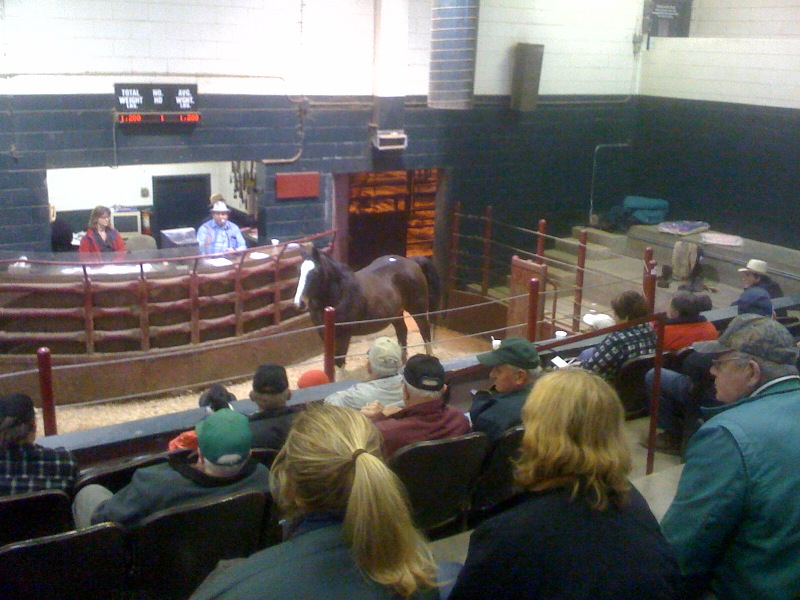
Kill buyers attend major kill auctions throughout the United States. There are also many smaller auctions which serve as feeder auctions to either the larger auctions or directly to the kill buyers' feedlots. Horse dealers attend the smaller horse auctions and have working relationships with the kill buyers. Some kill buyers are horse dealers. Some horse dealers are kill buyers. Horses that dealers purchase can be resold to private buyers or sold on through the slaughter pipeline to the kill buyers.

Entry Point

There are a number of "entry points" to the horse slaughter pipeline. Some of the entry points are obvious to the horse owner. Some less obvious. Placing an advertisement in a local magazine or on the internet. Perhaps, perhaps not. Running a horse through a local auction. Maybe. It depends who the purchaser of the horse is. A horse dealer may pick up the horse with the intent to resell the horse to another owner. Intentions can change, and the dealer may have a relationship with a kill buyer for horses he cannot resell. He may also simply collect horses as he goes from auction to auction. For those he cannot resell, he can ship those horses to a larger kill auction. Thus even if the local auction is not considered a kill auction, it can certainly serve as a feeder auction for an auction that has kill buyers in attendance.

Abuse of the Laws

Horses cannot legally ship in Double Deckers trailers in the United States if they are heading to slaughter. They can in Canada. Horses cross the border in Double Decker trailers as non-slaughter, their destination is simply a feedlot, a step away from slaughter. The lack of enforcement of laws makes it easy for shippers to do this. Either the intent of the law is being circumvented, or enforcement of the law is haphazard. Double Deckers are the preferred means of transportation for the slaughter business as they are more cost effective.

The summer of 2008, 40 mares and 6 stallions were discovered in a feedlot in Arizona. They had shipped from California, without a coggins. Fortunately they were saved. The horse slaughter business is illegal in California. A coggins is required for horses shipping across state lines that are not destined for slaughter.

Humane conditions at feedlots and auctions are questionable at best (Sugar Creek Cruelty Report). There are many examples in Animals' Angels investigations that highlight infractions of laws. Laws that are not being enforced.

Not only is the practice of horse slaughter inhumane, and the "system" to get horses to slaughter inhumane, but the entire practice promotes additional inhumane and illegal behavior (Leroy Baker fined $162,800. YEA BABY!!!).

What's Wrong With Horse Slaughter

Horse Slaughter is Inhumane

The horse is a flight animal unlike other livestock animals, such as cows and pigs, which are more docile. The process of slaughter is not designed specifically for horses, which have longer necks and typically balk away from something they fear. And horses sense fear. This makes the actual slaughter process less precise and there are many examples cited of horses not being rendered senseless by the first hit by a captive bolt gun (include a report here). The standard process in North America to slaughter a horse is to use a captive bolt gun that requires accuracy for effectiveness. While the veterinarian groups of AAEP and AVMA advocate that horse slaughter is humane, many veterinarians disagree. Dr. Nick Dodman has been outspoken on the inhumanity of horse slaughter. Dr. Hogan has provided testimony to Congress (check this).

The process of collecting and shipping horses to slaughter is also inhumane. Horses in the US go to slaughter via kill buyers, due to the large geographic area of North America. Individual horse owners would find it very costly and time consuming to bring horses themselves to slaughter and some slaughter houses (Quebec check) do not accept "owner drop-offs". Slaughter-bound horses are put through auction after auction, into kill pens grouped with many other horses and then shipped to slaughter over long distances in crammed conditions. The entire experience is alien to most horses which have been well looked after their entire lives. While this experience is exacerbated by the ban on domestic slaughter, even with domestic slaughter, the US is so large that unless slaughter can be localized the collecting and shipping process will always be inhumane. It also is important to note that when we had horse slaughter in Illinois, horses were being shipped to Canada for slaughter from the New Holland kill auction. Thus, we have always shipped horses to Canada and Mexico for slaughter, exporting horses for slaughter is simply happening more so now with the elimination of domestic slaughter.

Horses are not bred for the foodchain

With few exceptions (Alberta Canada and reports in some parts of the States) horses are bred for sports, work and leisure and not for the foodchain. Horses are humanized and are taught to trust as they serve our needs. Disposing of horses in this fashion after they have served us simply is not the right thing to do.

Most slaughter-bound horses have also been administered a variety of drugs through their lifetime. Even a common worming drug is labeled as not fit for animals for human consumption. Thus there really is no assurance that even if you can justify horse slaughter, a horse that is slaughtered may actually not be fit to eat. It is also important to note that in the European Union beginning July 2009, where the majority of US horse meat is being exported, horses that are slaughtered for human consumption must include documentation that they are free of drugs that would not be fit for human consumption. No such assurance can come from horse meat imported from the US. There is also no means in place to track horses that are slaughtered and determine their source of origin. This is not the same for cattle that are slaughtered (Origin of horses slaughtered?).

The irony here is that horse meat is marketed as a healthy alternative to other meats in parts of Europe and Asia.

Horses and Human Civilization

Horses have had more impact on the development of human civilization than any other animal or technology. Empires were built on the back of the horse. Wars were won by the side with the most horses. Up through the middle of the 1800s, people relied on horses for war, agriculture, transport and leisure. We are who we are today thanks to the horse.

Sadly for the horse, it's importance for human progress has been undermined by the industrial revolution and subsequent technologies. Sadly for humans, as it is a clear illustration of our nature, horses are now surplus to our fundamental needs and thus expendable in the most horrific way.

The threat of slaughter is exacerbated for wild horses. They no longer serve a purpose and they compete for land with ranchers.

Arguments Presented to Justify Horse Slaughter

There are a few arguments that are put forth by the pro-slaughter lobbies in order to justify horse slaughter. Some of the arguments are important, some are valid.

Unwanted Horses and What to Do?

There is a perception that there are too many unwanted horses and if we stop horse slaughter this number will only rise. This concern is exacerbated by the pro-slaughter lobby which plants stories in the media to attempt to tie abuse and abandonment cases with the lack of domestic horse slaughter.

The reality is we will always have unwanted horses, with or without horse slaughter. And sometimes horses will be abandoned and neglected. Perhaps moreso in a tough economy. The number of horses that are abandoned and neglected is far, far smaller than the number of horses that are slaughtered and to justify slaughter to eliminate horse abandonment and neglect is a false argument. It would also be foolish to argue that if we did eliminate horse slaughter entirely, we would not see additional abuse and neglect cases. However to justify slaughtering 120,000 horses to avoid a few cases of abuse and abandonment is self serving.

We have also seen large fluctuations in the numbers of horses slaughtered from year-to-year (300,000 to less than 70,000). To argue that the number of unwanted horses fluctuates similarly is hard to explain. We also do not see a negative correlation with neglect and abandonment cases with fluctuations in slaughter numbers.

This is simply not a valid argument.

Livestock versus Companion Animal

The horse is classified as livestock from a tax standpoint. It enables tax breaks for horsemen that are available to other farmers. This is very important for those whose business is the horse and certainly for states like Kentucky where the horse is a significant part of their economy (agribusiness). Thus if the horse is classified as livestock it should be treated as livestock.

The alternative argument is the horse is not bred for slaughter and is bred for other purposes, sports, leisure and work. The horse is trained to trust humans and that trust should not be betrayed. The horse is more akin to a companion animal. A dog or a cat.

The classification argument is a valid argument, especially for those in the horse business.

Property Rights

Ending horse slaughter would limit what the owner of a horse can do with his horse. A property rights argument. You own the horse, you should be able to do what you want with the horse. This is a weak argument. We do not slaughter cats and dogs, yet nobody considers that a property rights issue. In fact there are many limits placed on property we own. Consider the limits placed on house ownership in a neighborhood for example.

This is not a valid argument.

Market Collapse

Without horse slaughter we will see a collapse in the bottom of the market for the horse. In fact we have already seen this in states that are at the end of the slaughter supply chain, where horses are shipped to other states and other auctions before ending up at a major kill auction or in a kill buyers' feedlot. The market collapse is exacerbated by current economic conditions.

Certainly this argument is valid, however this argument is not so important. And a necessary market correction will create a disincentive to wreckless breeding habits that horse slaughter enables.

Environmental Concern

Without horse slaughter we will need to dispose of 120,000 horses, which will cause environmental contamination. The reality is that the number of horses that would need to be otherwise disposed of will be far less than the number of horses slaughtered (the number of unwanted horses is less than the number of horses slaughtered) and that number is also significantly less, by a factor of at least 5, than those we already dispose of on a yearly basis. On the otherhand, horse slaughter plants have been cited for their own environmental contaminations. For example: Ooze at Cavel not a worry, says manager

This is not a valid argument.

In Summary

There is one valid argument that is used by the pro-slaughter lobbies that justifies horse slaughter as it currently stands. That is the tax classification argument. However the "unwanted horse" argument is the major argument of the pro-slaughter community and one that easily connects with horses that may be abused and neglected. The reality is, however, that under close scrutiny this is a false argument.

The Reality: Why We Slaughter Horses

Who are funding the Pro Slaughter Lobbies

Before we note the real reasons that horse slaughter is a thriving business practice, it is important to highlight the groups who are fighting to sustain the practice. They present their arguments under the pretense that they are acting in the interests of the welfare of the horse. That slaughter is more humane than abuse and neglect. The groups are:

a. Farmers, who fear the slippery slope. Ranchers also compete on public lands with wild horses. NCBA Delayed Bill???????

b. AQHA, which sees slaughter as a means to dispose of horses as it encourages excessive breeding habits, which in turn broadens the domain of AQHA. Conrad Burns is their lobbyist (Lobbying Reports).

c. AAEP and AVMA. The slippery slope argument is also valid for veterinarians, whose organizations cover all animals. By supporting the end of horse slaughter, they would come under pressure to support the end of all animal slaughter, or at least determine how to distinguish between horse slaughter and the slaughter of other animals. The USDA (United States Department of Agriculture) is also the largest employer of veterinarians in the United States and thus has influence over the veterinarian organizations. Their dual argument in favor of horse slaughter is that it is humane (not so) and that slaughter is better than abuse and neglect (perhaps for the small number of horses that are neglacted versus the large number of horses that are slaughtered).

To contrast the viewpoint of AAEP and AVMA, Veterinarians for Equine Welfare (VEW) has been established to speak out against the inhumanity of horse slaughter.

d. NTRA (National Thoroughbred Racing Association). While the NTRA has taken a neutral stance on the latest piece of legislation for horse slaughter, and they did support anti-slaughter legislation in prior years, it is apparent that they cannot openly support the current legislation while they are working with Goodlatte. Goodlatte made an exemption for horse racing in his Internet Gambling Bill which is very important from a business standpoint for the sport of horse racing which relies on gambling for it's funding.

To contrast the NTRA's lack of position, prominent horsemen led by Staci Hancock have openly lobbied to support anti-slaughter legislation.

e. The Slaughter Business, there is some value in this business (approximately $40 million), although the lobbying efforts have been somewhat curtailed since the domestic slaughter plants were closed. Interestingly the owner of the "Common Horse Sense" web site was a lobbyist in Texas. The site operates under the guise of being good for the horse, yet is pro-slaughter.

The Unwanted Horse Coalition has been established to try to deal with the population of unwanted horses. Their efforts also help establish that there is an overabundance of unwanted horses and thus they do not actively support the end of horse slaughter while we have an abundance of unwanted horses. They are supported by the above groups such as the AAEP and the NTRA.

So what are the real reasons for horse slaughter ?

Business: It's Demand-Driven

The majority of horses slaughtered come via kill buyers, and the contracts they satisfy with the slaughter houses. Thus kill buyers don't simply arrive at slaughter houses with horses that need to be disposed. They deliver the number of horses that they are asked to deliver.

Kill Buyers Outbidding Rescues

There are many examples of kill buyers that have not resold horses at the request of private buyers and horse rescues. Horses are needed by the kill buyers to fill loads to satisfy their contracts with their customer, the slaughter house (illustration). If kill buyers have excess horses some will resell into the rescue market, but a kill buyer's principle customer is the slaughter house. The kill buyer and slaughter house behavior is not that of a service that simply disposes of excess horses. They exhibit the behavior of a demand-driven business.

Fluctuating Numbers

The number of horses slaughtered each year has fluctuated significantly, from a high of 300,000 (year) to a low of 70,000 (year). The fluctuations have not yielded a corresponding fluctuation in the number of abuse and abandonment cases. The reality is, the only explanation for the significant changes in numbers is that the numbers are driven by the demand for horse meat. Horse meat demand has been impacted by the outbreaks of disease that has effected the supply of other meat products. Outbreaks of Mad Cow disease spiked the demand for horse meat for example. Ironically while the EU readily imports US horse meat, US beef is still banned.

Unfettered Breeding Practices

Horse Slaughter does enable unlimited breeding. Breeders are not incentivized to want to end horse slaughter as horse slaughter does provide a solution for horses bred that do not fit their needs (poor confirmation for example). Horse slaughter also enables the breeding of abundant horses, knowing there is an easy outlet for horses that are no longer demanded. Those whose business is horse breeding also benefit from the tax classication of the horse as livestock.

The American Quarter Horse Association (AQHA) recently celebrated the registration of their 5 millionth horse.

Slippery Slope Argument

This is a tougher argument for anti-slaughter advocates. The worry for farmers is that if we are able to end horse slaughter, we will then target other livestock. Thus ending horse slaughter sets a precedent and enables a slippery slope. While FOBs are singularly focused on the ending of horse slaughter and are not working on other animal welfare legislation, other groups that are anti-horse slaughter are clearly interested in broader animal welfare issues. PETA is anti horse slaughter for example.

The agriculture industry has decided that horse slaughter is a slippery slope issue and rightly or wrongly they have thrown their weight behind this issue.

In Summary

The key driver behind those that support horse slaughter (Agriculuture and Veterinary organizations) is the slippery slope argument. The fear is that if horse slaughter is ended then other animal slaughter will be targeted. Fortunately for those lobbies the actual business of horse slaughter has proven profitable for those who participate in the business, and thus they protect their business interests by supporting the lobbies. The breeding origanizations also support slaughter simply because it provides an additional outlet for their product for their breeders. And breeders do benefit from the tax classification of the horse as livestock.

Are Horsemen Pro-Slaughter?

Aside from the organizations who are pro-slaughter (AVMA, AAEP and AQHA) it is important to understand which horsemen, as individuals, are pro-slaughter and why. I will categorize pro-slaughter horsemen as follows:

Pro-horse but have witnessed horse abuse and neglect

This group of horsemen considers horse slaughter as a more humane alternative than having horses abused and neglected. They have witnessed neglect cases firsthand. They are concerned with what we would do with all the unwanted horses if we did not have horse slaughter.

There is no doubt that neglect for a horse has terrible consequences over a long period of time, and slaughter is a shorter timeframe alternative even though it is no more humane. The reality is that humane euthanasia is the better "choice" in cases like this and making horse slaughter available universally to try to avoid additional neglect cases clearly puts many more horses at risk of slaughter than are at risk of neglect.

This group of horsemen may also not be aware of the inhumanity of horse slaughter as it is often portrayed as humane euthanasia.

Pro-horse but have read about abuse and neglect

This group of horsemen have not witnessed abuse cases firsthand, yet assume horse slaughter is a better alternative than abuse and neglect that they read about in the media. They are also concerned with what we will do with all the unwanted horses if we did not have horse slaughter.

Those who consider the horse as another livestock animal

For many, horses have a purpose, and their purpose is to serve their owner in whatever capacity that might be. At the end of it's life, that purpose is to provide an additional source of income and it become a food source for others. Some horsemen even consider this another noble purpose for their horses.

Those who benefit from the tax classification of the horse

There is a tax advantage as the horse is currently classified as livestock. Removing that classification would be very costly for many whose horse farms rely on that classification for their operations. Since all livestock is slaughtered, there should be no ban on horse slaughter in case a ban would jeopardize the classification of the horse as livestock.

In Summary

Many horsemen who are pro-horse slaughter are not actually pro slaughter for their own horses and are pro horse. Their views on slaughter stem from either a misunderstanding of the conditions of slaughter and the need for slaughter, or from a business perspective. Many would not send their own horse to slaughter despite supporting the practice. There are also obviously a large population of horsemen who are not pro slaughter at all.

Alternatives to Slaughter

Certainly there needs to be provision in place for those horses who are truly unwanted. The reality is, of course, that many horses that are slaughter-bound are not unwanted. They are simply unlucky. It is also important to note that the majority of horses that die each year are humanely euthanized.

There is a cost associated with humane euthanasia and disposal. This cost does vary depending on geography. Typically that cost is the equivalent of a couple of months of keep for a horse. A fair trade for the horse.

That being said, there will be additional funding necessary to support a humane euthanasia and disposal program. That funding can be developed from a tax on breeders, which would help serve as a disincentive to excessive breeding practices. A tax can also be applied each time a horse is registered with a new owner.

In practice we probably need to maintain similar systems we have in place now so owners can seek out opportunities and alternatives for the horses they no longer want. Horses that receive zero bids at auction, can then be euthanized and disposed of or returned to the seller. The auction would get a subsidy per horse and the seller would also receive a small fee for compensatation for bringing the horse to auction.

Funding also needs to be directed to develop a more structured rescue and rehabilitation infrastructure so many of the horses that are going to low-end auctions can find alternatives other than euthanasia.

So, Strategies and Tactics Going Forward?

The strategies and tactics employed in Washington, with the anti-slaughter lobby groups (AWI and HSUS) supported by the grass roots efforts, should obviously be continued. Growing the size of the grass roots efforts would be beneficial, and with additional media coverage, this can be accomplished. It obviously makes more sense if we could determine how to better work together as an anti-slaughter community such that all the grass roots efforts worked well together.

Getting more horsemen and horsemen's groups involved in the horse slaughter issue would be a move forward. As an animal welfare issue, it is easier to dismiss the notion of ending horse slaughter as a result of "mis-guided do-gooders". With the direct support of horsemen and of horsemen's groups it is harder to make that case. Sadly many horsemen do believe horse slaughter is a "necessary evil". They have been convinced by media exposure of abuse cases and horse abandonment. They have seen horse abuse. Getting horsemen's groups involved is made harder as they are also wary of working with animal welfare groups which are also engaged in disrupting their own sports.

There are also challenges to engage horsemen's groups on this issue since ending horse slaughter is not business friendly. Horsemen do get tax breaks as a result of the livestock classification of the horse. And if a horse is classified as livestock, then it essentially should be treated as livestock.

That being said, media pressure within the horse communities can help shift the needle here. Make sure all horsemen are aware of the horse slaughter issue and can distinguish clearly between horse slaughter and humane euthanasia. This can then put pressure on two of the significant pro-slaughter lobbies, the AQHA and the vets (AVMA and AAEP), as well as shift the NTRA from its neutral position (H.R. 6598).

It will be important to develop a marketing program targeted at EU decision makers and consumers of horse meat. Make it clear that while the EU is developing a process to guarantee that horses slaughtered within the EU are free of drugs, the same assurance cannot be made for the horse meat that is imported from North America and Mexico. Cite examples of horses purchased directly from kill auctions and shipped directly to slaughter houses.

We can take this one step further. If we accept that a horse is classified as a livestock animal, we should insist that the same regulations are in place as are for other livestock animals that are slaughtered. This includes a medical history of the horse that is slaughtered so it can be traced if there is a problem with the meat. Currently there are no means available to track a horse's medical history and to be assured it is "clean". A beef farmer has to keep two years of records for cattle it sends to slaughter. Thus while not directly pushing for an end of horse slaughter, this strategy will essentially end the practice for all animals that are not directly bred for slaughter. The farm lobbies should not be concerned with a "slippery slope" argument if all we are doing is bringing horse slaughter in line with other livestock slaughter. Horse breeders and others who benefit from the tax classification of the horse as a livestock animal will also not be concerned with this measure as we are not challenging that status.

As we continue to work to end horse slaughter, we can also work on programs to end horse slaughter in Canada and Mexico. Currently all US horses are shipped to either one of these countries for slaughter. By eliminating this option, or at least making it more difficult, we can effectively end the slaughter of US horses.

We can attempt to remove Goodlatte, and others who are unfriendly to horse slaughter legislation, from office.

The anti-slaughter lobbies can also look closely at issues that are important to the farm and veterinary lobbies. Since these lobbies have determined that the horse slaughter issue is important due to the "slippery slope" argument. We should challenge some of their legislative issues to show we can play at their game.

Personal tools