
Michelle and Patrick Payne End Training Partnership Following Fatal Crash

In horse racing, partnerships are often built over years of trust, shared ambition, and hard-earned success. The sudden end of the Michelle Patrick Payne training partnership following a fatal crash is a stark reminder of how quickly that foundation can shift.
From my perspective, this development goes beyond a professional separation. It represents a moment where personal loss and industry realities intersect, forcing difficult decisions that redefine both careers and trajectories.
A Partnership Defined by Experience and Strategy
Michelle and Patrick Payne brought a combination of experience and insight to their training partnership. Over time, their approach became associated with careful preparation, strategic placement, and consistent performance.
Their collaboration reflected a broader trend in modern racing, where success depends not just on talent but on data-driven decisions and long-term planning. This made their partnership particularly noteworthy within the industry.
The end of such a collaboration highlights how much is lost—not just in terms of results, but in shared expertise and direction.
The Incident That Led to the Decision
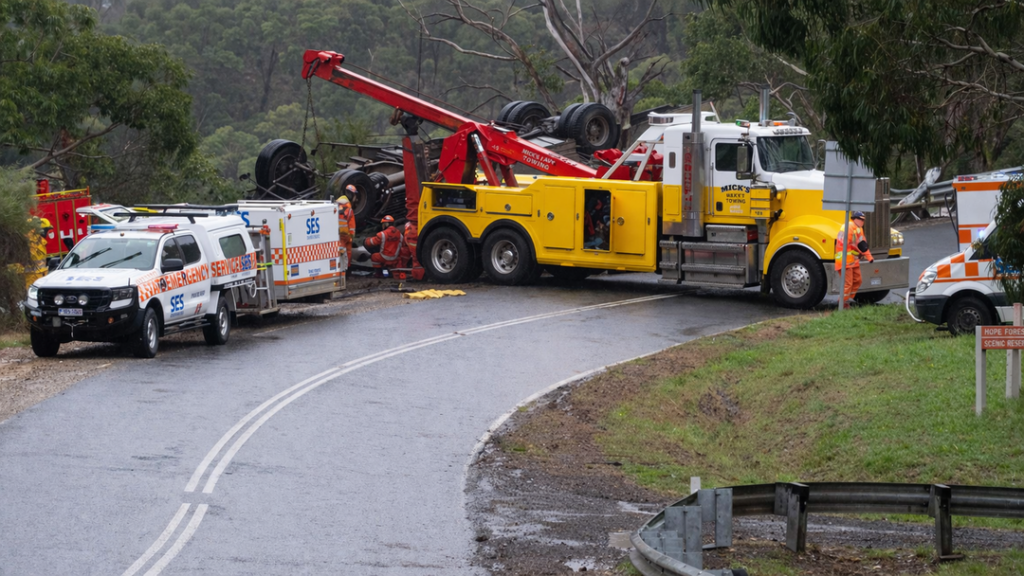
The fatal crash that triggered the dissolution of the partnership has cast a long shadow over what had been a respected collaboration. While details continue to emerge, the immediate impact is clear—both emotionally and operationally.
In a sport where risk is always present, incidents of this magnitude resonate deeply. They disrupt not only daily operations but also the long-term planning that defines successful training partnerships.
The decision to part ways reflects the seriousness of the situation, underscoring how external events can reshape even the most stable professional relationships.
The Broader Impact on Racing Operations
Beyond the individuals involved, the end of the Michelle Patrick Payne training partnership carries implications for owners, stable staff, and the wider racing community.
Training operations are complex systems, and any disruption can affect multiple layers—from horse conditioning to race scheduling. This kind of transition requires careful management to ensure continuity while adapting to new structures.
Navigating the Future After Separation
For Michelle and Patrick Payne, the path forward will involve both professional adjustment and personal reflection. Ending a partnership under such circumstances is never straightforward, particularly when it follows a traumatic event.
In racing, adaptability is essential. Trainers must recalibrate quickly, whether that involves restructuring operations, forming new partnerships, or pursuing independent paths.
What stands out is the resilience required to move forward in a sport that demands constant focus and commitment.
A Defining Moment for the Industry

This situation serves as a broader reflection point for the racing community. It highlights the interconnected nature of the sport, where individual decisions can have wide-reaching effects.
The end of the Michelle Patrick Payne training partnership is not just a singular event—it is part of an ongoing conversation about safety, sustainability, and the future direction of horse racing.
Safety and Risk in Modern Horse Racing
The incident also brings renewed attention to safety within the sport. Horse racing, while steeped in tradition, continues to evolve in response to concerns about risk and welfare.
Efforts to improve safety standards are ongoing, but events like this highlight the inherent challenges of managing a high-performance environment. The balance between competition and protection remains a central issue.
Based on global racing standards, governing bodies worldwide continue to refine regulations to enhance safety and accountability across the industry.
Moving Forward Amid Uncertainty
The conclusion of this partnership marks the end of an important chapter, shaped by both achievement and tragedy. It is a reminder that success in racing is not measured solely by results, but also by the ability to navigate challenges.
From my perspective, this moment underscores the importance of resilience—not just for those directly involved, but for the sport as a whole. As the industry continues to evolve, it must balance ambition with responsibility, ensuring that progress does not come at the expense of safety.
In the end, this story is about more than a partnership—it is about how racing responds when faced with its most difficult moments.