
Golden Tempo Shocks the Racing World With Belmont Stakes Victory
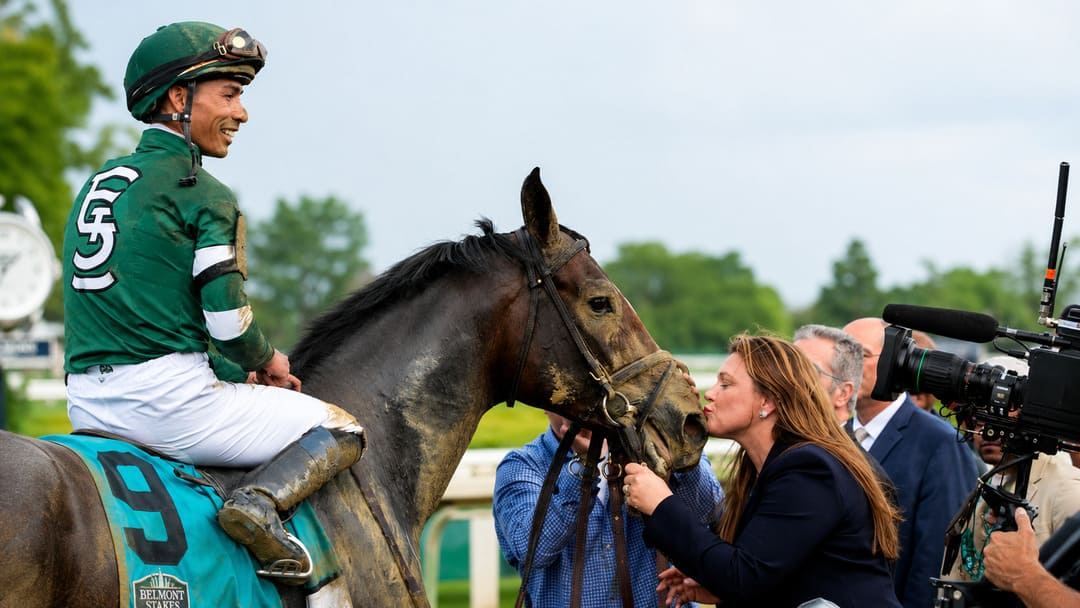
The Golden Tempo Belmont Stakes victory did more than add another trophy to a rising colt’s record. It forced horse racing to reassess whether his Kentucky Derby win was a perfect-trip upset or the beginning of a serious three-year-old championship campaign.
That distinction matters because Belmont winners are never judged in isolation. They are measured against distance, pressure, pace, surface, timing, and the decisions made by the people around them. Golden Tempo’s win at Saratoga gave the sport a result with immediate drama and longer-term implications, especially for readers who follow the balance between performance, training judgment, and horse welfare through the horse racing.
Golden Tempo Belmont Stakes Win Was More Than a Late Rally
Golden Tempo won the 158th Belmont Stakes at Saratoga Race Course, taking the Grade 1 race by 1 1/4 lengths after another closing move under jockey Jose Ortiz. The race was held at 1 1/4 miles for the third and final Saratoga edition before the Belmont Stakes returns to Belmont Park in 2027. The official Belmont Stakes recap placed the result in clear historical context: Golden Tempo was not merely repeating his Derby pattern; he was proving that pattern could travel.
The most important part of the performance was not just the final surge. It was the way the colt stayed connected to the race despite breaking from the outside post, settling near the back, and needing to build momentum without the same pace collapse that helped shape his Kentucky Derby victory.
That is where the result becomes more meaningful. A deep closer who wins once can be dismissed as fortunate. A deep closer who wins two classic races under different race dynamics becomes much harder to doubt.
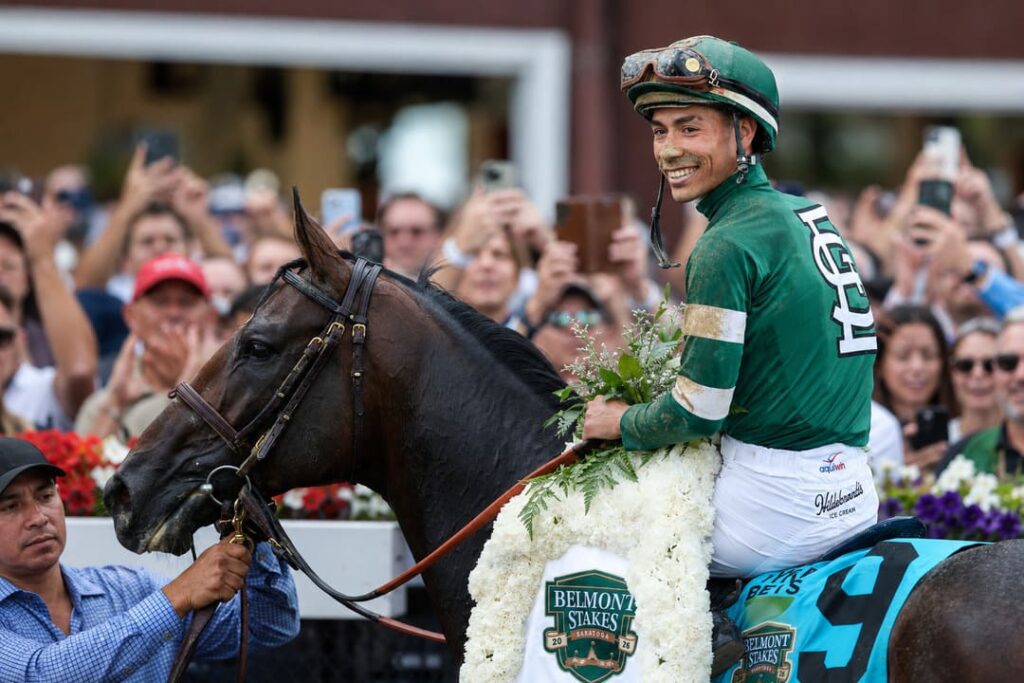
Saratoga Turned the Belmont Into a Different Test
The Belmont Stakes carries the nickname “Test of the Champion,” but the Saratoga version asked a different question than the traditional 1 1/2-mile race at Belmont Park. At 1 1/4 miles, this edition placed more emphasis on tactical timing, turn navigation, and acceleration through traffic.
That did not make it easy. It made it different.
Saratoga can be unforgiving to horses who leave themselves too much to do. Golden Tempo still had to pass serious rivals, including Commandment and Renegade, while handling a rain-affected afternoon and a race shape that did not hand him a perfect setup.
| Key Factor | Why It Mattered |
|---|---|
| Outside post | Golden Tempo had to avoid losing too much ground early |
| Moderate pace | His late kick had less help from tiring front-runners |
| Saratoga distance | The shorter Belmont format gave closers less room |
| Familiar rivals | Commandment and Renegade gave the result stronger form |
| Next target pressure | The Travers now becomes a natural measuring point |
The table shows why the win deserves more credit than a simple “closer got there” reaction. Golden Tempo had to solve several problems inside one race, and Ortiz had to keep enough composure to avoid moving too early.
Cherie DeVaux’s Judgment Is Now Part of the Story
Golden Tempo’s victory also deepened the spotlight on trainer Cherie DeVaux. She became the second woman to train a Belmont Stakes winner, following Jena Antonucci’s 2023 success with Arcangelo, and NYRA noted that DeVaux is now the only woman to train winners of multiple Triple Crown races.
That achievement matters beyond the record book. Racing often celebrates the horse first, then the jockey, then the trainer. In this case, the management of the campaign is central to the story.
Golden Tempo did not run in the Preakness. That decision removed any Triple Crown possibility, but it also protected the spacing between major efforts. After the Belmont, the choice looks less conservative and more strategic. The colt arrived with enough energy to finish, enough foundation to stay, and enough confidence to reproduce his best weapon.
The pressure point now is whether racing rewards patience as much as it rewards ambition. Golden Tempo’s campaign suggests that skipping a race can sometimes strengthen a season rather than diminish it.
The Rivalry With Renegade Still Has Life
Renegade entered the Belmont with reason to command attention. He had chased Golden Tempo home in the Kentucky Derby and remained a major measuring stick for the crop. Yet the Belmont result complicated that rivalry.
Golden Tempo beat him again, while Commandment finished second and Renegade third. That does not end the discussion, but it changes the burden of proof. Renegade now needs to show that his Derby near-miss was not his best shot at turning the tables.
The best rivalries in racing are rarely settled in one afternoon. They develop through form cycles, spacing, surfaces, and the way horses recover from difficult efforts. If these colts meet again, the question will not be whether Golden Tempo is legitimate. That question has been answered.
The next question is whether anyone in his division can make him uncomfortable before the final furlong.
A Belmont Result With Real Historical Weight
Golden Tempo now enters that conversation as a Derby-Belmont winner. NYRA reported that he became the 13th horse to win both the Kentucky Derby and Belmont Stakes, a distinction that separates him from horses who flash brilliance once and fade from the center of the sport.
That does not make him a Triple Crown winner. It does make him something increasingly valuable in modern racing: a horse whose campaign has produced multiple elite answers across different stages of the season.
The Travers Could Define the Next Chapter
The immediate signal to monitor is the Travers Stakes at Saratoga. DeVaux indicated that the Travers is a major goal for Golden Tempo, which would keep him in the same environment where he just strengthened his reputation.
That creates opportunity and risk. The opportunity is obvious: a Travers win would push Golden Tempo deeper into Horse of the Year and divisional championship conversations. The risk is that every major win raises expectations, and every next start becomes less about promise and more about confirmation.
For horse racing, that is where the story becomes especially useful. Fans love the spectacular finish, but campaigns are built in the quieter weeks between races. Soundness, recovery, appetite, energy, training rhythm, and mental sharpness will matter as much as speed figures or replay angles.
Golden Tempo has earned admiration, but the next phase will test management as much as talent. That is the part of racing that often gets less attention than the finish line, even though it usually determines how long brilliance lasts.
The Golden Tempo Belmont Stakes victory changed the shape of the 2026 three-year-old season because it made his excellence harder to dismiss. He is no longer just the Derby winner who got the right trip; he is the colt who came back, handled another classic-stage test, and left the division chasing him into summer.