
Aqueduct’s Last Day Shows What Racing Loses When City Tracks Vanish
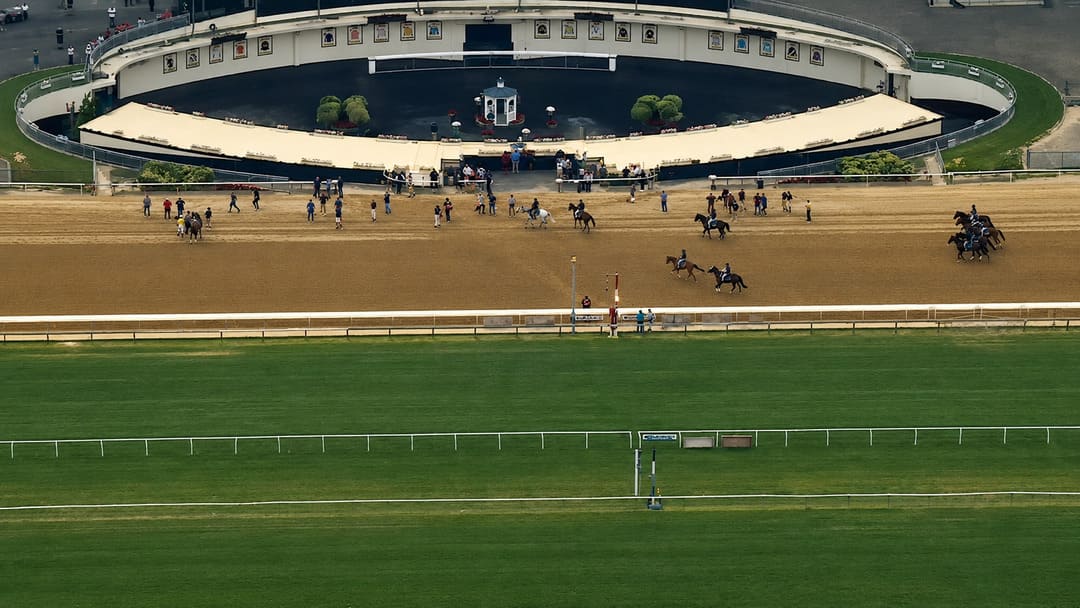
The Aqueduct Racetrack closing is more than the end of live racing at a famous New York track. It is the disappearance of a city racing space where bettors, horsemen, trainers, grooms, neighborhood regulars and casual fans shared a culture that newer, consolidated racing models may struggle to replace.
Aqueduct’s final day of live racing on Sunday, June 28, 2026 closed a 132-year chapter in Queens, leaving New York City without a thoroughbred racetrack as downstate racing moves toward the redeveloped Belmont Park. That loss carries the kind of historical weight often found in racing legacy stories, where the importance of a horse, a place or a racing era becomes clearer only when it is nearly gone.
Aqueduct Racetrack Closing Is Not Just Nostalgia
Nostalgia is the easiest way to talk about Aqueduct. The old grandstand, the winter racing, the subway access, the hardened regulars and the Big A nickname all invite memory. But treating the closure only as a sentimental farewell misses the more important point.
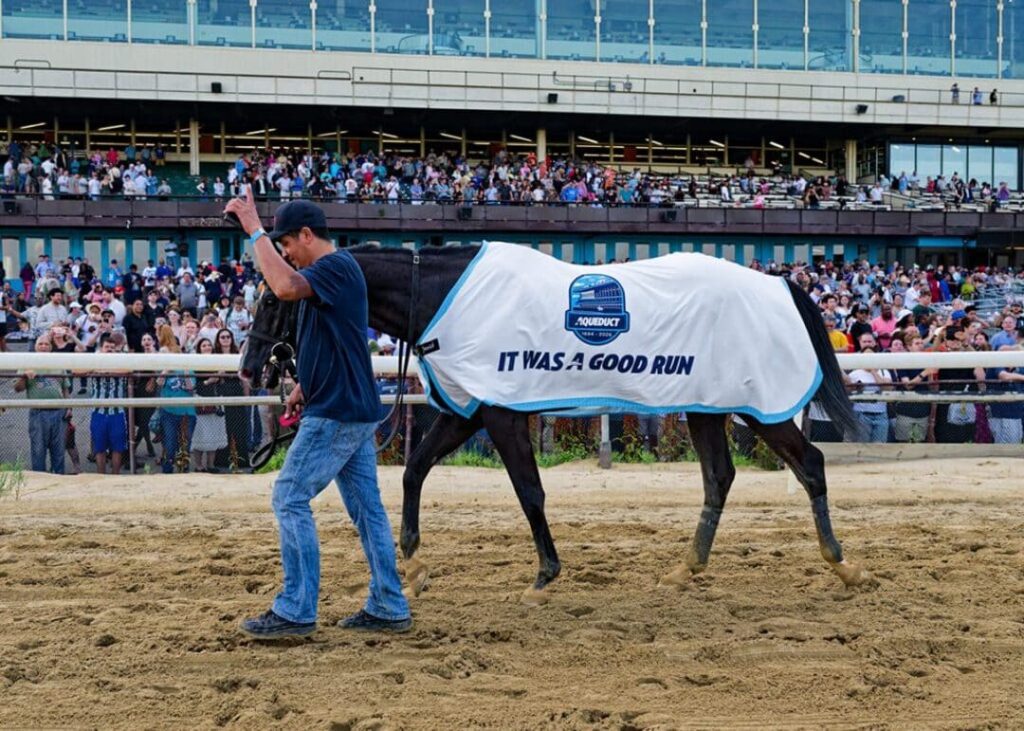
Aqueduct was not simply old. It was urban, accessible and woven into the daily life of New York racing. Its final weekend honored more than a facility. The New York Racing Association’s farewell weekend details noted that live racing had concluded after more than 132 years and that the final race was named “It Was a Good Run.”
That title worked because Aqueduct’s story was never polished in the Saratoga sense or grand in the Belmont sense. It was more practical than that. It was a place where racing lived close to ordinary city life.
That accessibility mattered because racing needs more than marquee events to stay connected to the public.
The City Track Played A Different Role
Urban racetracks carry a different cultural weight from destination venues. They do not rely only on vacation crowds, luxury hospitality or festival branding. They survive by being part of the city’s rhythm.
Aqueduct did that for generations. It was reachable in a way many American racetracks are not. It sat in Queens, close to public transportation, neighborhoods, airport traffic and working-class New York. That gave it a democratic feel, even when the sport around it was changing.
That matters because racing has a visibility problem. When tracks disappear from cities, the sport becomes easier for the broader public to ignore. It becomes something watched on television, streamed on wagering apps or visited occasionally at bigger destination tracks.
A city racetrack gives the sport a physical presence. It lets people pass it, hear about it, wander in, return, argue, learn and belong.
Aqueduct’s closure removes one of those entry points.
What Gets Lost When Racing Leaves The Neighborhood
Aqueduct’s disappearance changes several layers of the sport at once. The most obvious loss is live racing in New York City, but the deeper losses are social and cultural.
| What Aqueduct Represented | Why It Mattered | What The Closure Changes |
|---|---|---|
| City access | Racing was reachable for everyday New Yorkers | The sport becomes less physically present in NYC |
| Working-class track culture | Regulars gave the place texture and continuity | Racing loses a familiar community space |
| Winter racing identity | Aqueduct carried a distinct seasonal role | Downstate racing becomes more centralized |
| Local horsemen presence | The track supported daily racing routines | Belmont becomes the primary focal point |
| Historical continuity | The Big A linked eras of New York racing | Memory replaces live participation |
The table shows why the closure cannot be reduced to real estate. A racetrack is a workplace, a gambling room, a stable community, a classroom for new horseplayers and a gathering place for people who may not fit neatly into a luxury hospitality model.
When those spaces disappear, the sport loses more than dates on a calendar.
The Final Weekend Revealed The Track’s Real Value
Farewell events often risk feeling manufactured. Aqueduct’s final weekend carried more weight because the affection for the place was not invented for marketing. It had been built over decades of winter cards, long losing tickets, big performances, quiet mornings and neighborhood familiarity.
The final race name, “It Was a Good Run,” captured that mood. It was plain, not grandiose. That fit the track.
Aqueduct was never racing’s most glamorous address, but glamour was not its value. Its value was endurance. It kept showing up, season after season, while the sport around it became more dependent on major events, simulcasting, account wagering and destination branding.
The Big A endured because it belonged to people who understood racing as habit, not spectacle.
That is the kind of attachment a new building cannot automatically reproduce.
Belmont Consolidation Solves One Problem And Creates Another
The logic behind consolidation is not difficult to understand. New York racing is moving toward a rebuilt Belmont Park, with the goal of concentrating downstate operations into a modern facility capable of carrying the sport forward.
That may prove operationally sensible. The redeveloped Belmont is expected to become the central home of downstate racing, and the state’s Aqueduct redevelopment plan says racing at the Queens site will move to Belmont, opening roughly 100 acres for future uses such as housing, commercial retail, community facilities and open space.
That is a major land-use opportunity. It also reflects the hard reality that racetrack land in a city is no longer judged only by racing history. It is judged by housing needs, economics, political priorities and redevelopment pressure.
Still, the tradeoff should be named honestly. Belmont may offer a more modern racing platform, but Aqueduct offered proximity to a different public. Consolidation can strengthen operations while weakening local texture.
Efficiency is not identity. Racing must be careful not to confuse the two.
The Next Test Is Whether Racing Can Replace Access
The most important question after the Aqueduct Racetrack closing is not whether Belmont can be successful. It likely can. The sharper question is whether New York racing can replace what Aqueduct gave the sport in terms of access, atmosphere and everyday participation.
A modern Belmont may offer better facilities, upgraded amenities and a stronger long-term business platform. But racing must still ask who feels welcome, who can get there, who can afford the day, and whether the sport remains visible beyond its most committed audience.
If the future is only cleaner, newer and more centralized, something has been gained and something has been lost.
Aqueduct’s closing should push racing to think beyond consolidation. The sport needs efficient venues, but it also needs public spaces where racing feels lived-in rather than staged. It needs places where a new fan can become a regular and a regular can feel that the track still belongs partly to them.
The Aqueduct Racetrack closing matters now because it marks a physical shrinking of racing’s urban footprint. The opportunity is for Belmont to carry the sport forward without erasing the lesson Aqueduct leaves behind: racing survives through horses and history, but it also survives through access, habit, neighborhood memory and the people who keep coming back.