
Beverley’s Track Failure Shows Racing Safety Cannot Rely on a Quick Fix
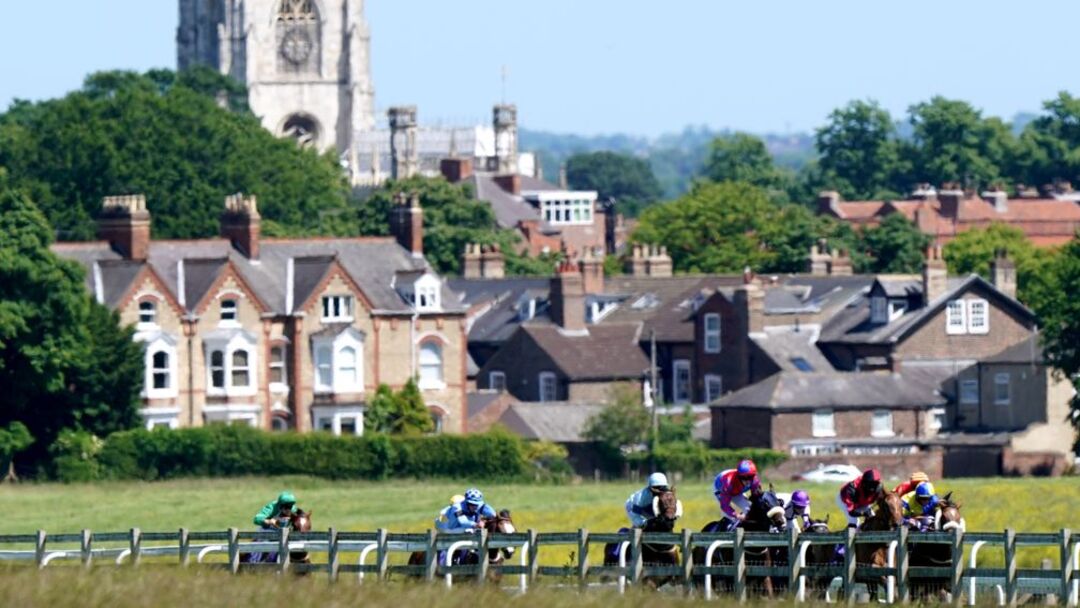
The Beverley racecourse abandonment was not caused by the dramatic underground collapse first suggested by early descriptions. It came after shallow-rooted turf rolled back beneath horses leaving the seven-furlong stalls, exposing an unstable section that riders and officials decided was unsafe.
Stopping after three races was the correct decision. The harder question is why the weakness became obvious only after racing had started and what Beverley must prove before horses return on July 28. That question belongs within racing’s wider horse welfare responsibility, because a safe surface is the first protection every horse and jockey should receive.
Beverley Racecourse Abandonment Exposed A Localised Failure
Monday’s six-race evening fixture ended halfway through after starters raised concerns following Race 3. An inspection involving jockeys, trainers, the clerk of the course and veterinary officials identified unsuitable ground beneath the stalls and on the racing line, leaving the stewards with little credible alternative to abandonment.
Beverley later clarified that the problem was not a deep hole or failed drain. The upper layer of turf had shallow roots and rolled back when horses accelerated from the stalls. Clerk of the course John Morley described the affected depth as roughly two or three inches, while officials said the issue appeared confined to the seven-furlong starting area.
That distinction matters, but it does not make the incident trivial. A localised defect can still create a serious risk when horses are accelerating in close formation. Small areas can carry large consequences when they sit beneath a starting gate.
The Tree Explanation Answers Only Part Of The Question
Racecourse officials believe a tree beside the seven-furlong start competed with the turf for water during drought conditions. Its roots were more effective at drawing moisture, leaving stressed grass in a high-traffic location despite irrigation.
The explanation is plausible and unusually specific. Beverley’s surface repair update says the track had also consulted an agronomist who visited the course the previous week. Chief executive Sally Iggulden added that a radar or sonar survey conducted 14 months earlier had given officials confidence that drainage or underground voids were not responsible.
Those checks make the case more instructive, not less. They suggest that inspections designed to understand the subsoil and general turf condition may still miss a narrow area whose root strength deteriorates under changing weather and concentrated use.
Inspection must follow the risk, not merely a fixed calendar.

Emergency Repairs Cannot Replace Preventive Monitoring
The planned work is direct. Beverley intends to remove the affected ground to a depth of six inches, replace it with fibresand and move the seven-furlong stalls approximately 20 yards forward. Officials expect the adjustment to shorten races at that start by about 13 yards.
The racecourse hopes to complete the work before its next meeting on Tuesday, July 28. The detailed remedial plan and inspection involved a British Horseracing Authority course inspector, and the remaining areas of the track were checked after the incident.
That is a sensible response. It should not become the final measure of success.
A repaired section may be stable next week, yet the industry lesson concerns earlier detection. Tree competition, drought stress, repeated watering and stall traffic are not invisible forces. Track teams need monitoring that can identify weakening root structure before race-day acceleration tears the surface open.
The Safety Decision Protected More Than The Schedule
Abandonment creates real costs. Three races were lost, horses did not receive their intended runs, jockeys and owners had travelled, and bettors were left with a shortened card. Beverley said affected owners and jockeys would be compensated, while racegoers were offered admission to the September 22 season finale.
Those disruptions explain why stopping a meeting is never casual. They do not justify gambling with an unstable racing line.
The horses leaving the stalls had already demonstrated how the surface could move under force. Continuing would have asked later runners and riders to cross an area that experienced professionals had inspected and rejected.
Abandonment was the responsible outcome. Public confidence would have suffered far more if commercial or scheduling pressure had outweighed the warning.
The Next Inspection Needs Clear Evidence
Before racing resumes, the most important signals are practical rather than promotional.
| Decision Factor | Evidence Needed Before Racing Returns | Why It Matters |
|---|---|---|
| Surface stability | Repaired section remains firm under testing | Prevents turf from rolling under acceleration |
| Root and moisture condition | Adjacent areas show consistent resilience | Confirms the weakness is genuinely localised |
| Stall relocation | New position avoids the stressed section | Removes immediate pressure from the repair |
| Full-course review | No similar shallow-rooted areas are found | Reduces the chance of another surprise |
| Independent approval | Course inspector accepts the completed work | Adds external scrutiny before reopening |
| Clear communication | Distance and surface changes are announced early | Protects horsemen, jockeys and bettors |
The British Horseracing Authority explains that watering is intended to maintain turf moisture, resilience and a consistent surface for horse welfare. Beverley’s problem shows why racing-surface resilience must be assessed locally: one irrigation plan can produce different outcomes where trees, roots and traffic alter how water reaches the grass.
Racing Must Learn Before The Next Weak Spot Appears
Beverley is not the only British course to face surface disruption in 2026. Cheltenham required work after drainage problems, while Haydock’s racing programme was interrupted after a separate hole was linked to historic mining conditions. The causes differ, so combining them into one technical failure would be misleading.
The shared issue is operational confidence. Racecourses are complex outdoor venues exposed to drought, rainfall, ageing infrastructure, roots, drainage systems and repeated high-speed use. A safe surface cannot be assumed because the previous inspection found nothing alarming.
Beverley now has an opportunity to respond well: complete the repair, allow independent inspection, publish any distance change and reopen only when the evidence supports it. Speed is not the success measure.
The Beverley racecourse abandonment should ultimately be judged by what changes before the next meeting, not how quickly the lost races disappear from the schedule. Racing protects trust when it stops at the first credible warning. It strengthens that trust when it can show how the warning will be detected earlier next time.