
Nysos’s Retirement Shows Racing’s Hardest Decision Can Come Before Injury
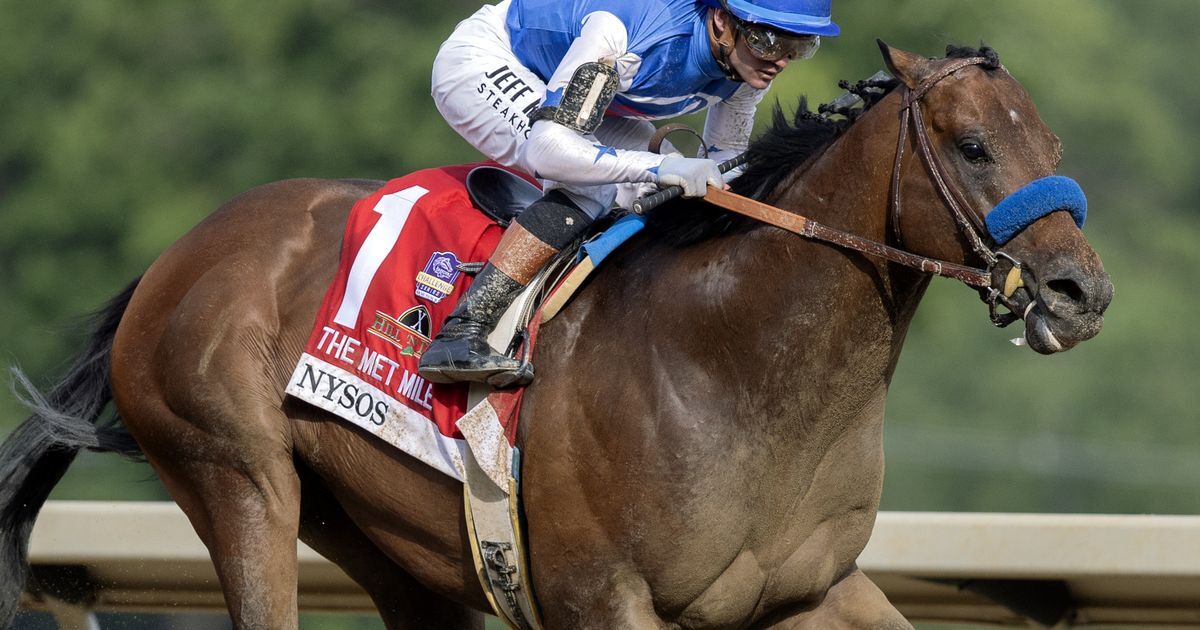
The Nysos horse retirement forces racing to confront an uncomfortable question because there was no visible catastrophe. Nysos left competition sound, fresh from the most commanding performance of his career, after routine imaging revealed subtle changes his connections were unwilling to ignore.
The decision represents prevention before breakdown, a principle central to serious horse welfare advocacy. It also moved an elite stallion prospect from a planned Breeders’ Cup campaign into the breeding shed earlier than expected, showing how welfare judgment and commercial value can point toward the same exit.
Nysos Horse Retirement Came Before a Visible Crisis
Coolmore’s official retirement announcement said a routine diagnostic evaluation revealed subtle imaging changes. It also stated that Nysos was sound and uninjured when trainer Bob Baffert, Baoma Corporation, and the Coolmore partners unanimously chose retirement.
No affected structure or diagnosis was publicly identified. That limits outside analysis, but it also prevents the story from being distorted into a claim that Nysos was actively injured. The available facts describe a precautionary decision based on information detected before an obvious clinical failure.
The five-year-old retires with eight victories and two seconds from 10 starts, more than $5 million in earnings, and Grade 1 wins in the 2025 Breeders’ Cup Dirt Mile and 2026 Metropolitan Handicap. Connections did not stop a horse whose form was fading. They stopped with another major campaign still available.
Diagnostic Imaging Changed the Meaning of Sound
Racing often uses “sound” as if it were a complete medical conclusion. A horse may move comfortably, train effectively, and show no obvious lameness while imaging identifies changes that require time, reduced workload, rehabilitation, or closer monitoring.
That distinction matters because sound is not risk-free. The value of routine imaging is not that every abnormality predicts catastrophe; it is that veterinarians and connections can make better decisions before repeated high-speed exercise adds more stress.
HISA has backed expanded diagnostic-imaging access as an injury-prevention tool. Nysos’s case shows what that principle looks like at the highest commercial level: information was found, the training timeline was reconsidered, and the horse was removed from competition.
The harder question is whether a less valuable horse would receive the same scanning, patience, and willingness to stop.
The Met Mile Made Another Campaign Tempting
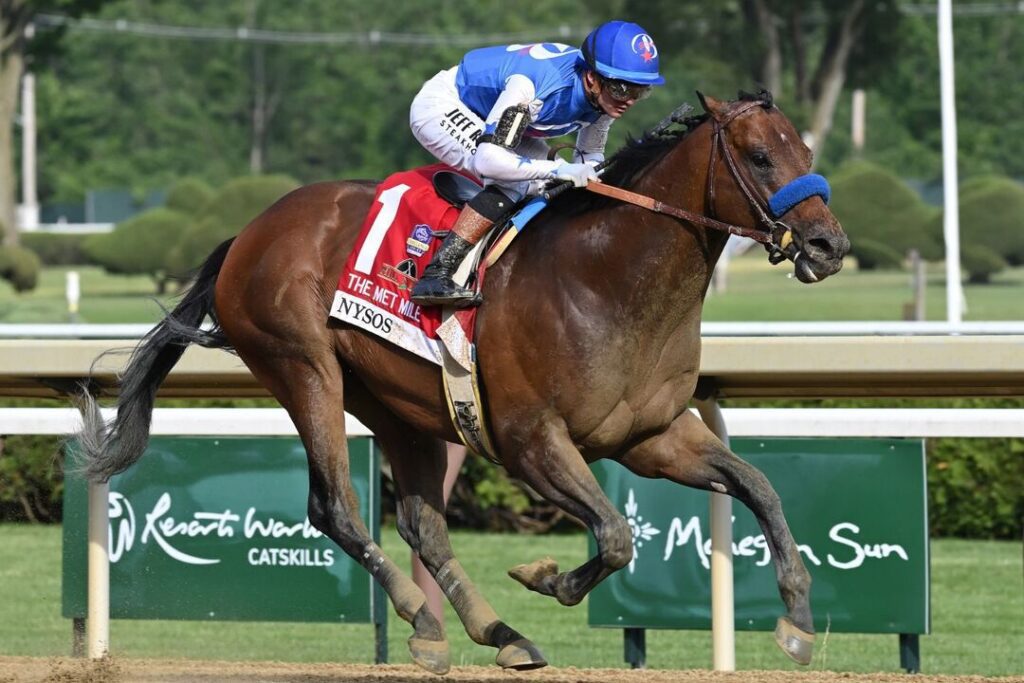
Nysos’s final start gave his connections every sporting reason to continue. In the June 6 Met Mile at Saratoga, he defeated Knightsbridge by four lengths in 1:34.85, finishing 0.13 seconds outside the track record.
The final Met Mile performance showed speed, composure, and authority against major older dirt horses. It also secured a Breeders’ Cup Dirt Mile berth, although the more ambitious plan was to pursue the Breeders’ Cup Classic.
The Pacific Classic on August 22 had been identified as a possible bridge to that target. Walking away supports the welfare argument. Connections were surrendering a major-race path because the preparation required no longer fit the medical information available.
Breeding Value Changed the Risk Calculation
The economic side cannot be dismissed. Coolmore had already purchased an interest in Nysos, and Ashford Stud had been announced as his eventual destination. His Met Mile victory carried stallion-making value, while his pedigree added another commercial advantage.
Nysos is by Kentucky Derby winner Nyquist and out of Zetta Z, a broodmare purchased for $2 million. He combines elite speed, Grade 1 dirt form, and a bloodline breeders already understand.
Retirement therefore did not create the same financial uncertainty it would for a gelding or a modestly bred horse without breeding value. It transferred Nysos into another valuable career.
Economic incentives matter, even when the welfare choice is correct. Preserving substantial stallion value makes precaution easier. Racing should praise the decision without pretending every owner faces an equivalent calculation.
The real welfare standard is whether prevention remains the priority when retirement produces cost rather than revenue.
Key Takeaways From the Nysos Decision
The sporting, medical, and commercial signals need to be read together.
| Key Signal | Welfare Meaning | Economic Meaning |
|---|---|---|
| Imaging found subtle changes | Risk was identified before visible injury | Future racing value became less certain |
| Nysos remained sound | Retirement was preventive | Stallion value could be preserved |
| Breeders’ Cup plans ended | Health outranked the calendar | Major purse opportunities were surrendered |
| Ashford was already secured | A long-term destination was clear | A valuable second career was available |
| No diagnosis was disclosed | Public interpretation must remain cautious | Veterinary information stayed private |
| Stud fee is unannounced | Breeding plans are still developing | Market value will be tested in 2027 |
The same facts can demonstrate responsible horsemanship and favorable economics without one explanation cancelling the other.
Racing Must Make Precaution Available Beyond Elite Horses
The next pressure point is access. Advanced imaging, specialist interpretation, rehabilitation time, and retirement options are unevenly distributed across racing.
A stallion prospect can be scanned routinely and removed from training without losing all future economic value. Horses in claiming races or lower-value programs may remain dependent on visible lameness, regulatory intervention, or an owner’s ability to absorb the cost of stopping.
Racing needs stronger access to preventive diagnostics, shared medical data, realistic rehabilitation funding, and credible aftercare routes for horses whose safest decision is not commercially convenient.
Transparency is the missing piece, although veterinary privacy imposes legitimate limits. The industry does not need every scan published. It does need enough explanation to show how precautionary decisions are made and how similar warning signs are handled across different levels.
The Nysos horse retirement should not be framed as proof that breeding economics defeated sport, nor as a welfare victory beyond criticism. It was a responsible decision made easier by a valuable second career. Its larger significance will depend on whether racing can extend the same early caution to horses whose retirement offers no financial upside.