
Todd Pletcher Reaches 6,000 Wins—But the Number Only Tells Part of the Story
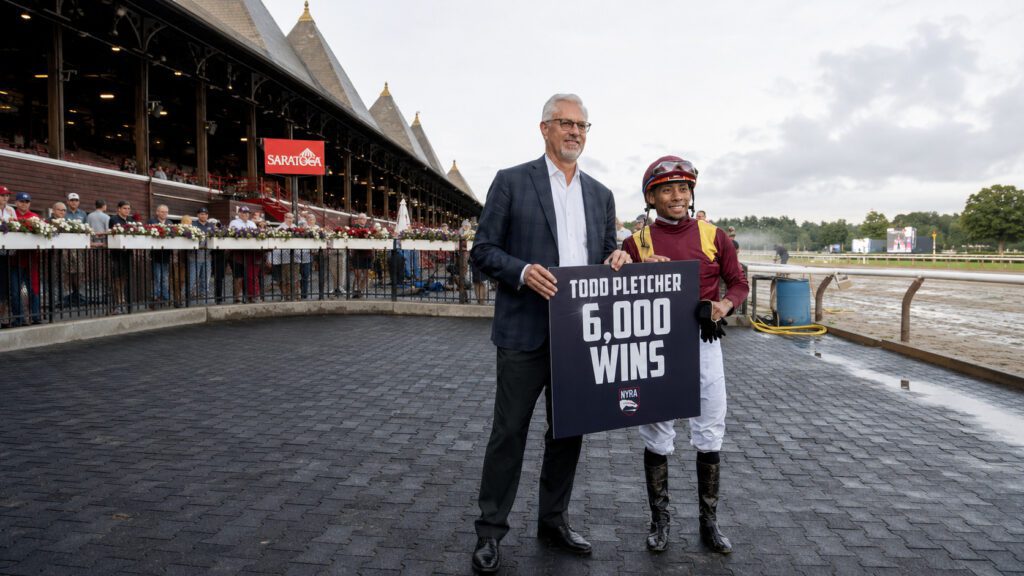
Todd Pletcher’s 6,000th North American victory arrived in Saratoga’s final race on August 8, but the Todd Pletcher 6000 wins milestone is more useful as a window into how a major racing stable actually functions. Versailles Road supplied the historic result under Manny Franco, yet that one result represented three decades of staffing, placement, observation and daily decisions.
Saratoga was a fitting setting. Pletcher’s barn had already produced another important result there when Renegade won the Jim Dandy a week earlier. That recent Jim Dandy analysis illustrates the larger point: elite training is often less about one spectacular workout than deciding when and where a horse should be asked to perform.
The Milestone Looks Different When You Count the Decisions Behind It
Six thousand victories can look like a simple measure of dominance, but the number becomes more revealing when viewed as the accumulation of thousands of smaller decisions. Every win required a horse to be prepared, entered, shipped when necessary, paired with a rider and placed in a race where its condition and ability gave it a realistic chance to succeed.
That process becomes considerably harder when a trainer is managing horses at multiple tracks and at very different stages of their careers. A promising two-year-old may need patience and education, while an experienced stakes horse may be working toward a carefully timed championship target. Maintaining standards across those situations is a management challenge as much as a training one.
Pletcher’s longevity also matters. Racing changes constantly through new owners, staff, veterinary practices, regulations, surfaces and competition. Remaining successful across three decades requires an operation that can adapt without losing the routines and judgment that produced results in the first place.
Seen that way, the 6,000th win is less a finish line than evidence of sustained organizational discipline. The statistic belongs to Pletcher, but understanding how it was produced means looking beyond the trainer’s name and into the network of people making the stable function every day.
Todd Pletcher 6000 wins Reflect a System, Not a Single Barn
Pletcher became the seventh trainer in North American racing history to reach 6,000 victories. The 6,000-win milestone details show that Versailles Road defeated older horses in an 11-furlong inner-turf optional claimer, an ordinary race compared with the Kentucky Derbies, Belmont Stakes and Breeders’ Cup events attached to Pletcher’s résumé.
That contrast is revealing. A career total this large is built as much from maiden and allowance races as from Grade 1 afternoons. The glamorous victories make the highlight reel; everyday races show whether a stable can keep finding suitable opportunities for different horses.
Pletcher’s operation lists Tristan Barry, Stu Hampson and Anthony Sciametta among its assistant trainers. Around them is a wider structure of grooms, exercise riders, veterinarians, farriers and staff. The trainer makes the final calls, but the information behind those calls comes from many people.
That is the first lesson of 6,000 wins: scale depends on communication.
The Most Valuable Information Often Arrives Before Race Day
A large stable cannot rely on the trainer personally noticing every small change first. Grooms know normal appetite and behavior. Exercise riders feel how a horse is traveling. Assistants watch patterns across training days and help keep programs consistent.
Veterinary and farrier input adds another layer. A horse that appears slightly different after training may need examination, altered shoeing, reduced workload or simply another day before the next serious move. Those decisions influence whether a horse reaches the right race in the right condition.
The best large operations therefore behave like information networks around horses. Observations move upward, decisions move back through the team, and the horse’s response becomes the next piece of evidence.
Race Placement Turns Management Into Results
The condition book creates opportunities, but trainers still have to decide which one fits each horse. Surface, distance, class, spacing, field strength and long-term objectives all matter.
A three-year-old being prepared for the Travers has a different problem from an older allowance horse trying turf. One may need a demanding prep; another may need easier company or more recovery time.
Pletcher’s Hall of Fame career record lists more than $526 million in earnings and 211 Grade 1 victories through early August 2026. Those numbers show elite-level success, but the underlying skill is repeatedly placing horses where ability and preparation can intersect.
This is where race selection becomes horsemanship. Enter too aggressively and a developing horse can be overmatched. Stay too conservative and opportunities disappear.
The machinery behind that judgment can be summarized simply:
| Stable function | Daily question | Why it affects results |
|---|---|---|
| Assistants | Is the training plan being executed consistently? | Keeps programs aligned |
| Grooms and exercise riders | Is the horse behaving and moving normally? | Supplies early warning signals |
| Veterinary and farrier team | Is the horse ready for the workload? | Shapes training and recovery |
| Race placement | Is this the right class, surface and timing? | Matches preparation to opportunity |
| Owner communication | Does the plan balance ambition and patience? | Supports long-term decisions |
| Stable leadership | Are standards holding across the operation? | Makes performance repeatable |
No row produces victories by itself. The advantage comes from connecting them.
Owners Are Part of the Performance Equation
Large-scale training also means managing owners with different objectives. One may be targeting a Grade 1, another protecting future breeding value, and another trying to find the correct level for a horse that has stopped progressing.
A trainer sometimes has to recommend the less exciting option. That can mean skipping a race, changing surfaces or giving a horse more time.
Pletcher’s longevity with major owners matters because trust creates decision room. When owners believe the barn’s assessment, a horse is more likely to receive a plan based on its condition rather than the pressure of a calendar date.
The Next Benchmark Is Whether Scale Preserves Horsemanship
Pletcher’s first winner came at Gulfstream Park in January 1996 with Majestic Number. Thirty years later, the challenge is maintaining standards as the operation moves through new horses, staff, owners and regulatory expectations.
Six thousand victories can make success look automatic when the opposite is true. Every new crop resets the problem. Young horses still have to develop, physical issues still require judgment, and accomplished runners can still be entered in the wrong race.
The pressure point is consistency without complacency. Large barns gain resources and depth, but size also creates more opportunities for communication failures and small details to be missed.
Six Thousand Wins Are the Output, Not the Whole Story
The Todd Pletcher 6000 wins milestone deserves its place in racing history, especially because it arrived at Saratoga, where Pletcher has won or shared a record 15 training titles through 2025. But the number is best understood as an output rather than a complete explanation.
Behind it are assistants carrying plans from one morning to the next, riders and grooms noticing changes, owners accepting difficult recommendations, veterinary and farrier teams influencing workload, and countless race-placement decisions that never become headlines.
Racing often celebrates the person whose name appears beside the horse. Six thousand wins are a reminder that sustained excellence is usually built by a much larger group—and that the quality of the operation matters most when nobody is counting.
Frequently asked questions
When did Todd Pletcher reach 6,000 career wins?
Todd Pletcher recorded his 6,000th North American training victory on August 8, 2026, at Saratoga Race Course when Versailles Road won the final race of the Whitney Day card under Manny Franco.
How many trainers have reached 6,000 North American wins?
Pletcher became the seventh trainer in North American racing history to reach 6,000 victories, joining a select group that includes Steve Asmussen, Dale Baird, Jerry Hollendorfer and other longtime winners.
Who works behind Todd Pletcher’s training operation?
Pletcher’s operation relies on assistant trainers, exercise riders, grooms, veterinarians, farriers and other staff. Their daily observations help shape training schedules, horse health decisions, race placement and preparation.
Why is race placement important to Todd Pletcher’s success?
Race placement requires matching a horse’s fitness, class, distance preference, surface and developmental stage with an appropriate opportunity. Getting those decisions right repeatedly is a major part of maintaining a successful stable.
How significant is Todd Pletcher’s 6,000-win milestone?
The milestone places Pletcher among North America’s most accomplished trainers. More importantly, it reflects roughly three decades of sustained performance across thousands of horses, races, owners and changing generations of stable personnel.