
Yonkers Doping Investigations changed more than the penalty record around New York harness racing. Their larger sporting effect has been felt in the way trainers prepare standardbreds for races, particularly at Yonkers Raceway, where pre-race routines must now account for tighter oversight, narrower medication windows, and the possibility of testing away from the racetrack.
The impact is not limited to one stable or one season. The research record for this article includes past Yonkers-related episodes such as the December 9, 1997 barn sweep, the December 2019 IOX-2 positives that later produced a 20-year suspension for trainer Michael Temming in September 2020, and broader drug-ring evidence involving participants connected to New York racing. Those cases differ in facts and legal posture, but they point toward the same practical lesson: preparation is now judged not only by fitness, gait efficiency, and race placement, but also by whether the stable can document a compliant path from training mile to post time.
To explore a different perspective on racing industry issues from a site within the same network, Racebook Review serves as a relevant point of reference. This analysis stays on the sporting side: how regulation and investigations have affected training practices, prep-race planning, and race-day readiness.
Yonkers Doping Investigations And Prep-Race Discipline
Yonkers Doping Investigations Shift The Daily Log
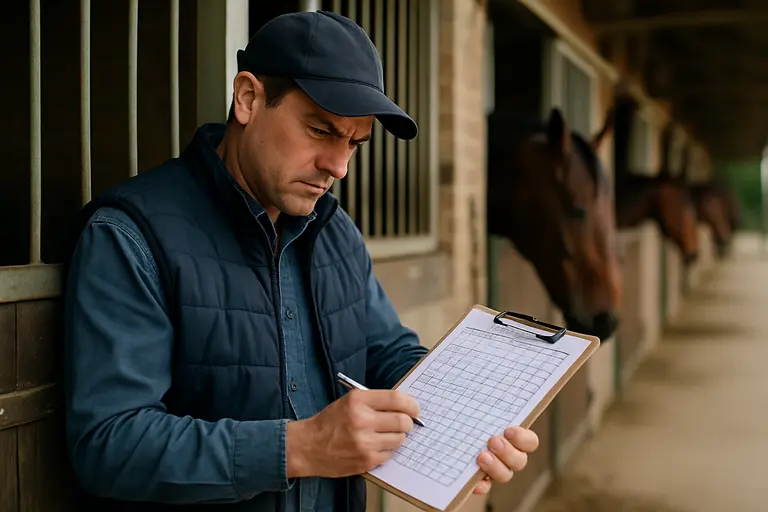
Harness trainers have always managed repetition: jog days, training trips, recovery days, veterinary checks, shoeing, and equipment adjustments. What has changed is the evidentiary value of those decisions. A training log is no longer just an internal tool for judging whether a horse is tightening up before a start. It can become part of the stable’s protection if a medication question arises.
Through that lens, Yonkers Doping Investigations have pushed professional barns toward more formal records. A trainer preparing a standardbred for a Yonkers race must know who handled the horse, what treatment was given, when it was given, and whether the horse remained within the rules during the final days before competition. That is not a paperwork exercise detached from sport. It affects how hard a horse can be trained, whether a minor soreness issue leads to conservative management, and whether a prep race remains a sound target.
Why Standardbred Prep Work Is Exposed
Standardbred racing creates a distinctive preparation pattern. Horses often race more frequently than elite thoroughbreds, and many remain in active racing cycles rather than building toward a single peak. That rhythm increases the value of small adjustments, but it also reduces the margin for unclear medication timing. A horse that needs repeated therapeutic support may be difficult to place responsibly if testing rules are narrow and the stable cannot show a clean sequence of care.
At Yonkers Raceway, the half-mile track places its own athletic demands on a horse. Position, gate speed, cornering, and the ability to sustain pace through tight turns matter. A trainer may want a sharp prep to secure early position in a later target, yet aggressive training can reveal soreness that demands caution. Under closer scrutiny, the responsible choice may be to miss a start, alter the work pattern, or seek a clearer veterinary assessment rather than rely on treatment too close to race time.
Race-Day Testing Changed The Preparation Timeline
TCO₂ Screening Makes Timing Part Of Training
New York’s standardbred rules now make race-day chemistry part of the preparation timeline. By June 2026, Racing, Pari-Mutuel Wagering and Breeding Law Section 902-A mandated on-track pre-race testing for excess total carbon dioxide, known as TCO₂, in standardbred horses. The statute requires samples from at least three horses in any race or 50 percent of the field, whichever is higher, and excess TCO₂ triggers scratching of the horse, according to PML Section 902-A.
That rule matters before race day. Trainers cannot treat TCO₂ compliance as a final-hour concern because the consequence is immediate sporting exclusion rather than a delayed administrative question. A prep program now has to consider feeding routine, supplementation decisions, veterinary communication, and stall management in the days leading into a race. The purpose from a sporting standpoint is straightforward: the horse that lines up behind the gate should be competing on conditioning, gait, stamina, and handling rather than an artificial blood-chemistry edge.
Scratches Create Sporting Consequences
A scratch for excess TCO₂ does more than remove one horse from a field. It can alter the race shape, change which horses control the first turn, and disrupt a carefully planned development cycle. For a horse using a Yonkers start as a prep, missing the race may mean losing a needed tightener before a more demanding assignment. For the rest of the field, the absence of a pace factor can change how drivers approach the opening quarter.
That is why the best training response is preventive rather than reactive. Stables that treat testing as a normal part of race preparation are better positioned to keep horses on schedule. Stables that treat compliance as separate from conditioning risk losing the sporting benefit of their work.
Medication Rules Now Shape Stable Decisions
The Pletcher Decision Reached Beyond Thoroughbreds
The clearest recent court example in New York involved thoroughbred trainer Todd A. Pletcher rather than a Yonkers harness horse, but its lesson reached across disciplines. On May 7, 2026, the court upheld a 10-day suspension and $1,000 fine after Forte tested positive for Meloxicam following the 11th race at Saratoga on September 5, 2022. The same decision described the 2020 change to NYCRR 4043.2(d), which limited the permitted NSAIDs in the seven days before a race to three FDA-approved agents and removed Meloxicam from that window, as shown in Matter of Pletcher.
The sporting message is that regulatory agencies have moved toward reducing medication use close to race time. For trainers, that changes the evaluation of a prep race. If a horse needs a prohibited or poorly timed anti-inflammatory approach to make a start, the race may no longer be a suitable prep. That shifts the professional standard from asking whether a horse can compete to asking whether it can compete while meeting both soundness and compliance expectations.
Records Became A Training Tool
In harness racing, the trainer responsibility principle has long placed heavy accountability on the person listed as trainer. The research record includes the 2007 Dennis Laterza matter involving rhEPO/DPO in a horse named Lemon Pepper after a Yonkers race on April 27, 2007. The practical effect is familiar to trainers: delegation does not remove responsibility. A veterinarian, assistant, groom, or outside professional may perform a task, but the trainer’s license is still exposed if the horse returns a positive test and the trainer cannot produce substantial contrary evidence.
That reality has changed how serious barns use records. Treatment charts, supplement inventories, staff instructions, stall-access controls, and pre-race checklists have become part of horsemanship. They help protect the horse’s race schedule, but they also support better decisions. If a record shows a pattern of soreness, delayed recovery, or repeated need for therapy, the correct sporting response may be to back off rather than press on toward a prep start.
What Yonkers Training Practices Now Emphasize
Cleaner Preparation Is A Performance Question
Yonkers Doping Investigations have therefore changed the definition of a well-prepared harness horse. Fitness remains central, but a modern Yonkers prep must also be clean, explainable, and repeatable. The trainer who brings a horse to the paddock with a strong mile in hand but poor documentation has not completed the job. The horse’s condition and the stable’s compliance file now move together.
- Clearer medication calendars that work backward from race day.
- More conservative decisions when a horse shows soreness close to a prep start.
- Greater attention to TCO₂ risk before standardbred races.
- Written staff procedures for treatments, supplements, and barn access.
- Greater use of prep races only when the horse can compete within the rules.
The sporting effect of Yonkers Doping Investigations is not that trainers stopped seeking improvement. Improvement remains the core of racing. The change is that improvement has to come through conditioning, placement, gait work, recovery, and horsemanship that can withstand review. That standard may make some prep paths slower, but it also makes the result on the track easier to interpret. A sharp effort at Yonkers means more when the preparation behind it is controlled, documented, and compliant.