
The value of Weather Race Metrics in prep races is not that they supply a single correction factor for every horse. Their value is more limited, and more useful: they help analysts separate a horse’s actual effort from the race environment that shaped the clock, pace, and recovery profile.
That distinction matters most in prep races because the sporting question is usually developmental. A prep can show whether a horse handled a new distance, coped with pressure, finished with purpose, or came back from a previous effort in good order. Weather and surface condition can blur those signals. A slower time may reflect a less efficient performance, but it may also reflect rain-softened turf, a tiring dirt surface, stronger wind, or a race-day change in going. Without recording those inputs, performance tracking risks comparing unlike events as though they occurred under identical conditions.
The evidence supplied for this review is stronger in endurance running than in official prep-race chart data. That limits how far the findings should be carried into horse racing. Still, the running studies are useful because they show a clear principle: environmental conditions can shift performance enough that raw time alone becomes a weak measure of athletic output. For racing analysts, the lesson is not to copy marathon penalties into equine models, but to treat weather as part of the performance record.
Weather Race Metrics In Prep Race Review
Why Weather Race Metrics Need Context
The most reliable use of Weather Race Metrics is comparative rather than absolute. A horse’s prep result should be reviewed against the conditions of that race day, the surface description, and any change in the track profile during the card. This is especially relevant when a prep is later used to assess readiness for a target race at a different venue, distance, or surface.
In the supplied research, horse-racing notes point toward moisture, going changes, and soft conditions as variables that can change the character of a race. The notes do not provide official prep-race charts, sectional databases, or confirmed race-by-race results. For that reason, the safest conclusion is narrow: analysts should record track condition and weather alongside time, pace, and finish position, then avoid overstating what any single prep proves.
That approach fits with the wider sporting review of prep stakes, where surface and race-day conditions can change pace, timing, and safety review. A related discussion of how race conditions shape prep stakes makes the same broad analytical point: the race environment belongs in the performance file, not in a footnote.
Separating Effort From Environment
A clean performance log should not only ask how fast the horse ran. It should ask what the horse was asked to do under the circumstances. Did the field face rain before the race? Was the official going changed during the card? Did wind conditions affect the backstretch or homestretch? Did the surface appear to reward forward placement, late finishing, or stamina?
Those questions do not replace video review, sectional timing, veterinary reporting, or official chart analysis. They add a layer that helps prevent a false reading of form. In a prep race, a horse that sustains effort through deteriorating ground may have shown more than a raw final time suggests. Another horse may have recorded a visually sharp win under conditions that suited early speed, without proving the same ability under a more demanding surface.
What Marathon Data Can And Cannot Tell Racing
Temperature Effects Are Measurable In Endurance Events
The strongest verified figures in the supplied material come from large human endurance studies. A Boston Marathon study covering 580,990 runners from 1972 to 2018 found that a 1 °C rise in average air temperature slowed all finishers by about 1 minute 47 seconds, while the effect on annual winners was much smaller, about 20 seconds per 1 °C. The same study reported that higher wet-bulb globe temperature, higher barometric pressure, wind speed, and precipitation were associated with worse performance across most groups except winners PLOS One.
A separate New York City Marathon study covering 1,280,557 finishers from 1970 to 2019 reported longer race times with higher temperature, with wind speed and humidity also significantly affecting times, especially among men. The supplied research notes state that high temperature added an average of 8 minutes to finish times compared with lower-temperature conditions PubMed.
Those figures should not be treated as horse-racing conversion tables. Humans in marathons compete over hours, while racehorses in prep races work over much shorter durations and on surfaces where footing can be as important as air conditions. The useful point is the measured direction of influence: weather can change recorded performance, and the change may differ between elite performers and the wider field.
Why Direct Transfer Would Be Unsound
Prep-race evaluation should be cautious because equine performance depends on variables not captured by marathon research. Surface composition, hoof interaction with the ground, kickback, turn configuration, race pace, field size, and rider decisions can all shape outcomes. The supplied research also notes sprint-running findings in which heat may aid certain short anaerobic events, a reminder that weather effects are not uniform across all sports or distances.
For horse racing, that means analysts should avoid claims such as “one degree equals a fixed number of lengths” unless supported by race-specific data. A stronger method is to build condition-adjusted narratives: the horse accelerated despite a demanding surface, weakened after contesting pace into wind, or finished evenly when rain had shifted the race toward stamina.
Building A Prep Race Weather File
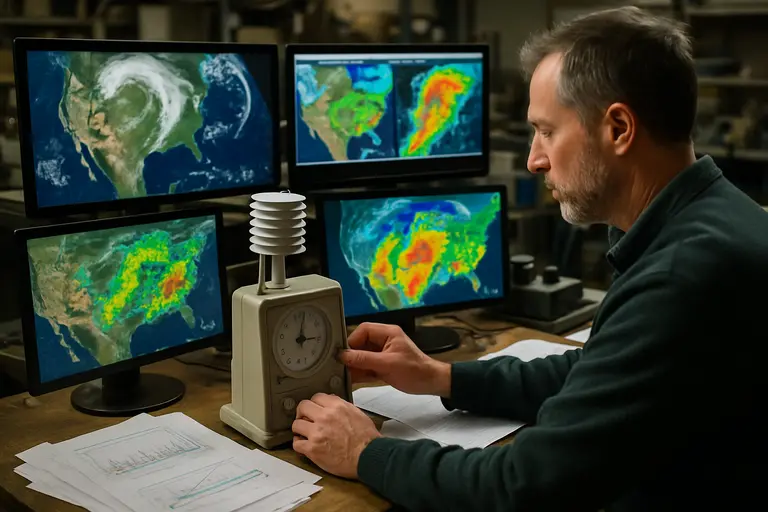
Core Variables For Race Review
A useful prep race weather file should be simple enough to repeat across races and detailed enough to support later comparison. It should combine official racing information with weather observations tied to the race time, not only to the broader day. The goal is not to excuse every defeat or inflate every win. The goal is to preserve context before memory turns a race into a single line of form.
| Variable | Performance Use | Caution |
|---|---|---|
| Official Track Or Going Condition | Frames time, pace, and finishing strength | Condition labels may change during the card |
| Rain Before And During Racing | Helps explain surface change and stamina demands | Rainfall amount alone may not describe footing |
| Temperature And Humidity | Supports review of exertion and recovery context | Human endurance effects cannot be copied directly |
| Wind Direction And Speed | Can shape pace pressure by course segment | Venue layout affects how wind is experienced |
| Prior Similar Conditions | Shows whether a horse has relevant experience | Class, distance, and pace still matter |
For readers seeking to broaden their understanding across a similar network, racebookreview.com offers a separate but related resource focused on sporting performance and prep-race evaluation.
How To Read A Prep Result More Fairly
- Record the surface and official condition at the time of the race, not only the published morning description.
- Pair final time with pace shape, especially if the track appeared to change during the card.
- Compare the horse’s prior efforts under similar conditions before calling a result a regression.
- Treat strong finishes on testing ground as potentially meaningful, while keeping class and trip in view.
- Flag uncertainty when weather data, sectional timing, or official condition changes are incomplete.
Used this way, Weather Race Metrics improve discipline in the review process. They do not turn prep analysis into a formula. They make the analyst state what is known, what is inferred, and what remains uncertain.
Weather Effects In Prep Race Performance
What A Cautious Analyst Should Prioritize
The strongest prep-race read comes from combining conditions with what the horse actually did. A horse that relaxes behind speed, handles kickback or softer ground, and finishes with energy has supplied evidence beyond the clock. A horse that fades after being used early on a tiring surface may deserve a different interpretation than one that fades under neutral conditions after an easy trip.
The value of Weather Race Metrics is greatest when two prep performances appear similar on paper. If one occurred on a fast, consistent surface and the other came after rain or shifting going, the raw comparison is incomplete. The same is true when a horse moves from one prep venue to another. Weather does not decide the sporting outcome by itself, but it can shape how much credit or concern a performance deserves.
The evidence base supplied here supports a cautious, evidence-first standard. Large marathon studies confirm that temperature, wind, humidity, precipitation, and related heat-stress measures can change athletic performance in measurable ways. The horse-racing material points toward the same need for condition awareness, but it does not provide enough official prep-race data to assign universal time or length adjustments. That uncertainty should remain visible in any serious performance file.
For prep races, the practical standard is clear: preserve the weather record, read the race shape, respect the surface, and resist judging development from final time alone. That keeps the focus where it belongs — on the horse’s athletic performance under the conditions it actually faced.