
Racehorse Pre-Race Care Before Belmont Stakes Weekend
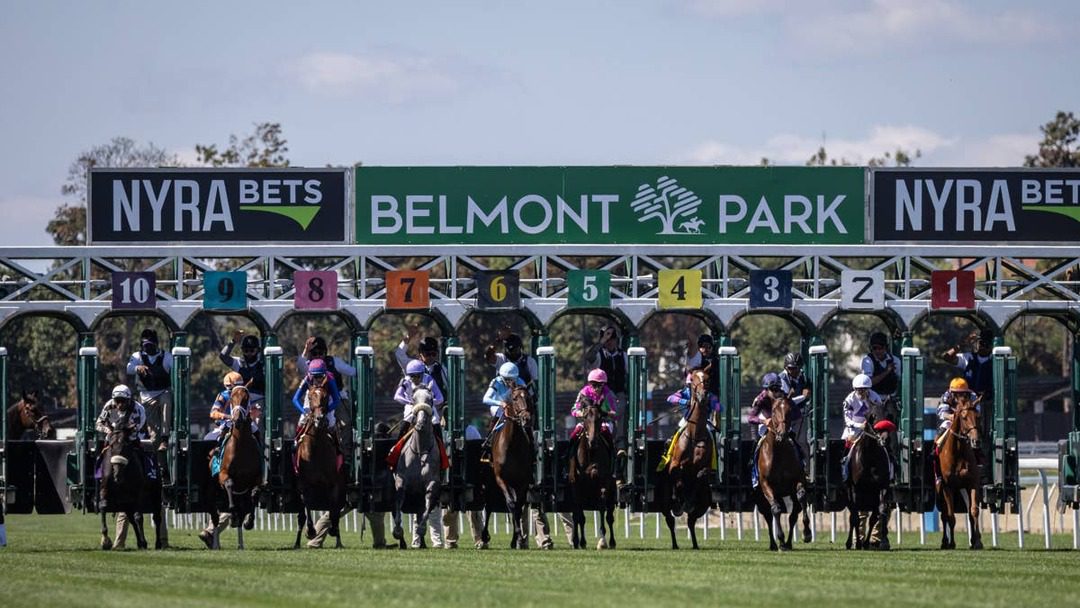
Racehorse pre-race care becomes most revealing when the stakes are highest. In the final 48 hours before Belmont Park’s September 26 program, the job is no longer to create fitness; it is to protect the condition, soundness and confidence already built through weeks of training.
That matters on a card stretching from the 1½-mile Grade 1 Joe Hirsch Turf Classic to the seven-furlong Vosburgh on dirt. Different horses face different physical demands, and good horsemanship depends on recognizing the individual rather than forcing every runner through the same routine. That principle also sits behind racing’s growing emphasis on preventive welfare decisions before an obvious problem becomes an injury.
Racehorse Pre-Race Care Starts Before The Final 48 Hours
A horse does not become fit for a Grade 1 on Thursday night.
By race week, the major conditioning work should already have been completed. The final days are about maintaining readiness while avoiding unnecessary fatigue. Exercise can still be part of the routine, but the purpose changes from building capacity to keeping the horse comfortable, mobile and mentally settled.
That makes everyday observations increasingly valuable. Appetite, water intake, movement around the barn, recovery from exercise, legs, feet and general demeanor all help connections establish whether the horse is behaving normally.
The important word is normal.
A naturally quiet horse should not suddenly be expected to behave like an aggressive one because race day is approaching. Trainers, grooms and riders build an understanding of each horse over time, which makes a subtle departure from that individual pattern more meaningful than a generic checklist.
Knowing the individual horse is part of the safety system.
Feed And Water Are About Consistency, Not Experimentation
Race week is a poor time for unnecessary changes.
The horse’s familiar feeding and watering program provides a stable baseline for both the animal and the people caring for it. Sudden changes can also make it harder to determine whether a shift in appetite or drinking behavior reflects the horse, the environment or a new management decision.
Hydration deserves particular attention because intense exercise places demands on fluid balance and temperature regulation. Veterinary guidance on equine exercise hydration emphasizes that horses should be well hydrated before strenuous work and that dehydration can contribute to higher body temperatures and earlier fatigue.
That does not mean every racehorse should receive an identical fluid or electrolyte program. Environment, workload, diet and the horse itself all matter, while competition medication rules must also be respected.
The useful principle is simpler: protect the normal routine, monitor intake and let veterinary professionals address concerns rather than improvising close to post time.
Veterinary Oversight Is Part Of Race-Day Preparation
Modern racehorse care is not confined to the trainer’s barn.
HISA says regulatory veterinarians conduct pre- and post-race inspections on every covered horse and can advise stewards when a horse is unsafe to race or when allowing it to compete would be inhumane. Veterinary treatment information and medical history can also inform those examinations.
That creates an important distinction between being entered and being ready.
A horse can have trained toward a race for weeks, shipped successfully and reached the morning of competition, yet welfare decisions still continue until the gate opens.
Records matter because a single examination is only a snapshot. HISA requires responsible persons to maintain medication, vaccination, treatment and procedure information, while attending veterinarians have their own reporting obligations. Those records give regulatory veterinarians more context when evaluating a horse.
Observation plus history is stronger than either one alone.
Medication Rules Reshape The Final Two Days
The last 48 hours also carry a regulatory boundary.
Saturday’s Joe Hirsch Turf Classic conditions state that Lasix is not permitted within 48 hours of post time under HISA Rule 4212. The same restriction appears in the Gallant Bloom conditions.
That matters because contemporary race preparation combines horsemanship with medication compliance. The final two days cannot be viewed simply as a trainer choosing what might help a horse feel its best.
There are national rules governing what can be administered and when.
Even electrolyte administration has timing restrictions depending on the method used. HIWU guidance distinguishes between free-choice electrolyte water, oral products, intravenous solutions and nasogastric administration during the pre-race period.
The welfare objective and regulatory objective increasingly overlap: keep the horse healthy without using the final hours to mask discomfort or manufacture readiness.
Belmont Shows Why One Care Routine Cannot Fit Every Horse
Saturday provides an unusually clear comparison. Belmont has four graded stakes covering different distances, surfaces and types of runners.
| Race | Distance And Surface | Main Race-Day Demand |
|---|---|---|
| Joe Hirsch Turf Classic | 1½ miles, turf | Sustained efficiency over a long route |
| Flower Bowl | 1¼ miles, turf | Balance of stamina, settling and acceleration |
| Gallant Bloom | 6½ furlongs, dirt | High-intensity sprint performance |
| Vosburgh | 7 furlongs, dirt | Speed combined with enough endurance to finish strongly |
The table is not a prescription for four different treatment programs. It explains why management has to remain individualized.
A horse preparing for 12 furlongs on turf is being asked a different athletic question from a dirt sprinter. Age, temperament, recent racing schedule, travel and training history can further change what an individual horse needs.
The Flower Bowl and Vosburgh also carry Breeders’ Cup Challenge implications, increasing the sporting stakes without changing the basic welfare principle: the calendar cannot outrank the horse.
The Small Signals Matter Most Before The Gate
The most important development in the final 48 hours may be something nobody outside the barn ever sees.
A change in appetite, unusual stiffness, heat or filling in a limb, altered behavior or recovery that looks different from normal does not automatically identify an injury. It does provide a reason for closer professional evaluation.
That is where good racehorse management becomes difficult. Months of preparation, significant prize money and championship ambitions can all be sitting on one side of the decision. The horse’s physical condition has to remain on the other and carry more weight.
Belmont’s September 26 card will naturally be discussed through contenders, pace, form and Breeders’ Cup implications. Behind those stories is a quieter process of feeding, watering, observing, examining and making decisions that may never appear in a chart.
Good racehorse pre-race care is not about finding a last-minute advantage. It is about arriving at the starting gate with a horse whose preparation has already been completed and whose condition still supports asking for a competitive effort. The best decision in those final 48 hours is sometimes to maintain the plan. When the horse gives a reason to reconsider it, the best decision can also be not to race.