
A Name Is Only the Start: What New Thoroughbred ID Tools Mean for Aftercare
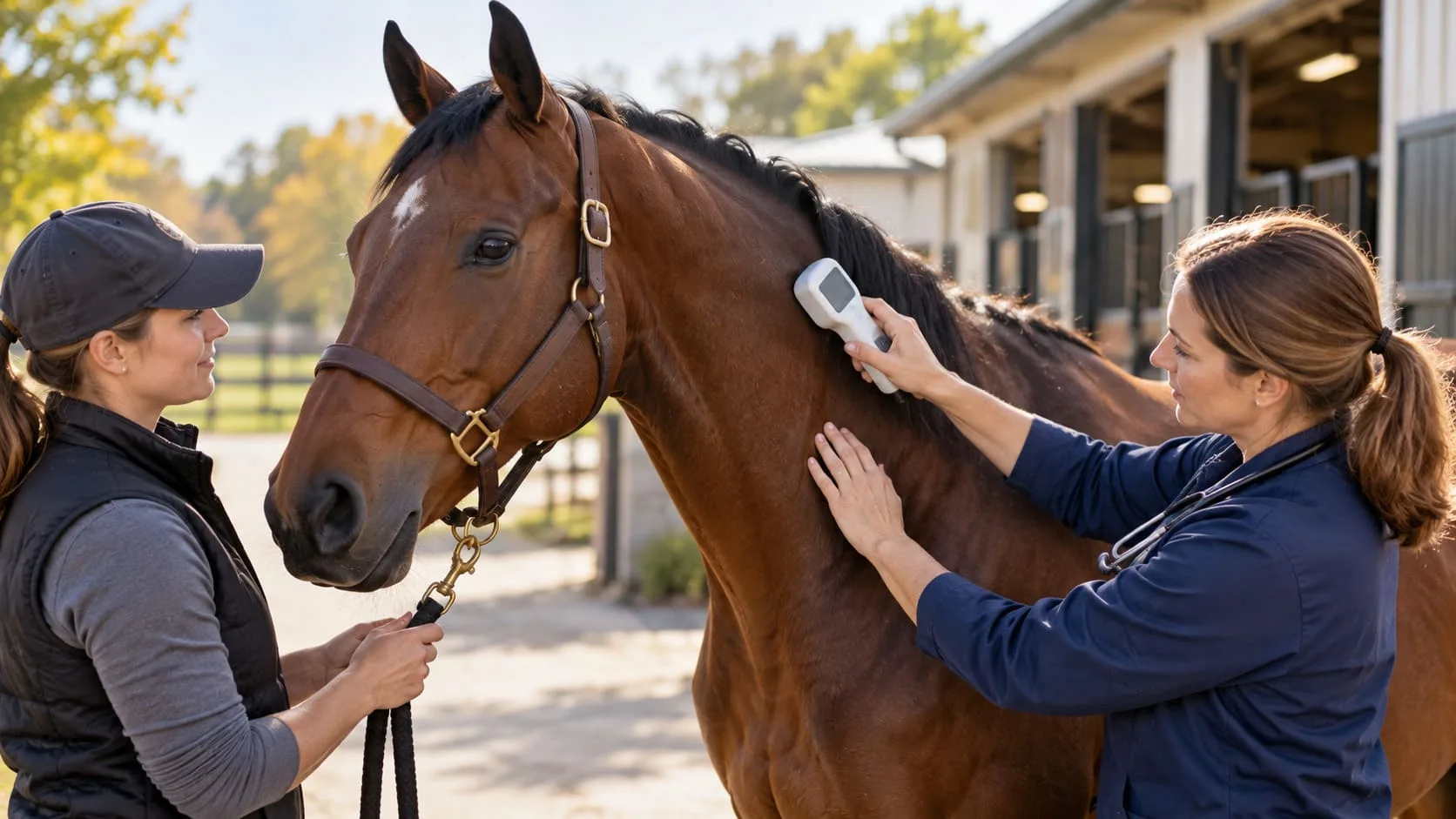
A retired racehorse can have years of recorded breeding and racing history yet arrive at a new barn with its identity uncertain. Without a reliable name, locating previous connections, checking records or finding someone willing to assist can become unnecessarily difficult.
In 2026, The Jockey Club introduced a new tool designed to address that problem. Its free ID My Thoroughbred app uses microchip numbers to identify registered Thoroughbreds and now also supports traditional lip tattoo lookup.
For retired Thoroughbred identification, that is a meaningful improvement. But it also raises a bigger welfare question: once a horse has been identified, who takes responsibility for what happens next?
Why Both Microchips and Lip Tattoos Still Matter
Thoroughbred identification has changed considerably over the past decade.
The Jockey Club made microchips mandatory for registration beginning with foals born in 2017. These chips provide a permanent identification number that can be read with appropriate equipment and matched to the breed registry.
Many older racehorses, however, were identified through lip tattoos. Those markings can become difficult to read with age, and some retired horses have incomplete records or limited documentation accompanying them.
Recognizing this problem, The Jockey Club expanded its ID My Thoroughbred app in July 2026 to accept tattoo numbers alongside recorded microchip numbers.
This matters especially for horses born before the microchip requirement. Older Thoroughbreds are not excluded simply because their original identification method was different.
AlexBrownRacing.com’s longstanding off-track Thoroughbred resource and identification guide already includes practical information about reading lip tattoos and researching former racehorses.
The new technology provides another route to the same fundamental goal: establishing which horse is standing in front of you.
It does not eliminate every identification problem. A tattoo may be unreadable, a microchip may not be recorded in the expected database, and an unfamiliar horse may require additional documentation before its identity can be confidently established.
What the ID My Thoroughbred App Actually Does
When The Jockey Club launched the app in February 2026, its central feature was straightforward: users could retrieve identifying information by entering a valid microchip number or using a compatible reader.
The app can return the horse’s registered name and identifying markings. Registration photographs may also be available when the appropriate conditions are met.
The July update added tattoo lookup, while certain users can access registration photographs for horses born in 2002 or later, where those photographs exist. The app also provides access to a My TB’s Story Equineline report under specified location or ownership settings.
An important practical distinction is that a smartphone does not automatically function as a horse microchip scanner. A compatible reader is needed to scan the implanted chip, although a number obtained through other appropriate means can be entered manually.
The Jockey Club has also recognized that identification tools are useful only when people can access them.
In February, it announced the distribution of 100 free microchip scanners to selected aftercare organizations, with approximately 400 additional scanners planned for distribution.
Those figures describe the announced distribution effort, not independently verified totals of successful horse identifications or placements.
Nevertheless, providing equipment directly to organizations caring for retired Thoroughbreds addresses a practical barrier. A database is considerably more useful when the people encountering unidentified horses have a reliable way to search it.
Identification Is Not the Same as Protection
A microchip can establish a strong link to a registered identity. It cannot, by itself, determine whether a horse is healthy, whether its current care is appropriate or whether someone offering it for sale has lawful authority to transfer ownership.
Nor should a microchip be confused with a continuous GPS tracker. Ordinary identification chips are read when compatible equipment is brought near them. Information about a horse’s location depends on the reporting and recording systems used, not continuous satellite monitoring.
That distinction is particularly important in aftercare.
Knowing a horse’s identity can help someone investigate its history, but it does not establish whether that horse needs rehabilitation, a lighter workload, veterinary treatment or permanent retirement.
The next step requires people willing and able to act.
The Jockey Club’s Thoroughbred Connect program offers one way to make those connections. Participants can indicate their willingness to assist a specific Thoroughbred, while people caring for a horse can seek potential help.
Since 2020, contact information from that program has also been integrated into digital registration certificates for relevant certificate managers.
The 2026 identification app builds on that system by giving users an additional way to identify a horse and indicate whether assistance is needed or available.
But it remains a means of making connections, not a guarantee that suitable care, funding or a new home will be secured.
What a Responsible Identification Process Should Include
When a former racehorse’s identity is uncertain, the sensible starting point is to establish the available evidence rather than rely on its appearance or an unverified account of its racing history.
A caretaker can arrange for a suitable microchip reader to be used, check any existing tattoo and compare the results with the registered name, markings and photographs available through the appropriate registry.
Once identification is established, other questions remain separate:
- Whether ownership and transfer documentation are complete.
- Whether the horse has been assessed for its current health and soundness.
- Whether previous connections or aftercare contacts may be able to help.
- Whether its proposed new home, work and long-term care match its individual needs.
A registered identity is useful evidence, but it is not a substitute for legal transfer documentation or an examination by a qualified veterinarian.
Where a horse is neglected or in immediate difficulty, obtaining appropriate veterinary or welfare assistance should take priority over completing its historical research.
The Real Test Is What Happens After Identification
The Jockey Club’s 2026 improvements make an important part of Thoroughbred aftercare more accessible. Horses that once might have remained unidentified because of faded tattoos or missing paperwork may now have another pathway back to their recorded histories.
That is genuine progress, particularly for retirement organizations dealing with horses whose original racing connections are no longer obvious.
But the technology’s ultimate value will depend on what happens after a successful identification.
A confirmed name can reconnect a horse with its past. A responsible owner, appropriate veterinary care and a sustainable aftercare plan are what give that horse a safer future.