
Belmont Stakes Fair Odds: Renegade Leads a Wide-Open Saratoga Betting Market
Belmont Stakes fair odds are less about finding the most obvious horse and more about deciding whether the market has left enough room for doubt. For bettors already tracking the Belmont Stakes 2026 favorites, Renegade’s position at the top of the Saratoga conversation creates the real question: is he a fair favorite, or has the market already taken the best of the price?
That matters because this is not a normal Belmont setup. Saratoga changes the feel of the race, the pace puzzle, and the betting psychology around it. A favorite can be legitimate and still be too short. A rival can look less accomplished and still be the better wager. That tension is what makes this market more interesting than a simple ranking of contenders.
Renegade Is The Right Favorite, But Not A Free Pass
Renegade deserves market respect because his profile has the traits bettors usually reward in a classic race: proven class, tactical quality, serious connections, and enough staying power to project well over the Saratoga version of the Belmont. Nothing about his place near the top feels accidental.
The danger is that bettors often confuse “most likely winner” with “automatic value.” Those are not the same thing. A horse can be the correct favorite while still being an uncomfortable bet if the price demands perfection. In a race with credible alternatives, the margin between fair odds and poor odds can disappear quickly.
That is the pressure point around Renegade. His supporters can make a strong case that he has the cleanest combination of form and upside. His skeptics can argue that the market is already pricing in most of that case. The smartest approach is not to ask whether he can win. He clearly can. The better question is whether his odds leave enough compensation for trip risk, pace uncertainty, and late movement from other contenders.
This is where price discipline matters. If Renegade drifts, he becomes more attractive. If he tightens too aggressively, he may become the horse everyone respects but not everyone should bet to win.
Why Belmont Stakes Fair Odds Are Harder At Saratoga
The Belmont at Saratoga carries a different betting texture because the race is not being run under the traditional Belmont Park identity. The official Belmont Stakes schedule and ticket information confirms Saratoga as the 2026 festival venue, which means handicappers must think about this race through the lens of the Spa rather than relying only on old Belmont assumptions.
That shift matters. Saratoga can magnify tactical positioning, rider decisions, and how comfortably a horse handles the rhythm of the track. A runner with stamina may still need sharper positional speed. A closer may need a cleaner setup. A front-running or stalking type may become more dangerous if the race lacks sustained pressure.
For Belmont Stakes fair odds, that means the handicap cannot stop at talent. It has to measure race shape. Renegade may be the leader of the market, but he still has to win a race that could be shaped by who commits early, who saves ground, and who moves first.
The wide-open feel also creates a common betting trap. When a favorite looks obvious but the rest of the field looks competitive, bettors may try to simplify the race too much. Saratoga usually punishes that. The better read is that Renegade is the anchor, not the whole market.
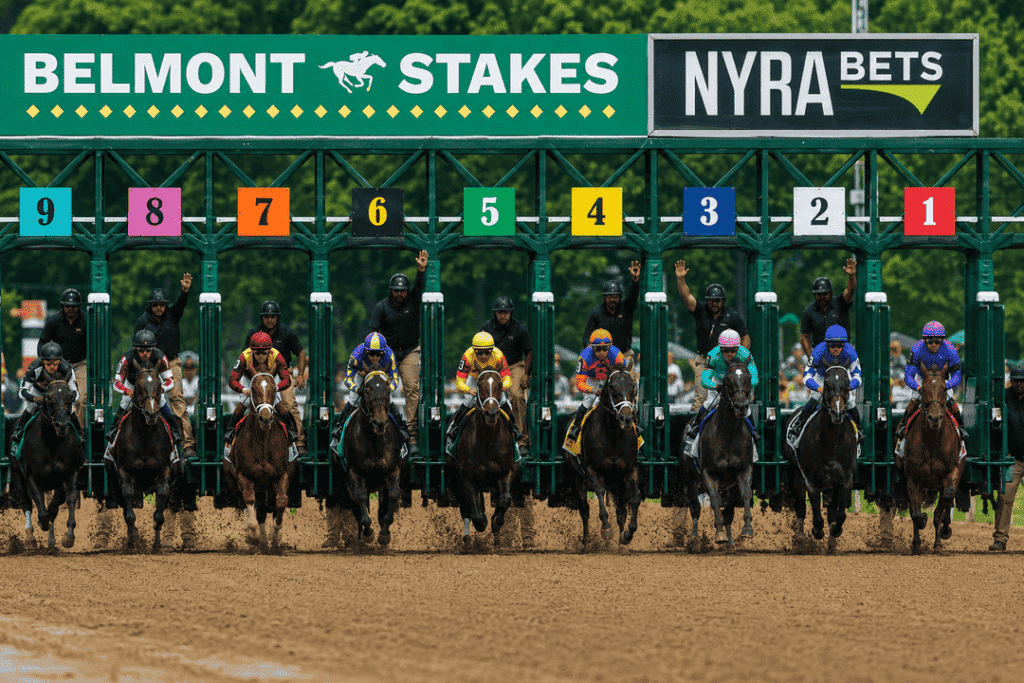
The Market Behind Renegade Is Too Strong To Ignore
Golden Tempo, Chief Wallabee, Commandment, and other contenders give this race its betting depth. Even if Renegade sits at the top, the supporting cast is strong enough to prevent the market from becoming one-dimensional.
That is why the second tier deserves serious attention. A horse sitting in the 3-1 to 8-1 range can be more interesting than the favorite if the expected race shape fits better. A deeper runner at a bigger number may also become usable underneath if the pace develops faster than expected.
The field does not need to be full of superstars to create value. It only needs enough legitimate threats to make a short favorite work harder than his price suggests. This is the kind of race where win bets, exactas, and trifectas can tell different stories. Renegade may be the likeliest winner, but the better payout structure may come from using him selectively instead of blindly building every ticket around him.
Bettors should also remember that wide-open does not mean random. It means several outcomes are plausible, and the job is to decide which plausible outcome is being underpriced or overpriced.
| Betting Factor | Why It Matters | Market Implication |
|---|---|---|
| Renegade’s favorite status | He owns the strongest overall profile | Fair only if the price does not collapse |
| Saratoga race shape | Tactical position can matter more than reputation | Stalkers and adaptable runners gain appeal |
| Golden Tempo pressure | A proven rival keeps the favorite honest | Win odds may stay competitive near the top |
| Mid-priced contenders | Several horses can hit the board with the right trip | Exacta and trifecta value may be stronger than win value |
| Late betting movement | Public money can distort fair odds | Patience may reveal better entry points |
The table shows why this market should be treated as a pricing exercise, not a popularity contest. The best bet may not be the best horse on paper. It may be the horse whose odds leave the most room for things to go right.
Renegade’s Profile Gives Bettors Confidence And One Big Concern
Renegade’s appeal is easy to understand. His résumé, connections, and running style give bettors something solid to hold. His public profile is also supported by a visible record that readers can review through Renegade’s official race profile, which adds to why he has become such a natural focal point.
But confidence can become expensive. The more obvious a horse looks, the more carefully bettors need to check whether the market has already absorbed the positives. If Renegade is treated as though he only needs a clean trip to win, his fair odds become vulnerable. No horse in this kind of field should be priced as if uncertainty has disappeared.
The biggest concern is not weakness. It is market compression. A high-quality favorite can still be a bad wager if too much public money turns a fair number into a thin one. That is especially true in a race where rivals have enough quality to capitalize on a small mistake.
This is the balance bettors must strike: respect Renegade’s chance without letting his reputation take control of the ticket. The most useful betting opinion may be deciding the exact number where he becomes playable — and the exact number where he becomes a horse to use defensively instead.
Late Signals Could Reshape The Saratoga Betting Board
The next phase of the market will be shaped by signals that often matter more than early odds. Post position, track condition, workout reaction, rider confirmation, and public money can all change the fair-odds calculation.
A favorable draw could strengthen Renegade’s case. A difficult post could force bettors to reconsider how much risk is built into his price. A speed-heavy field could help one type of runner and hurt another. A softer early pace could make tactical horses more dangerous. A lively pace could bring closers and underneath prices into sharper focus.
The public market may also overreact to name recognition. If casual money piles onto the most familiar horse, the value may move elsewhere. If bettors become too eager to oppose the favorite, Renegade could become playable again at a more honest number. That is why late odds movement matters more here than early opinion.
For disciplined bettors, the smartest move is to build a fair line before the final rush. Decide where Renegade is value. Decide which alternatives are worth backing. Decide which horses belong underneath but not on top. Waiting until the board tells you what to think is usually how value disappears.
The Real Test Is Whether Bettors Can Separate Talent From Value
Renegade leading the Belmont market makes sense. He has the profile, the attention, and the credentials to command respect. But the best Belmont Stakes fair odds conversation is not about whether he is good enough. It is about whether the market is asking bettors to pay too much for the comfort of siding with the obvious horse.
That is the difference between handicapping and betting. Handicapping identifies the contenders. Betting decides which prices are worth the risk. In a Saratoga Belmont with a credible favorite and a dangerous supporting cast, that difference becomes everything.
Renegade may still prove to be the right answer. But the sharper opportunity may belong to the bettor who treats Belmont Stakes fair odds as a moving target, not a fixed opinion. The race is wide open enough to reward conviction, but dangerous enough to punish anyone who mistakes the favorite for a guarantee.