
The Breeders Cup Storylines most worth tracking after the early-October preps begin with one fixed point: the Breeders’ Cup World Championships are scheduled for October 30–31, 2026, at Keeneland Race Course, as listed in the Breeders’ Cup prep schedule. Because today is October 6, 2026, Fall Stars Weekend is no longer a preview; it is evidence. The task now is to sort what the preps proved, what they merely suggested, and where the record remains incomplete.
This review stays with the sporting questions: form, distance, surface, race timing, field limits, and how prep performances may translate to Keeneland. To explore more horse racing insights from a related network, check out the Racebook Review. The focus here is strictly on racing evidence.
Breeders Cup Storylines From Fall Stars Weekend
Fall Stars Weekend ran from October 1–4, 2026, and the research record identifies 23 Challenge Series races during that span. Its importance was heightened by venue. Keeneland is not just another prep stop in 2026; it is the championship site. For horses using the Coolmore Turf Mile, Spinster, Alcibiades, Jessamine, and other local races as late tests, the weekend supplied course experience under pressure less than four weeks before the main event.
Breeders Cup Storylines On The Host Track
Host-track evidence should not be overstated, but it should not be dismissed. Keeneland’s configuration, surface response, and run-in can expose horses that need more room to gather momentum or those who are most effective when asked to quicken at a precise point. The value of the October 1–4 races lies in direct comparison: several contenders were asked to perform over the same course that will decide their division on October 30 or October 31.
That is why the October prep sequence connects closely with the Breeders Cup calendar. The calendar has narrowed from broad divisional sorting to specific race placement, recovery time, and whether a horse’s prep effort was demanding enough to sharpen fitness without leaving too much behind.
Rhetorical And The Mile Benchmark
Rhetorical’s Coolmore Turf Mile on October 3 gave the Mile division a clear Keeneland reference. The research record states that he defended his title in the Grade 1 race by 2 1/4 lengths over one mile on firm turf, with a final time of 1:36.35 and a closing half-mile in 46.84 seconds. Those details matter because the Breeders’ Cup Mile often rewards a runner that can hold position before producing a sustained finish rather than a single late burst.
The open question is whether that performance represents a local peak or a repeatable pattern. Defending a Grade 1 title at the same meet is a strong sporting signal, but the championship field will bring a broader international cast and a different race-day tempo.
The Distaff Took Shape At Keeneland
The Distaff picture changed sharply in the Spinster Stakes on October 4. Fully Subscribed, facing older fillies and mares for the first time, won the Grade 1 Spinster at Keeneland by 3 1/4 lengths over Counting Stars and earned an automatic place in the Breeders’ Cup Distaff, according to the Daily Racing Form report. That was not simply a qualifying result. It was a class test against more seasoned opposition on the same track she is expected to revisit.
Breeders Cup Storylines From The Spinster
The Spinster was described in the research as a three-horse race, so the field size limits how far the result can be stretched. A small field can reduce traffic and produce cleaner trips than a championship race with more pace pressure. Even so, the margin and the first test against older rivals give Fully Subscribed one of the strongest recent Distaff signals in the evidence set.
For Counting Stars, second place requires a more careful reading. The research identifies her as a Grade 1 winner at age three and notes that the Spinster was her first start against older fillies and mares. That context makes the result neither a failure nor a full endorsement. She met older opposition, handled the assignment well enough to finish second, and now must show whether that effort moves her forward or leaves her short of the top of the division.
Immersive And The Missing Detail
Immersive appears in the Spinster context within the research, but the notes provided do not supply her finishing position or trip details. That absence is meaningful. A careful race review should not fill gaps with assumptions. Without verified placement, margin, or running-line information in the provided evidence, Immersive can be treated only as part of the pre-race Distaff setting rather than as a fully assessed championship indicator.
Juvenile Races Still Require Caution
The two-year-old divisions are often the most fluid at this stage, and the 2026 evidence supports that caution. Summer Starlet’s Grade 1 Spinaway win at Saratoga on September 5 is a strong sprint-to-route marker: the research records a career-best 97 Beyer Speed Figure in that seven-furlong race. The next question was distance, because the Alcibiades at Keeneland was scheduled for October 2. As of October 6, that race has already been run, but the supplied research does not give its result.
Summer Starlet And The Distance Question
For that reason, Breeders Cup Storylines in the Juvenile Fillies division should separate what is known from what is pending in this evidence set. Summer Starlet showed high-end ability at seven furlongs. The research also names Emphatic and Forever Carina as fillies trying to advance their cases through the Alcibiades. What cannot be stated from the supplied material is whether Summer Starlet stayed the longer trip, whether one of her rivals improved past her, or whether the Keeneland surface changed the divisional order.
That distinction is not a technicality. Two-year-olds can move forward quickly, but they can also look different when asked for more distance, two turns, or a new surface rhythm. The Spinaway established Summer Starlet as a major talent; the missing Alcibiades result prevents a firmer judgment here.
Turf Juveniles Add International Pressure
The juvenile turf divisions widened during the same prep window. The research identifies the Vincent O’Brien National Stakes in Ireland on October 3, along with the Jessamine and Miss Grillo in the United States on October 2–3, as races connected to Challenge berths and international depth. That combination matters because Keeneland’s juvenile turf races can draw horses with very different development paths: European two-year-olds with straight-course or galloping-track experience, and U.S.-based runners trained through tighter turns and quicker tactical changes.
The evidence supports one cautious conclusion: the juvenile turf fields were still being shaped by results on both sides of the Atlantic during the first week of October. It does not support ranking the travelers without the final field list and verified race outcomes.
Selection Rules And Classic Evidence
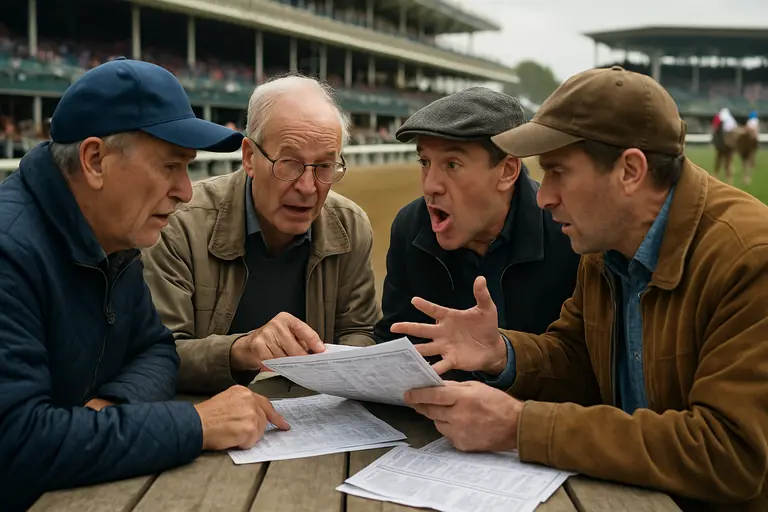
The next procedural date is October 19, 2026, when pre-entries are scheduled to be taken. The research states that oversubscribed fields will be sorted by Challenge Series wins, graded stakes points, and the judgment of a three-member expert panel. It also states that most races are capped at 14 starters, while the Dirt Mile and Juvenile Turf Sprint are limited to 12.
Pre-Entries Create A Hard Sorting Date
Those limits affect sporting analysis because championship quality alone does not guarantee a stall in the gate if a race draws more qualified horses than it can hold. The field-selection process rewards automatic qualifying wins first, then graded stakes accumulation, then panel judgment. That structure makes the final prep races more than form references; they can determine access.
- Challenge Series winners hold the clearest route into their target race.
- Graded stakes points matter most for horses without automatic berths.
- Panel judgment becomes relevant where form, geography, and race records are difficult to compare directly.
Forever Young’s Unfinished Evidence
The Classic division carries one unresolved thread in the provided notes. Forever Young, identified in the research as the Dubai World Cup and Saudi Cup winner, was scheduled to make his final prep in the Jockey Club Gold Cup Stakes at Belmont Park on September 18 while aiming to defend his Breeders’ Cup Classic title. Because September 18 has passed, that should be treated as a completed prep date. Yet the supplied research does not provide the race result, margin, surface condition, or trip.
That means any firm Classic assessment from that prep must wait for verified outcome data. The safe reading is narrower: Forever Young’s route was designed to use the Jockey Club Gold Cup as a final American test before Keeneland. Whether that test strengthened or weakened his Classic case is not established by the research provided here.
Breeders Cup Storylines At Keeneland
The strongest Breeders Cup Storylines after the October preps are not all equal in evidentiary weight. Fully Subscribed’s Spinster win is the clearest result in this set because it combines a Grade 1 win, a decisive margin, older opposition, a Keeneland surface test, and an automatic Distaff berth. Rhetorical’s Coolmore Turf Mile repeat supplies a serious Mile benchmark, especially with the recorded final time and closing half-mile. Fall Stars Weekend as a whole confirmed that many contenders used the championship course rather than a distant prep venue.
The juvenile divisions require more restraint. Summer Starlet’s Spinaway remains a strong seven-furlong marker, but the missing Alcibiades result blocks a complete distance assessment. The juvenile turf races point to global depth, though final travel decisions and field composition still matter. The Classic discussion is similar: Forever Young’s planned path is documented, but the supplied evidence does not include the outcome of his September 18 prep.
As October 19 pre-entries approach, the story is less about broad reputation and more about verified proof. Keeneland has already provided several hard clues. The remaining work is to match those clues against field limits, recovery windows, and race conditions on October 30–31.