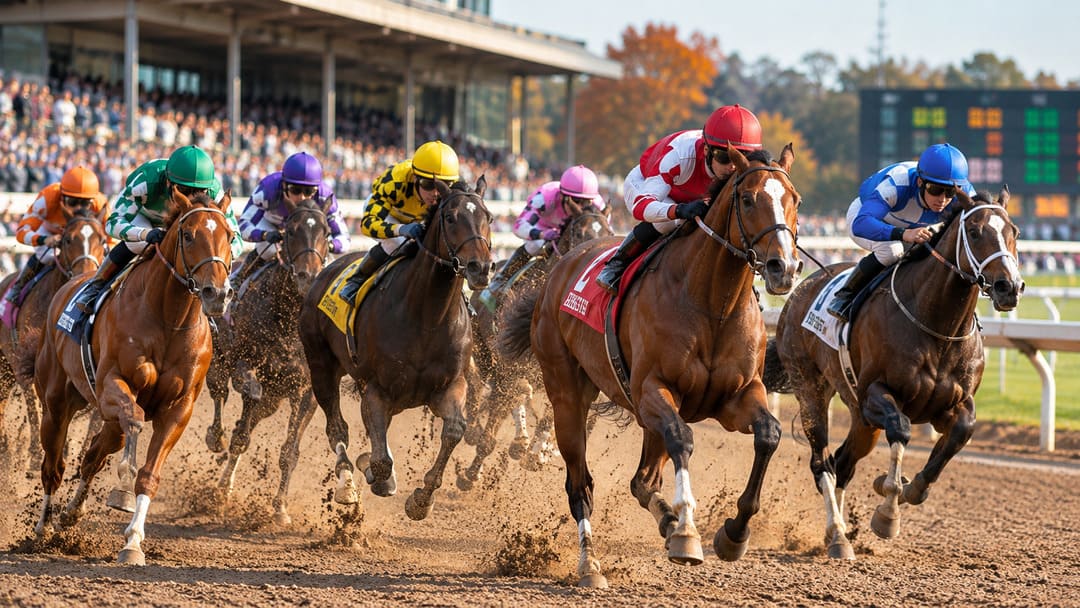
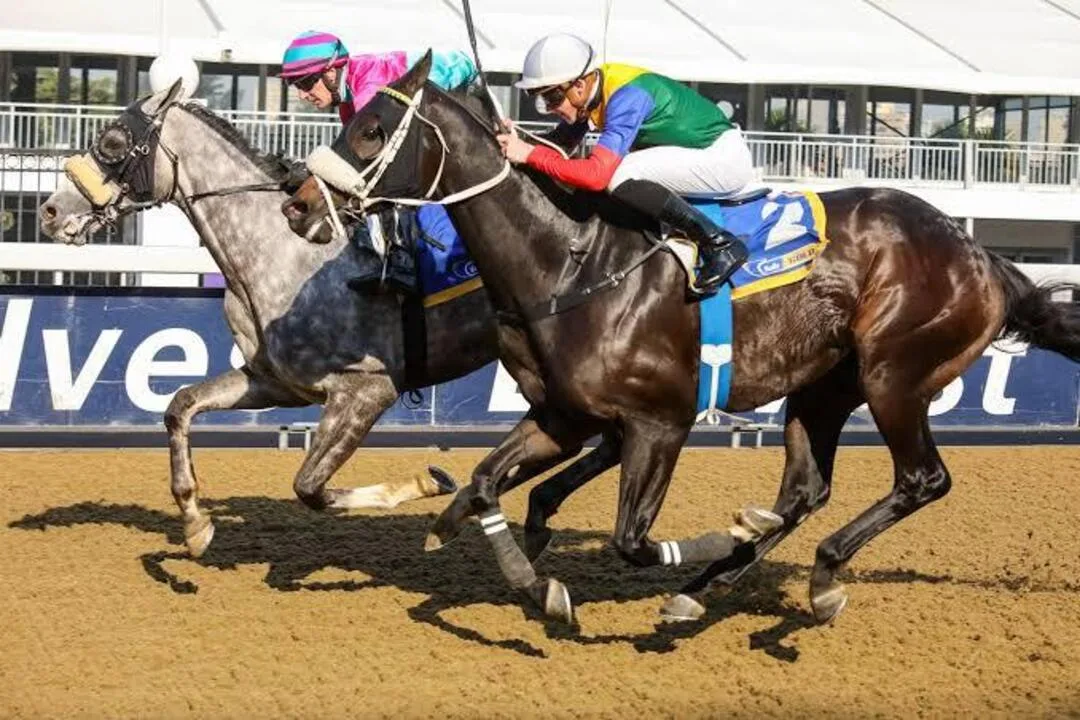
Los Alamitos Track Conditions drew scrutiny on October 31, 2026, when heavy rain led to the cancellation of the final six races on an eight-race card. Pine Run, a 5-year-old gelding, died following a racing injury in the first race that night. The cancellation showed that the condition of the track was a reason not to continue the card. It did not, on its own, establish what caused Pine Run’s injury.
The October 31 card offers the clearest example of how weather changed racing at Los Alamitos: two races took place and six did not. How the surface affected the horses that did run is a different question. The reported cancellation, individual race accounts and the state fatality register each help answer part of it, but none substitutes for a record of how the surface was assessed as the rain fell.
Los Alamitos Track Conditions on October 31
The timing of the cancellation matters. Officials canceled the remaining races after the card had started; they did not call off all eight before the first race. That establishes the sequence of racing and cancellation, not when the surface reached a particular threshold. The available account does not specify what officials observed before race one, how those observations changed by race two, or which measurements, if any, informed the decision to stop.
What Los Alamitos Track Conditions Explain
The reported concern about the surface explains why the last six races were canceled. It does not establish whether Pine Run encountered a problem with footing, whether conditions varied across the racing lanes, or whether the first two races were run over materially different surfaces. Those questions would require evidence tied to the time and location of the injury, such as time-stamped inspections or maintenance records. The decision to stop tells us about the remaining card; it cannot retrospectively describe every part of the track during race one.
For performance analysis, the shortened card also limits what can be said about how the surface played. The six canceled races offer no results for comparison, and the available account does not supply the race times, margins or running lines needed to assess whether the two completed races appeared to favor a particular part of the track. The absence of those details is not evidence that conditions had no effect. It means the defensible sporting finding is narrower: the rain curtailed the program, and the available evidence does not isolate an effect on performance.
What the October Race Accounts Show
Norco’s Win and Empressum’s Injury
On October 11, 2026, Norco won the Robert Boniface Los Alamitos Championship. In the same Quarter Horse stakes, former champion Empressum suffered a fatal injury early in the race after appearing to take an awkward step leaving the gate, according to the Daily Racing Form race report. The account establishes who won and describes what was visible at the start. An apparent awkward step is an observation, not a finding about why it happened.
That distinction cuts both ways. Norco’s win stands as the result, but it does not establish how the race would have developed had Empressum continued. Nor does Empressum’s injury establish a surface problem in the championship. The heavy rain reported on October 31 cannot be used as evidence of Los Alamitos Track Conditions on October 11. A surface analysis has to start with evidence from the race in question, not from a different card at the same venue.
Soo Bronx and the Limits of a Running Line
On October 17, 2026, the 2-year-old filly Soo Bronx was bumped early, took a bad step and was pulled up, according to the reported race account. She was transported by equine ambulance and died following the injury. The sequence is useful because it records contact and a subsequent visible problem. It does not establish that the contact caused the injury, or that the surface contributed. A running line can identify a moment worth examining without settling the explanation for it.
Reading the Fatality Counts by Category
The reported tally from the California Horse Racing Board through November 3, 2026, was 14 racing-or-training deaths at Los Alamitos: 13 in racing and one in training. The CHRB equine fatality register also listed Ebok’s Dream Girl, a 5-year-old mare who died after a race on October 11, 2026, in a non-musculoskeletal category. The date describes when the death occurred; the category describes how the regulator recorded it. Neither establishes a specific diagnosis or a link to footing.
Through November 23, 2025, the reported Los Alamitos count was 19 musculoskeletal fatalities: 11 in racing, six in training and two in the other category. The 2025 and 2026 figures end on different November dates and are not presented with a common set of categories. They also lack a common measure of exposure. Even if the definitions and reporting windows were aligned, fewer deaths would not necessarily mean a lower rate if the number of starts or the amount of training activity also changed.
Of the 11 fatal race injuries in the 2025 musculoskeletal count, eight involved Quarter Horses and three involved Thoroughbreds. That breakdown describes the recorded cases, not the relative risk to each breed. A valid race-day comparison would need the number of starts by breed over the same period. To test whether wet conditions were associated with a higher rate, the comparison would also need starts and incidents classified by documented surface condition. These counts alone cannot answer either question.
What the Los Alamitos Record Can Establish
The clearest finding about Los Alamitos Track Conditions remains the October 31 decision: heavy rain and concern about the surface brought the card to an early end. The fatal incidents are part of the safety record, but they do not supply a common explanation. Treating the cancellation as proof of an injury mechanism would go beyond what is documented. Treating the lack of proof as a clean bill of health for the surface would go beyond it in the other direction.
For related coverage, our analysis of race conditions and safety review separates what a race shows from what an incident review needs to establish. For more on similar topics, check out Racebook Review, a related site in our network.
At Los Alamitos, the most useful evidence for assessing the October 31 decision would be a time-stamped record of inspections and maintenance before the opener, between the completed races and at the point of cancellation. For judging safety trends, the more useful comparison would be fatality rates based on matching reporting windows and consistent categories. Those records would address two distinct questions: what officials knew when they stopped racing, and whether the frequency of fatal injuries changed.
Breeders’ Cup Attendance rose to 81,604 at Keeneland on October 30 and 31, 2026, up about 25% from the 65,232 recorded at Del Mar in 2025. The official Breeders’ Cup report put Friday’s crowd at 35,829 and Saturday’s at 45,775. Keeneland drew 16,372 more admissions across the two days than Del Mar had the previous year. That was a substantial gain, but the change of host track makes it a poor basis for forecasting another 25% rise.
The useful distinction for future racing events is between the size of the crowd a meeting actually drew and the strength of demand it might have drawn under different conditions. The first is on the record. The second depends on information the attendance total does not provide, including how many admissions were available each day and how the two cards compared with their counterparts at other editions.
Breeders’ Cup Attendance in Context
Two Del Mar Editions Offer a Closer Comparison
The Breeders’ Cup’s historical attendance figures put Del Mar at 67,418 in 2024 and 65,232 in 2025, a decline of 2,186, or about 3%, between consecutive editions at the same track. The increase from Del Mar in 2025 to Keeneland in 2026 was much larger. The Del Mar pair is the closer comparison because the host stayed the same, though it does not establish that ticket availability, the race cards or the mix of spectators stayed the same.
Santa Anita’s reported two-day crowd of 109,624 in 2023 provides another reference point. Keeneland’s 2026 total was 28,020 below that figure despite its clear gain over both Del Mar editions. Read in order, the four totals did not trace a steady rise or a steady decline. They showed how much the reported crowd varied from one edition to another, with three host tracks in the comparison.
That distinction matters for any racing series that changes venues. A larger crowd at a new host can be a strong result for that edition without proving that demand rose by the same amount across the sport. The same caution applies in reverse: a smaller crowd at a different track would not, on its own, show that fewer people wanted to see championship racing. Our Saratoga attendance analysis applies a similar distinction, separating race-day turnout from a broader attendance trend.
What Friday and Saturday Drew at Keeneland
Breeders’ Cup Attendance Was Higher on Saturday
Saturday, October 31, drew 9,946 more people than Future Stars Friday on October 30 and accounted for about 56% of the two-day total. Friday accounted for about 44%. The gap is worth measuring because a combined number masks how differently the two days drew. It is not, however, evidence that Friday had lost ground. That would require equivalent Friday attendance figures from earlier editions. A comparison between the two days at Keeneland answers a question about the split at one meeting, not about Friday’s direction over several years.
Nor does the gap isolate the appeal of the Friday program. The two cards took place on different days of the week, and the attendance figures alone cannot distinguish the influence of the races from the practical difference between making a Friday and a Saturday visit. A claim that the Friday card itself needed changes would require evidence that spectators were less interested in the program, rather than less able to attend or choosing to come on only one day.
For planning purposes, the more useful question is whether Friday drew the audience organizers expected given the number of places available. A lower count could still represent a high share of available admissions. Conversely, a substantial crowd could leave room to attract more spectators if a large share went unused. The reported totals establish that Saturday drew more people; they do not settle which day came closer to filling the space offered to spectators.
What Host Tracks Can Learn From the Crowd Counts
For future championship meetings, reporting attendance beside the number of admissions made available each day would make comparisons more useful. A track can have a larger crowd and still fill a smaller share of the space it offers. A smaller crowd can make fuller use of the space at a different venue. Without a consistent measure of usable capacity for each card, it is better to compare the published counts directly than to rank how fully each host met demand.
It would also help to distinguish tickets sold, reported attendance and unique visitors. A two-day total does not establish how many separate people attended because a spectator who came both days could be counted twice. That distinction matters if a host wants to know whether it reached more people or persuaded more of the same people to return for the second card. Both would be useful outcomes, but they answer different questions about the audience.
The choice of benchmark should follow the question. For an assessment of Keeneland’s 2026 event, the day-by-day count is the clearest starting point. To assess whether Friday is gaining or losing ground, compare Friday with Friday and account for any differences in admission limits. To test whether a host is drawing more spectators on repeat visits, start with editions at that same track rather than expecting a change in venue to work like a controlled comparison.
What Keeneland’s 2026 Turnout Means for Future Breeders’ Cups
Keeneland’s return as host in 2026 after last staging the event in 2022 produced a two-day crowd above either of the preceding Del Mar editions and below Santa Anita’s 2023 count. That is a useful benchmark for a future Keeneland edition, not a minimum every host should be expected to match. A future meeting could draw fewer people and make fuller use of the space available, or draw a larger crowd without showing a comparable increase in the number of distinct spectators.
The best follow-up to the 2026 result would be another set of comparable daily counts, with Friday and Saturday reported separately and with enough information about admission limits to explain the differences. That would help organizers judge whether Friday needed a different approach, whether Saturday had room to grow, and whether returning to a host track changed turnout beyond what could be explained by the space offered.
For readers interested in related discussions across the network, Racebook Review provides further insights. The sporting takeaway from Keeneland is narrower than the headline gain: Breeders’ Cup Attendance increased sharply from the 2025 edition, and both 2026 cards contributed substantial crowds. The numbers are strong enough to serve as a benchmark, but not detailed enough to explain why the crowd grew or to prescribe what the next host should change.
Horse Racing Odds Nov. 18, 2026: Three-Track Preview
Wednesday, November 18, 2026, brings another afternoon of Thoroughbred racing across the United States, with Parx Racing, Finger Lakes and Mahoning Valley all scheduled to begin shortly after noon Eastern Time.
The opening races feature three different morning-line favorites: Highway Patrol at 2/1 at Parx, Poppy’s Ticket at 5/2 at Finger Lakes and King of Sheba at 1/1 at Mahoning Valley. Those figures provide an early picture of how the betting markets may develop, but they are morning-line estimates, not live odds.
For racing enthusiasts, the more interesting comparison is how those prices relate to field sizes, distances and the competitive conditions at each racetrack.
Horse Racing Odds for November 18, 2026: Opening-Race Comparison
The following table highlights the three shortest morning-line prices in each track’s opening race.
Racetrack
Horse
Morning-Line Odds
Parx Racing
Highway Patrol
2/1
Parx Racing
Let’smakeitadouble
4/1
Parx Racing
Extrasexymcsteemee
5/1
Finger Lakes
Poppy’s Ticket
5/2
Finger Lakes
Ry’s Advantage
3/1
Finger Lakes
Magic Beach
7/2
Mahoning Valley
King of Sheba
1/1
Mahoning Valley
Leo’s Legacy
5/2
Mahoning Valley
Eileen’s Desperado
4/1
Odds reflect the published morning lines for Race 1 at each venue, checked November 17, 2026. They may change, and runners may be scratched before post time.
Parx Racing: Highway Patrol Heads the Opening Market
Parx Racing’s November 18 racecard lists nine races, beginning at 12:05 p.m. ET. The opener is a $26,000 starter optional claiming event over 6½ furlongs on dirt, with seven horses entered.
Highway Patrol, trained by Robert Mosco and scheduled to be ridden by Jorge A. Vargas Jr., is the 2/1 morning-line favorite. Let’smakeitadouble follows at 4/1, while Extrasexymcsteemee is quoted at 5/1.
The early prices suggest that Highway Patrol is expected to attract the most win-pool support, but the seven-runner field leaves room for alternatives.
Different race conditions matter when interpreting a favorite’s price. A 2/1 favorite in a seven-horse starter optional claiming race should not automatically be compared with a similarly priced runner in a larger or higher-class event.
Finger Lakes: A More Closely Grouped Opening Market
At Finger Lakes, the official first-race entries show a six-furlong dirt claiming race scheduled for 12:10 p.m. ET. Six horses are entered, competing for a $17,500 purse.
Poppy’s Ticket leads the morning line at 5/2, with Ry’s Advantage at 3/1 and Magic Beach at 7/2.
The relatively narrow price differences distinguish this market from Mahoning Valley’s opener. The three lowest-priced horses are grouped within a small range, suggesting the line maker expects wagering support to be more widely distributed.
There is also a practical consideration: Finger Lakes’ opening race is restricted to horses that have never won two races. Comparing competitors within that condition is more meaningful than judging them against favorites from unrelated races.
Mahoning Valley: King of Sheba Opens at Even Money
The shortest-priced opening-race favorite among these three tracks is King of Sheba.
According to the Mahoning Valley November 18 entries, the three-year-old gelding is listed at 1/1 for Race 1, scheduled for 12:15 p.m. ET. Trainer Larry Rivelli has entered the horse with jockey Walter A. Rodriguez.
The race is a $5,000 claiming event over 5½ furlongs on dirt, with six runners competing for a listed $12,200 purse.
Leo’s Legacy is the second choice at 5/2, followed by Eileen’s Desperado at 4/1.
King of Sheba represents the shortest quoted favorite across the three opening races. However, even-money odds do not establish certainty. They indicate the morning-line maker expects considerably stronger betting support for this horse than for its principal rivals.
Why Tomorrow’s Horse Racing Odds Could Change
Morning-line prices are predictions of how the public is expected to wager, not final prices offered to bettors.
The NYRA Bets explanation of racing odds describes how betting pools determine the prices eventually displayed at the racetrack. As more money enters the pool, odds move according to the distribution of wagers.
For example, at hypothetical final odds of 2/1, a successful $2 win wager returns $6 including the original stake. At 1/1, the same wager returns $4. These examples assume the quoted odds are the actual final prices, not merely the morning line.
The important distinction is that the final payout is not guaranteed by the pre-race program.
Several developments can change the picture before the horses enter the starting gate, including scratches, jockey changes, track conditions and late betting activity. A major scratch can also alter the competitive structure of the race.
What Racing Fans Should Watch on November 18
The first three races under review are scheduled only five minutes apart, making the opening portion of Wednesday’s program especially active.
Parx begins at 12:05 p.m. ET, Finger Lakes follows at 12:10 p.m., and Mahoning Valley starts at 12:15 p.m.
Fans following all three meetings should pay attention to updated entries and the timing of each race rather than relying solely on a preview published the previous day.
It is especially useful to check scratches and final odds before drawing conclusions about the markets. A favorite may remain the most popular runner, drift to a longer price or shorten substantially as wagering develops.
Although odds attract much of the attention, the sport also depends on responsible horse management. Alex Brown Racing’s established horse welfare advocacy reinforces the importance of considering Thoroughbred well-being alongside racing performance and commercial interests.
Final Outlook for Wednesday’s Racing
November 18 offers three contrasting opening-race markets.
Highway Patrol leads the Parx Racing morning line at 2/1, Poppy’s Ticket opens at 5/2 at Finger Lakes, and King of Sheba carries the shortest early price at 1/1 at Mahoning Valley.
These differences illustrate how morning-line estimates can vary even among races with relatively small fields.
The key is to treat Wednesday’s published figures as an informed starting point rather than definitive predictions. Once the fields are confirmed and betting pools develop, the final prices may tell a different story.
Disco Chick Stakes Odds Today: Lady Annabelle Leads Six-Horse Field at Parx
Lady Annabelle heads the morning-line betting market for the $75,000 Disco Chick Stakes at Parx Racing on Tuesday, November 10, 2026. The six-year-old mare is listed at 9/5 for the seven-furlong dirt contest, scheduled as Race 8 at 3:14 p.m. Eastern Time.
The official Equibase entries for Race 8 confirm that Angie’s Reward has been scratched from the original seven-horse field. That leaves six active runners, with Lady Annabelle the shortest-priced entrant on the published morning line. These are pre-race estimates, not guaranteed betting prices.
Disco Chick Stakes Odds for November 10, 2026
The published morning-line odds for the remaining runners are:
Post
Horse
Jockey
Morning-line odds
1
Lady Annabelle
Silvestre Gonzalez
9/5 (+180)
2
Mary Q
Eliseo Ruiz
4/1 (+400)
3
Carousel Queen
Mychel Sanchez
12/1 (+1200)
4
Aoife’s Magic
Frankie Pennington
8/1 (+800)
5
Nature’s Candy
Andy Hernandez
3/1 (+300)
6
Presenceisapresent
Jorge Vargas Jr.
5/1 (+500)
Angie’s Reward, originally assigned post position seven with a 10/1 morning line, is scratched and excluded from the active field.
The race is restricted to Pennsylvania-bred fillies and mares that are also Pennsylvania-sired, aged three and older. The advertised purse is $75,000, with a seven-furlong distance on dirt.
Why Lady Annabelle Is the 9/5 Morning-Line Favorite
Lady Annabelle enters the race with seven straight wins, making her recent record one of the most compelling stories on the Parx Racing circuit.
In his November 9 preview for Daily Racing Form, Patrick Moquin reported that the mare was claimed for $7,500 in March and subsequently developed into a stakes winner under trainer Ernesto Padilla-Preciado. Her first stakes victory came in the Commonwealth Sire Stakes in October.
That progression helps explain the attention surrounding her latest appearance. A horse that moves from claiming company to repeated victories at higher levels naturally becomes a prominent figure in the betting market.
Her morning-line price also reflects the expectation that bettors will support her recent form.
But a winning streak is not a guarantee of another victory. Racing outcomes still depend on factors such as the start, pace, positioning, racing surface and performances of the other runners.
Nature’s Candy Offers an Important Form Comparison
Nature’s Candy is the second choice on the morning line at 3/1.
The six-year-old mare won the Disco Chick Stakes in 2025 and finished second to Lady Annabelle in the Commonwealth Sire Stakes last month. Her return gives the 2026 race an interesting comparison between an established winner of this event and a rival currently enjoying an extended winning streak.
Nature’s Candy is trained by Hugo Padilla, while Lady Annabelle represents Ernesto Padilla-Preciado.
Their previous meeting provides relevant form, although it cannot establish how another race will unfold.
Mary Q, listed at 4/1, is the third choice on the morning line. Presenceisapresent follows at 5/1, while Aoife’s Magic and Carousel Queen carry longer opening prices.
The differences between their odds indicate how the morning-line maker expects wagering support to be distributed. They are not independent measurements of each horse’s true ability or a prediction of the final finishing order.
How the Scratch Could Affect Today’s Race
Angie’s Reward was entered as another runner from the Padilla-Preciado stable.
Her withdrawal reduces the number of competitors, which can affect how the remaining horses position themselves and how bettors distribute money across the win pool.
However, removing a horse does not automatically improve every other runner’s chance by the same amount. The potential effect depends partly on the scratched horse’s running style and the tactics of the remaining field.
For readers interested in the relationship between early speed, positioning and race outcomes, Alex Brown Racing’s guide to pace maps and pari-mutuel betting provides additional background. Pace is one consideration among several, and the absence of a runner does not make a race predictable.
Why Morning-Line Odds Are Not Final Betting Prices
The most important distinction for readers is that the published Disco Chick Stakes odds are not live prices.
The New York Racing Association explains in its horse racing betting guide that morning-line odds are estimates prepared by a track handicapper. Actual pari-mutuel odds change as wagers enter the betting pool.
Lady Annabelle’s 9/5 morning line is equivalent to +180 in American odds notation. At that hypothetical price, a winning $2 wager would return $5.60, including the original stake.
That calculation illustrates how fractional odds work. It is not a promise that the horse will start at 9/5 or that any wager will produce that return.
A horse attracting more betting support may start at shorter odds than its morning-line estimate. Conversely, a horse receiving less support can drift to a longer price.
Late scratches and changes in wagering activity can also affect the market.
What to Check Before the 3:14 p.m. Post Time
The Pennsylvania Thoroughbred Horsemen’s Association maintains the Parx Racing race-day entries page, where readers can find the day’s official program information. It is a useful starting point for checking the card before the scheduled race.
The final field, track conditions and current betting prices are more relevant immediately before post time than estimates prepared in advance.
For the November 10 Disco Chick Stakes, the verified pre-race picture is straightforward: Lady Annabelle is the 9/5 morning-line favorite, Nature’s Candy is next at 3/1, and Angie’s Reward has been scratched.
The race also brings together a mare seeking an eighth consecutive victory and the previous year’s Disco Chick winner. That combination makes it an interesting contest to follow, even without attempting to forecast its result.
The published odds provide context for how the market is expected to view the field. The race itself, and the final betting prices, will provide the definitive outcome.
The Keeneland Track Records discussion at the 2026 Fall Meet needs restraint as much as enthusiasm. The meet opened on October 2, 2026 and runs through October 24, 2026, so the first major sprint test has already taken place as of October 6. Without an official result chart supplied for every race already run, the safest analysis is to identify where the record threats were most logical, which horses were named in primary entry material, and what conditions would have been required for a legitimate clocking challenge.
Keeneland’s modern dirt records are best read within the post-2014 surface context cited in the research notes. That matters because a fast clocking from an earlier configuration or a different surface does not provide a clean comparison. The realistic candidates are not simply the most talented horses on a card. They are horses drawn into races at the right distance, with enough early speed, a favorable pace environment, and a track condition that allows speed to carry without exaggerating the meaning of the final time.
Keeneland Track Records And Modern Dirt Benchmarks
Keeneland Track Records Reset The Comparison
The modern dirt standard creates a narrower and more useful frame. The research notes list Drafted at 0:50.45 for 4½ furlongs on April 27, 2016; Amelia’s Wild Ride at 1:02.97 for 5½ furlongs on October 3, 2015; Nashville at 1:07.89 for 6 furlongs on November 7, 2020; Highly Motivated at 1:14.99 for 6½ furlongs on November 6, 2020; and Gamine at 1:20.20 for 7 furlongs on November 7, 2020. Each mark belongs to a specific distance profile rather than a general claim about raw brilliance.
Those Keeneland Track Records also show why sprint records are so hard to anticipate before a race is run. A horse can look fast enough on paper yet lose time through a hesitant break, a duel through the opening quarter, a wide trip, or a surface that is playing honestly rather than quickly. Conversely, a record threat can emerge when a genuine specialist clears off early and keeps running through the final furlong without being softened by pace pressure.
Distance
Record Holder
Record Time
Race Context In Research
Fall Meet Relevance
4½ furlongs
Drafted
0:50.45
Maiden race, April 27, 2016
Best suited to precocious juveniles with clean breaks
5½ furlongs
Amelia’s Wild Ride
1:02.97
Woodford Stakes, October 3, 2015
Requires stakes-class sprint speed and sustained pace
6 furlongs
Nashville
1:07.89
Perryville Stakes, November 7, 2020
The Phoenix Stakes profile makes this the clearest target
6½ furlongs
Highly Motivated
1:14.99
Nyquist Stakes, November 6, 2020
Demanding middle sprint mark for developing horses
7 furlongs
Gamine
1:20.20
Breeders’ Cup Filly & Mare Sprint, November 7, 2020
Relevant to seven-furlong filly and mare sprint targets
Why Older Marks Do Not Control This Review
Track-record analysis can become misleading when eras are blended. The research notes specify that the dirt surface was installed before the 2014 Fall Meet, so this review treats the post-2014 dirt records as the proper sporting standard. That does not diminish older performances. It simply avoids comparing unlike conditions.
The same caution applies to surface condition. Amelia’s Wild Ride set the 5½-furlong record under muddy conditions according to the research notes, while several other cited dirt records came on fast tracks. A wet or sealed surface can either help speed carry or create a tiring race, depending on preparation and weather. The official chart, not the visual impression alone, has to settle the question.
Phoenix Stakes Pace Was The First Test
Booth And Mad House Supplied Named Speed
The 2026 Fall Meet was always likely to test Keeneland Track Records first through the Phoenix Stakes, a Grade 2 race at six furlongs on dirt run on October 2, 2026. The supplied Equibase entry material listed Booth and Mad House among the entrants, with both drawn from inside posts for that six-furlong race Equibase entries. That made the race a logical place to measure any challenge to Nashville’s 1:07.89 standard.
Because October 2 has already passed, it would be inaccurate to frame the Phoenix as an upcoming record attempt. It should now be treated retrospectively. The research supplied here confirms entries, date, distance, grade, and the relevant six-furlong record, but it does not provide the official result chart from the Phoenix. Without that chart, no claim should be made that the record was broken, threatened by a specific margin, or missed because of a particular trip.
A Record Requires More Than Early Speed
Inside speed can help, especially in a short dirt sprint, but it does not guarantee a record. A sprinter drawn inside must leave cleanly, establish position without being used too hard, and keep enough energy for the final furlong. If two or three horses insist on the same forward position, the early fractions may look exciting while the final time suffers.
Nashville’s 1:07.89 remains the relevant six-furlong measuring point from the research notes. To approach that figure, a Phoenix-type winner would need both class and efficiency. A pressured half-mile followed by a laboring finish is not enough. The best record attempts tend to look smooth before they look spectacular: break, position, rhythm, separation, finish.
Juvenile Sprints And Seven-Furlong Targets
Short Juvenile Races Need Clean Starts
Drafted’s 4½-furlong mark of 0:50.45 is a different kind of target. It is not simply a question of a horse being talented; it is a question of precocity and immediate speed. At that distance, a slow first jump can end any record possibility before the field reaches full stride. Young horses may have the raw speed to threaten the clock, but they are also more likely to lose time through greenness.
The supplied research points to two-year-old dirt sprinters and maiden races as possible sources of a record challenge. That is plausible in sporting terms, particularly when a juvenile draws well and faces limited pace pressure. Still, the standard is stern because 4½ furlongs leaves little room for recovery. A horse cannot overcome an awkward start, drift, and still expect to reach Drafted’s time.
Gamine’s Seven-Furlong Mark Is The Steepest Class Test
Gamine’s 1:20.20 at seven furlongs is arguably the most demanding benchmark in this group because it came in a Grade 1 championship context, according to the research notes. A race such as the Raven Run can create a theoretical opportunity at the distance, but the right profile would be rare: a high-class filly with enough speed to control position and enough stamina to keep the clock moving through the final eighth.
Seven furlongs also punishes a one-dimensional pace type. A sprinter stretching from six furlongs may look dangerous early but weaken late. A closer may finish strongly but lose too much time before launching. The rare record threat is the horse who can travel fast without appearing rushed. That is why any comparison to Gamine’s time should be made only after reviewing the official splits and chart.
How Record Claims Should Be Verified
Charts, Replays, And Conditions Must Agree
Official timing must sit at the center of any serious record claim. The supplied Keeneland-Equibase archive link shows the type of primary material that should be used to validate race timing and conditions through an official race replay or chart source Keeneland replay archive. Visual impressions can be useful, but they cannot replace the charted time, distance, surface condition, and race classification.
For sporting analysis, the most useful record review asks three questions. Was the race run at the exact record distance? Was it conducted on the comparable modern dirt surface? Did the official clock confirm the time? If one answer is missing, the claim should remain provisional. The same caution applies when fast stakes performances are used to shape championship talk, a theme also relevant to Breeders’ Cup contenders after stakes wins.
Readers who follow racing coverage across our network may also see related material at Racebook Review, which is another platform where detailed analysis of horse racing events is shared. This assessment is limited to the sporting record: horses, distance, surface, pace, and verified performance evidence.
Keeneland Track Records Require Verified Charts
Any claim about Keeneland Track Records at the 2026 Fall Meet should be treated as a chart-first matter. Booth and Mad House were logical names to discuss before and after the October 2 Phoenix because they were verified entrants in a six-furlong graded dirt sprint. Juvenile dirt sprinters remain plausible threats to the shortest marks if they break sharply and meet a quick surface. Seven-furlong fillies face the most demanding comparison because Gamine’s standard combines speed, class, and stamina.
The safest reading is not that records are likely to fall, but that specific race types create credible pressure points. Six furlongs through the Phoenix profile, 4½ furlongs through precocious juveniles, and seven furlongs through high-class female sprinters are the distances that deserve the closest scrutiny. Until official charts confirm otherwise, Nashville, Drafted, Amelia’s Wild Ride, Highly Motivated, and Gamine remain the modern dirt benchmarks that every Fall Meet speed performance must answer to.
The Saratoga attendance figures from the 2026 summer meet delivered a split signal: the track again cleared the one-million mark, yet the average crowd per racing day declined from the prior year. For a sport that measures its public standing partly through who still chooses to be present at the rail, in the backyard, and around the paddock, that distinction matters.
Saratoga’s 2026 summer meet ran 45 days and ended on Labor Day, Monday, September 7, 2026, according to the Times Union meet report. Paid attendance was reported at 1,045,373, the 11th consecutive year in which the meet exceeded 1 million paid attendees. That is not a minor achievement in modern racing, where many tracks have struggled to make live attendance feel central to the sporting product.
Still, the average daily figure changed the reading. The meet averaged about 23,230 attendees per day in 2026, down from about 26,544 in 2025. Those figures do not show a collapse. They show a track retaining scale while giving back some day-to-day crowd density.
Saratoga Attendance In The 2026 Meet
Why The Million Mark Still Matters
For racing historians, Saratoga’s repeated ability to draw more than 1 million paid attendees remains significant because it reflects continuity. The track’s sporting appeal is not limited to one race, one horse, or one promotional weekend. A 45-day meet requires repeated participation across weekdays, allowance cards, maiden races, graded stakes, and marquee Saturdays.
Saratoga attendance cleared seven figures again in 2026, which supports the view that the venue’s live racing culture remains unusually durable. The number also indicates that the crowd base is broad enough to absorb a long meet. A single-day crowd can be shaped by weather, a star runner, or a major stakes card. A 45-day total is a more demanding test.
That said, the seven-figure total should not be read without the daily average. Attendance above 1 million confirms reach. The decline in average daily crowd size raises a different question: whether the same number of racing days, promotional patterns, and race-day routines produced slightly less routine attendance than in 2025.
Saratoga Attendance And Daily Pressure
The average daily figure of about 23,230 in 2026 was still strong by contemporary American racing standards, but the drop from about 26,544 in 2025 deserves caution rather than dismissal. The sporting issue is not merely how many people entered the grounds across the full season. It is how often the meet created the atmosphere associated with Saratoga at its best.
Daily density affects the way a racecourse feels. It shapes paddock attention, apron energy, walking-ring observation, and the sense that a regular weekday card has its own public weight. Lower average attendance does not mean weaker racing. It can, however, suggest that the connection between routine race days and casual attendance softened during the 2026 meet.
The Saratoga attendance pattern therefore points to two truths at once. The track remained a national attendance anchor, and the 2026 meet still faced pressure to keep ordinary days from drifting too far below the major-event standard.
Major Days And The Shape Of Fan Engagement
Travers Day Kept Its Pull
Travers Day on August 29, 2026 drew 47,659 attendees. That figure shows the staying power of Saratoga’s most recognizable summer race day. Even when average daily attendance declined, the Travers remained capable of concentrating interest around a single card.
From a sporting perspective, that matters because major days serve as reference points for the wider meet. They remind fans that Saratoga is not only a venue of tradition, but also a place where high-level competition can still command public attention in person. The question is not whether Travers Day remains strong. The better question is how much of that energy carries into surrounding days.
Whitney Day on August 8, 2026 also stood as one of the meet’s major markers, even though the research supplied here does not provide a verified attendance number for that date. That limits how far the comparison can be taken. It is fair to say the day retained its status as a major Saratoga racing date, but not fair to infer a crowd trend without the matching attendance figure.
Special Programming Added Non-Race-Day Texture
The 2026 meet also included fan-centered programming noted in the research, including Fan Appreciation Week from September 2 through September 7, the Corgi Cup, and FIFA World Cup viewing parties. Those details suggest that Saratoga was not relying solely on the race card to shape the on-site experience.
Such events should be understood carefully. They do not replace the horses, trainers, jockeys, race conditions, or stakes calendar as the sporting core of the meet. They can, however, help keep casual visitors on the grounds longer and give families or occasional fans more entry points into a day at the track.
That is where the attendance data becomes more useful. If a track can exceed 1 million paid attendees while average daily turnout declines, then race-day programming may be working as support rather than as a full answer. The racing product still has to carry the day, especially on ordinary cards.
Belmont Festival Numbers Add Context
A Larger Saratoga Frame
The attendance picture grew when the five-day Belmont Stakes Racing Festival held in June 2026 was included. Total attendance across that broader Saratoga racing period reached 1,149,677, according to a local business journal recap. That figure matters because it shows Saratoga carried public interest beyond the traditional late-summer meet structure.
Yet the Belmont Festival should not be folded into the summer meet total without explanation. It was a separate five-day June event, even though it used the same venue and contributed to the broader 2026 Saratoga racing story. Combining the festival with the 45-day summer meet can help describe the venue’s seasonal reach, but separating the two gives a cleaner reading of the summer meet itself.
This distinction is useful for historical comparison. Saratoga’s reputation was built through recurring summer patterns: the sequence of stakes, the rhythm of weekday racing, and the rise toward Travers Day. The June festival expanded the venue’s 2026 footprint, but the 45-day summer meet remains the more direct measure for year-to-year crowd behavior.
What The Numbers Cannot Prove
The available attendance figures cannot explain every cause behind the daily decline. Weather, calendar placement, race-card composition, travel patterns, and visitor behavior may all influence turnout, but the research supplied here does not verify their individual effects. A cautious reading should avoid assigning a single cause.
The data also cannot prove whether younger fans, returning families, longtime season attendees, or occasional visitors changed their behavior in different ways. Paid attendance counts entries. It does not identify why each person came, how many races they watched closely, or whether the visit deepened their connection to the sport.
For readers comparing this piece with other network coverage, the prior Saratoga fan engagement analysis considered related meet signals. A separate network reference point is Racebook Review, where readers can find additional context about similar racing events and attendance patterns, while this article remains confined to sporting attendance and race-day engagement.
What Saratoga Attendance Says About Racing
The safest interpretation of Saratoga attendance after the 2026 summer meet is neither triumphal nor gloomy. The track again reached a level of live support that many racing venues would welcome. More than 1 million paid attendees over 45 days confirmed that Saratoga still has a rare place in the American racing calendar.
At the same time, the lower daily average shows that strength at the top does not erase pressure underneath. A track can have landmark days, a loyal base, and strong public identity while still needing to protect the everyday appeal of the meet. Saratoga’s task is not only to stage the biggest afternoons well. It is to make the routine racing day feel worth attending.
The 2026 figures show a racecourse with durable public standing, not one immune from change. The million-plus total reflects deep attachment. The daily decline asks for attention. In that tension, Saratoga offered a clear lesson for racing after September 7, 2026: fan engagement is strongest when marquee events and ordinary race days both feel essential to the sport.
The Colonial Downs Record Season was not a single-day spike or a promotional headline after the fact. It was a completed 2026 racing program, ending on September 7, 2026, that set new marks for scale at the New Kent track and gave Virginia racing a stronger sporting base to assess before the next calendar cycle.
That distinction matters. A longer meet can help a regional circuit only if the racing product holds together: enough horses to fill races, enough purse strength to keep stables engaged, and enough fan interest to make major days feel connected to the wider racing calendar. Colonial Downs cleared several of those tests in 2026, but durability is a separate question. Expansion creates opportunity, and it also exposes pressure points.
Colonial Downs Record Season By The Numbers
Colonial Downs Record Season Set The Baseline
Colonial Downs staged 48 live race days in 2026, the longest season in track history and an increase from the 44-day meet held in 2025. The completed season included 428 races and 3,350 horses in competition, both all-time highs for the track. Colonial Downs also awarded $29 million in prize money during the 2026 season, according to Churchill Downs Incorporated’s recap of the historic 2026 season.
Those figures give the sporting analysis a firmer starting point than broad claims about momentum. Race days measure calendar footprint. Race count measures how much live competition the track actually delivered. Horse participation measures whether the program had enough supply from stables to support that expansion. Prize money measures the incentive structure that helps persuade owners and trainers to ship, stay, or plan around a meet.
The comparison with 2025 is useful because the prior season had already raised expectations. In 2025, Colonial Downs featured 31 stakes races with $27.4 million in total purse money, while the 2026 approval pushed the track toward its longest meet at that point, as reported by Daily Racing Form. The 2026 results therefore did not come from a low base. They extended a trend that had already begun to alter how Virginia fits into the Mid-Atlantic and national racing schedule.
Attendance Gave The Virginia Derby Day Added Weight
The flagship Virginia Derby day on March 14, 2026, drew nearly 10,000 fans, making it one of the largest single-day live racing crowds in Virginia. That attendance figure matters for reasons beyond atmosphere. Major race days need public presence to sustain their identity, especially when a track wants a stakes event to serve as more than an isolated feature on a calendar.
The Virginia Derby’s position as a Kentucky Derby qualifier also changes the way the day is judged. A prep race needs to do more than distribute points or prize money. It must offer a credible competitive test, draw horses whose connections see value in the timing and conditions, and produce performances that can be evaluated against the rest of the three-year-old division. In that sense, the attendance number and the race’s calendar role worked together: the day had public scale and sporting relevance.
How The Racing Product Expanded
More Race Days Required More Than A Longer Calendar
A 48-day meet is not meaningful by itself if the added dates dilute race quality. Colonial Downs’ 2026 figures suggest the track did more than stretch the same product across more afternoons. The 428 races and 3,350 horses in competition point to a program that expanded in volume while retaining enough participation to support the larger schedule.
That is where the future question begins. A larger season can help horsemen create more predictable plans. Trainers can map campaigns around turf opportunities, dirt races, stakes targets, and allowance conditions without treating Colonial as a brief stop. Owners can see a clearer path for horses that fit the program. Jockeys and agents can make stronger commitments when there is enough continuity to justify travel and stable relationships.
The 2026 stakes schedule also carried significance. Colonial Downs offered 35 stakes races and handicaps totaling more than $6.5 million in purses. That gave the meet a stronger upper tier and helped separate it from a calendar built only on overnight races. Stakes depth is not just about headline events; it gives developing horses intermediate goals and gives established runners reasons to appear more than once.
Purses Can Shape Horse Supply
The $29 million in prize money awarded in 2026 is central to any reading of the Colonial Downs Record Season. Purses influence where stables point horses, especially in a competitive summer period when tracks compete for the same barns, riders, and divisions. Strong prize money can help a track attract better fields, but it can also help retain local and regional participation by making the meet practical rather than aspirational.
For Virginia, that matters across the sporting chain. A stronger race program can support breeders by giving state-connected horses more chances to run in a visible setting. It can help trainers build seasonal patterns around a home-state or regional meet. It can also give fans a more coherent racing product, because horses can return, rivalries can develop, and form becomes easier to follow across weeks rather than scattered dates.
The caution is that purse strength must be sustained. If future prize money falls back sharply, some of the participation gains may prove temporary. If the schedule grows faster than horse supply, field depth can suffer. The 2026 season provided evidence of capacity, not a guarantee that every future season will match it.
Why Horsemen Should Treat The Signal Carefully
Expansion Creates Sporting Pressure
The most encouraging sign from 2026 was balance: more days, more races, more horses, and a major crowd on Virginia Derby day. Still, each positive indicator carries a related operational demand. More race days require track maintenance, staffing, veterinary oversight, racing office work, and stable-area coordination. Larger fields and a broader stakes schedule ask more of horsemen and officials alike.
That pressure is not a negative by itself. Serious racing jurisdictions are built through repeated delivery. The issue is whether Colonial Downs can keep the racing product consistent while protecting horse welfare and competitive integrity. A record season should raise the standard, not create an expectation that every metric must climb every year regardless of conditions.
Weather is another sporting variable. A turf-centered meet can be shaped by rain, heat, and course condition decisions. Colonial Downs’ future strength will depend partly on how well the track manages surface use and preserves field quality when conditions change. Those are ordinary racing challenges, but they become more visible when a meet has a larger profile.
The Calendar Fit Still Needs Testing
The completed 2026 summer meet ran from June 25 through September 7, with racing days concentrated from Thursday through Sunday and a special Labor Day program on Monday, September 7. That structure made sense for access and for building stronger race-week rhythm, but its long-term effect will need to be judged over multiple seasons.
A Thursday-through-Sunday pattern can help create a clearer weekly identity. It can also place Colonial Downs into direct comparison with other active summer venues. For trainers, the decision is practical: surface preference, condition-book fit, purse level, travel distance, and timing all matter. For riders, the question is whether enough mounts and stakes opportunities justify sustained presence. For fans, repeated weekend racing can build habits if the fields and feature races hold interest.
Readers interested in following the industry can explore further insights at Racebook Review, providing a comprehensive look at racing-related topics. The sporting lesson from Colonial is already evident: calendar growth works best when race quality and horse supply grow with it.
What Colonial Downs Record Season Means For Virginia
The Colonial Downs Record Season gave Virginia racing a stronger platform than it had one year earlier. The track did not merely add days; it completed its longest meet, produced record race and horse-participation totals, awarded major prize money, and hosted a Virginia Derby day crowd that showed the sport can still draw meaningful live attendance in the state.
The next test is not whether 2026 can be praised. It can. The more useful question is what the season proved and what it did not prove. It proved that Colonial Downs could stage a larger meet with significant participation. It proved that major race days, especially the Virginia Derby, can carry public and competitive weight. It proved that purse levels can help position Virginia as a serious stop for horsemen.
It did not prove that growth will be automatic from spring 2027 onward. Racing programs are sensitive to horse population, scheduling conflicts, weather, purse consistency, and the willingness of leading stables to return. A record year can become a foundation, but only if the conditions that produced it remain in place.
For now, the most evidence-based reading is cautious optimism. Colonial Downs strengthened Virginia’s racing profile in 2026, and it did so through measurable sporting gains rather than vague momentum. The task after a record season is not to chase size for its own sake. It is to protect the quality that made the expansion credible.