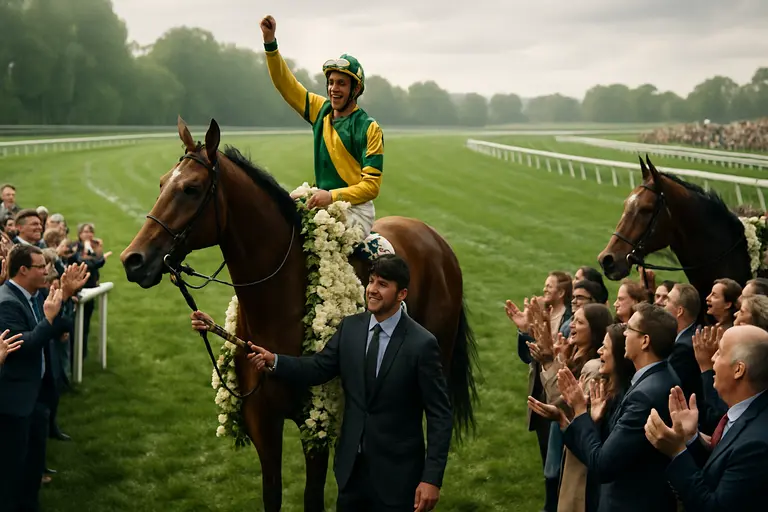
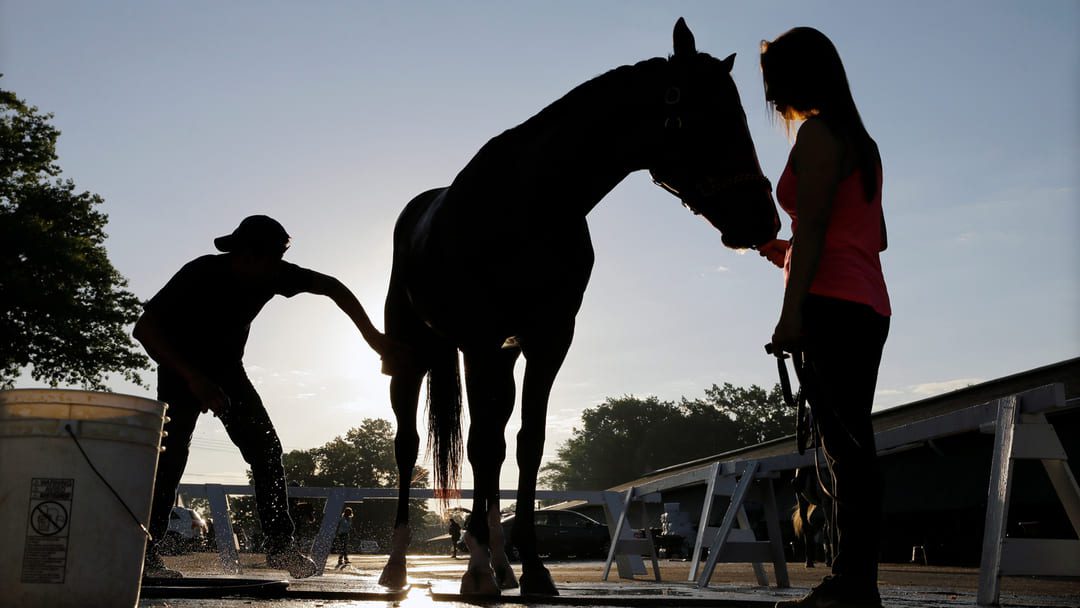
The record of 2-Year-Old Stakes runners is persuasive, but it is not a simple ladder from juvenile promise to classic success. The best evidence points in two directions at once: racing at age two often gives a Thoroughbred a meaningful developmental base, yet even the most famous juvenile races have produced mixed results when measured against later Triple Crown performance.
That tension is what makes juvenile form such a demanding subject. A precocious colt can look polished in October and still fail to carry the same advantage into the next spring. A less exposed horse can improve sharply with age, distance, and conditioning. Trainers are not merely chasing early trophies; they are trying to educate young horses without asking for too much too soon. When exploring further reading within the same network, Racebook Review offers insights that complement this analysis of race evidence, conditioning, and historical performance.
What 2-Year-Old Stakes Actually Prove
2-Year-Old Stakes As A Baseline
At their best, 2-Year-Old Stakes identify horses that already understand the basic tasks of racing: breaking cleanly, accepting pressure, changing gears, and finishing while still learning their bodies. Those skills matter because young Thoroughbreds are not finished products. A juvenile who can settle behind speed or quicken after traffic has shown more than raw talent. He or she has shown race craft.
The strongest historical argument for juvenile exposure comes from the difficulty of winning the Kentucky Derby without having raced at age two. The research file supplied for this analysis includes Derby records showing that horses without juvenile starts have been rare Derby winners. It also contains a conflict that deserves caution: one note identifies Apollo in 1882 and Justify in 2018 as the two since 1882, while another notes that from 1937 to the present, 75 Derby starters did not race at age two and only Justify in 2018 and Mage in 2023 won. Because those statements cannot both serve as the same all-time count, the responsible reading is narrower: Derby success without any age-two racing has been unusual, and exact historical framing should be checked against the full official Derby record.
Derby Records Demand Caution
The caution matters because juvenile racing is not proof of future class by itself. A horse may run early because he is physically forward, because his connections believe he needs experience, or because a specific race fits his stage of development. Another horse may wait because of timing, conditioning, or a conservative training plan. The presence or absence of an age-two start is a signal, not a verdict.
That is why young Thoroughbred talent should be judged through repeated evidence rather than one early reputation. The serious question is not whether a juvenile was brilliant once. It is whether the horse’s performance pattern suggests resilience, tractability, and the capacity to stretch that ability into tougher races.
Major Juvenile Races Leave Uneven Clues
Breeders’ Cup Juvenile Graduates
The Breeders’ Cup Juvenile is one of the clearest examples of a race with high prestige and limited predictive certainty. As of 2026, the research notes identify only three winners of that race who later won a Triple Crown race: Timber Country from the 1994 Juvenile, Street Sense from the 2006 Juvenile, and Nyquist from the 2015 Juvenile. That is a striking list because it includes major horses, but it is also short compared with the stature of the event.
The explanation is not that the Juvenile lacks quality. Rather, it asks young horses to peak in a demanding championship setting months before the spring classics. Some can hold or improve their level. Others are overtaken by later developers. The distance, pace pressure, travel, and maturity gap between late autumn at age two and the following spring can alter the order quickly.
Champagne And Late-November Evidence
The Champagne Stakes offers a different historical signal. The research notes state that the Grade 1 Champagne at Belmont Park, for 2-year-olds, produced 23 Kentucky Derby winners between 1892 and 2010. That figure suggests the race has long been a meaningful class marker. Yet even there, the proper reading is careful. A race can be historically influential without turning every winner into a classic horse.
The Kentucky Jockey Club Stakes, run annually during the last week of November at Churchill Downs, gives another useful late-season test for young runners. The research notes state that multiple winners of that Grade II race went on the next spring to compete in, or win, Triple Crown trial races. That wording is important. Competing in trials and winning classics are different achievements. Late juvenile strength can place a horse on the path, but the next season still asks for physical growth, soundness, and adaptability.
Surface And Safety Shape The Record
Speed Figures Need Context
Performance figures can sharpen the discussion, but they should not replace race reading. In the 2026 Equibase statistics cited in the research, the highest male 2-year-old speed figure was 105, recorded by Hughes in the American Pharoah Stakes at Santa Anita on October 3, 2026, according to Equibase leaders. That is a clear piece of current-season evidence, and it belongs in any sporting assessment of top juvenile form as of October 5, 2026.
Still, a figure is not the whole race. The surface, pace shape, field depth, and the way a young horse achieves that number matter. A juvenile who runs fast while relaxed and efficient may be giving a different signal from one who runs fast through pressure that leaves a mark. Trainers often watch the recovery as closely as the performance, because a two-year-old’s next step depends on how the race is absorbed.
Track Conditions Are Not A Footnote
Surface should be central to any historical reading of juvenile stakes form. The research file points to U.S. injury tracking for 2-year-olds by surface type from 2009 through 2022, with measurable variation in injury incidence depending on racing surface. The relevant published record is available through The Jockey Club report.
That data does not tell us which individual horse will progress from a juvenile stakes race to a classic campaign. It does remind us that performance records are produced under specific physical conditions. Dirt, turf, and synthetic surfaces can place different demands on stride, traction, and fatigue. A young horse’s form line is therefore inseparable from where and how that performance occurred.
Juvenile stakes success should be read alongside later starts, not isolated as a single credential.
Trainer intent matters, but public records only confirm race participation and results, not every private training reason.
Speed figures are strongest when paired with trip notes, surface context, and evidence of recovery.
2-Year-Old Stakes Require Patient Interpretation
Evidence Before Labels
The cleanest reading of 2-Year-Old Stakes history is that early class matters, but it does not settle the future. The Champagne record gives juvenile stakes form real historical weight. The Breeders’ Cup Juvenile record shows that even championship juvenile success converts to Triple Crown success only for a select few. Derby records, despite the conflict in the supplied notes, support the broader point that racing at age two has often been part of the profile for top classic horses.
For trainers, the challenge is balancing education and preservation. A major juvenile stakes race can teach a horse to cope with pressure, travel, crowds, and faster fractions. It can also reveal limitations that were hidden in easier company. The best barns read those signals without forcing a young horse into a schedule that the animal is not ready to handle.
For analysts, the task is similar. Juvenile form should be respected without being frozen in place. A sharp two-year-old may train on, flatten out, or improve again with distance. A horse absent from the juvenile stakes scene may be behind on experience yet still capable of development. The historical record supports no lazy rule. It asks for patient reading of class, timing, surface, and the trainer’s management of a still-growing athlete.
The Breeders Cup calendar tightened sharply after a compressed run of late September and early October prep races, leaving the sport with a shorter, clearer runway toward the World Championships at Keeneland Race Course in Lexington, Kentucky, on October 30-31, 2026. As of October 5, 2026, the cited Santa Anita opening-weekend races, the Zenyatta Stakes, the Flower Bowl Stakes, and the October 2-3 juvenile events had already taken place or sat on dates that had passed. Without verified results in the supplied research, the safest analysis is not to assign winners or form upgrades, but to assess what those calendar positions meant for each division.
The official Challenge Series frame remains central because these races were designed to award automatic starting positions into designated Breeders’ Cup divisions, subject to the normal entry process. The official Breeders’ Cup Challenge schedule lists the qualifying structure for the series Breeders’ Cup Challenge schedule. That matters because the final month before the Championships is not only about identifying the fastest horses; it is also about determining which connections have earned defined access points, which juveniles have handled graded pressure, and which older horses have held form close enough to championship weekend.
Breeders Cup Calendar Context Before Keeneland
Breeders Cup Calendar Timing Had Already Shifted
The most telling feature of the Breeders Cup calendar in this research was the amount of action packed into a narrow window. Santa Anita’s Autumn Meet opening weekend on September 26-27, 2026, included four Breeders’ Cup Win & You’re In Challenge races. The Zenyatta Stakes, listed on September 27, was identified as one of the final Challenge opportunities for the Distaff division. Then the Flower Bowl Stakes, a Grade II race tied to the Maker’s Mark Breeders’ Cup Filly & Mare Turf, was moved to October 1 after weather forced a rescheduling from September 26.
That sequence matters from a sporting standpoint. A late rescheduling can alter recovery patterns, shipping plans, and the spacing between a prep and the championship assignment. The research does not provide field lists, results, margins, fractions, or track conditions, so it would be improper to assess individual performances. Still, the dates alone show how narrow the margin became for horses using these races as springboards. A filly exiting the Flower Bowl on October 1, for example, had less than a month before the Filly & Mare Turf division gathered at Keeneland.
Pre-Entry Now Defines The Next Checkpoint
The Championships schedule supplied by Breeders’ Cup places the 2026 World Championships on October 30-31 at Keeneland, with pre-entry due by noon Eastern Daylight Time on October 19, 2026, and post times and race order scheduled to be announced on October 21 Breeders’ Cup Championships schedule. That creates a distinct administrative and sporting checkpoint after the prep-race phase.
For trainers, the question after these late qualifiers was not simply whether a horse had earned a berth. It was whether the horse came out of the race well enough, had enough time to travel or remain settled, and could be prepared for the demands of Keeneland. The research supports the dates and qualifying structure, but not the condition of any individual runner. That distinction is essential. Calendar pressure can be analyzed; unsupported horse-by-horse claims cannot.
Juvenile Divisions Took Center Stage In Early October
October 2, 2026, was one of the key juvenile dates in the research. Keeneland hosted the Darley Alcibiades Stakes, a Grade I Challenge Race for the Breeders’ Cup Juvenile Fillies division, and the Jessamine Stakes, a Grade II Challenge Race for the Juvenile Fillies Turf division. Because both were staged at Keeneland, they carried a practical relevance beyond qualification. Young horses were asked to perform at the same track that will host the Championships later in October.
That does not mean a Keeneland prep automatically predicts championship success. Juveniles can progress quickly, regress after a demanding race, or react differently when pace and field composition change. But racecourse experience is still a meaningful piece of evidence. The Breeders Cup calendar placed those fillies in a position to show how they handled Keeneland’s race-day setting before the championship entries were finalized.
Belmont Park Added More Juvenile Sorting
October 3, 2026, added another juvenile cluster. The Champagne Stakes, listed as a Grade I Challenge Race for the Breeders’ Cup Juvenile, served two-year-old colts and geldings. The Futurity Stakes, a Grade III race, awarded a berth in the Breeders’ Cup Juvenile Turf Sprint. The Miss Grillo Stakes, a Grade II Challenge Race, fed into the Juvenile Fillies Turf division.
Those three races indicate how wide the juvenile pathway had become by early October. Dirt route prospects, turf sprint types, and turf fillies all had separate opportunities to secure championship positions. For analysts, this is where caution is most valuable. Juvenile races can produce visually strong winners, but the research does not give finishing times, beaten margins, trip notes, or pace figures. The responsible reading is that the dates completed a major sorting stage, not that they settled divisional rankings by themselves.
Older-Horse And Turf Signals Remained Division-Specific
Distaff And Filly-Mare Turf Timing Was Tight
The Zenyatta Stakes on September 27 was noted among the final Win & You’re In races for the Distaff division. The Flower Bowl Stakes on October 1 carried an automatic berth for the Maker’s Mark Breeders’ Cup Filly & Mare Turf. Together, they show how different championship divisions faced different timing demands. Dirt mares exiting the Zenyatta had roughly a month to the Distaff, while turf mares using the rescheduled Flower Bowl had an even tighter turnaround.
For the Distaff, a late prep can be useful if a horse needs a current race to sharpen fitness. It can also be demanding if the race requires a hard effort. For the Filly & Mare Turf, the rescheduled Flower Bowl created a more compressed final preparation than originally planned. The research confirms the date change and divisional connection, but it does not confirm how the surface played, how the race unfolded, or which horses advanced. Those gaps should keep analysis measured.
Automatic Berths Do Not End Selection Questions
A Win & You’re In berth is a sporting achievement, but it does not remove every question before championship weekend. Connections still had to reach the October 19 pre-entry deadline, and race order details were not due until October 21. That sequence means the prep phase and the entry phase are separate stages on the same road.
Readers tracking form from these events may also find related race-by-race context in Breeders’ Cup contenders from 2026 preps, especially where prior stakes outcomes help frame championship readiness. For a broader perspective within the same network, check out racebookreview.com, a related site in the network. However, this analysis stays focused on the athletic and calendar implications rather than wagering angles.
What The Breeders Cup Calendar Now Clarifies
The Breeders Cup calendar now clarifies three sporting points. First, the qualifying window described in the research had largely passed by October 5, 2026. Second, the next verified checkpoint was the October 19 pre-entry deadline at noon Eastern Daylight Time. Third, Keeneland’s October 30-31 Championship dates gave late September and early October prep horses only a limited recovery and preparation span.
That structure places extra weight on horsemanship. Trainers must judge whether a prep race advanced a horse’s condition or took more out of the horse than expected. Jockeys and exercise riders become part of the evidence chain through morning behavior, gallop energy, and how a horse travels after the race, though none of those details appear in the supplied research. Racing offices and connections then face the formal pre-entry process before the final championship shape can be read with confidence.
The key caution is that a calendar can identify pressure points, but it cannot replace verified performance data. The dates show which divisions were affected: Juvenile, Juvenile Fillies, Juvenile Fillies Turf, Juvenile Turf Sprint, Distaff, Filly & Mare Turf, Sprint, and other qualifying paths connected to the Santa Anita opening weekend. They do not tell us who emerged in peak condition. Until official results, charts, and confirmed entries are applied, the best reading is structural rather than declarative.
In that sense, the late prep schedule did its job. It narrowed the field of discussion, created automatic access points, and forced each division toward firmer definition before Keeneland. The next stage was no longer about projecting which prep races might matter. It was about which horses came through those races sound, eligible, and ready to be named by the October 19 deadline. That is where the road to the 2026 Breeders’ Cup shifted from qualification to championship assembly.
The Churchill Track Conditions record from May 2026 offers a useful sporting case study in how surface, weather, and prep timing should be read before major stakes events. The central lesson is not that one label, such as fast dirt or firm turf, explains every result. It is that the label becomes meaningful only when paired with distance, running style, recent works, and the way the surface held through the race card.
Churchill Downs staged several major spring races under conditions that were recorded as stable. On May 1, 2026, the 152nd Longines Kentucky Oaks was run over a fast main track, with Always A Runner defeating a field of 13 fillies according to the official Churchill Downs release. The following day’s Kentucky Derby card also remained on fast dirt in the research record, while the weather file for Louisville described May 2 as mostly cloudy with only trace precipitation during the afternoon and evening, as shown by the National Weather Service archive.
Fans seeking more insights into racing coverage can explore Racebook Review, a related site within the same network, which ties into the broader analysis of track conditions and racing strategies. This analysis stays with the sporting question: how should horsemen, analysts, and fans evaluate a surface before a stakes race without overstating what the data can prove?
Churchill Track Conditions And Fast Dirt
Churchill Track Conditions In The Oaks Window
The Oaks result is a good starting point because the official race note identified both the race status and the track condition. A fast dirt track on May 1 meant there was no need to reinterpret the form through a wet-track lens. That matters with three-year-old fillies, because a sudden change from dry dirt to sealed or muddy footing can alter how early speed carries, how comfortably a closer handles kickback, and how much energy a horse spends holding position.
The 13-filly Oaks field also showed why a race-day condition cannot be reduced to a single word. “Fast” describes the main track category, but it does not describe every tactical choice inside the race. A fast surface may help forward horses if the track is carrying speed, yet it can still reward a runner with stamina if the pace is contested. The label is the baseline, not the full diagnosis.
Weather Evidence From Derby Day
The May 2 weather record helps explain why the Derby-day surface was not treated as compromised in the research notes. Trace precipitation is not the same as sustained rain, and the record did not indicate enough moisture to move the main track away from fast. For analysts, that distinction is essential. A cloudy afternoon can look threatening, but the actual precipitation level is what matters for surface interpretation.
That is where caution protects the analysis. If the track remained fast, then a horse’s performance should not be excused or upgraded simply because the sky looked unsettled. The more relevant questions are how the track played at the race distance, whether previous races on the card showed a speed-favoring pattern, and whether runners were finishing with normal energy.
How Bias Reports Should Be Read
Sprint Speed Was A Strong Signal
The spring-meet research set reported a notable early-speed pattern in short dirt sprints from April 25 through June 14, 2026. In six-furlong dirt races, frontrunners won 34 of 69 races, close to 49 percent. At seven furlongs, early or pace-pressing runners won 20 of 43 races, about 46 percent. Those figures are useful because they separate sprint dynamics from route assumptions.
The caution is that bias figures are descriptive, not automatic. They tell us what happened across a sample; they do not prove why it happened in every race. A high share of frontrunning sprint winners may reflect surface speed, race shape, field composition, or a combination of those factors. The right reading is not “all speed is safe.” The better reading is that a six- or seven-furlong dirt stakes at Churchill during that period required close attention to early position.
Post Position Was Distance Specific
The same spring research noted a sharper inside and early-pace pattern at six furlongs, while seven-furlong dirt races appeared more favorable to early pace from mid-to-outside posts. That difference matters because Churchill’s chute races and one-turn configurations do not ask the same question at every distance.
A rail draw can be an asset if the horse breaks cleanly and holds position. It can become a problem if the runner lacks early speed and is forced to take dirt behind faster rivals. At seven furlongs, a mid- or outside draw may allow a pace-pressing horse to stay in the clear before the turn. This is why track-condition analysis should be tied to distance and field layout, not treated as a general rule for the entire meet. A related discussion of how race setup can change prep interpretation appears in this analysis of prep stakes race conditions.
Turf And Dirt Prep Signals
Firm Turf Changed The Modesty Read
The May 1 Modesty Stakes supplied a different surface lesson. The Grade III race was run at 1 1/8 miles on the Matt Winn Turf Course, which was rated firm in the research record. Kathynmarissa rallied widest to win in 1:48.13. That result should not be read the same way as a fast-dirt sprint result, because the energy demands were different.
Firm turf can allow high-quality late runners to sustain momentum, especially when they are able to angle out and build a run without being stopped. Kathynmarissa’s wide rally showed that the course did not make outside movement impossible in that race. Still, one turf stakes does not prove a course-wide closer bias. It shows that on that day, in that race, a wide late move was viable on firm ground.
Final Works Matched Race Week Surfaces
Prep work also belongs in the surface discussion. On April 26, 2026, final works before the Oaks and Derby were conducted over a fast main track in the research record. Potente worked five furlongs in :57.80, while Intrepido worked a half-mile in :45.00. Those times stand out, but the more useful point is that the workouts occurred over the same broad surface category later seen during the major race window.
That alignment can help analysts evaluate readiness, but it should not be exaggerated. A fast work over fast dirt indicates a horse handled that morning’s footing. It does not guarantee the same efficiency under race pressure, with a full field, kickback, and a different pace. Morning drills are evidence of condition and sharpness; race-day performance still depends on how that energy is used.
Churchill Track Conditions Stakes Read
A disciplined read of Churchill Track Conditions before a major stakes event should start with the official surface designation, then test it against weather, distance, running style, and earlier races on the card. The May 2026 examples support that method. The Oaks was run on fast dirt. Derby-day weather produced only trace precipitation in the cited record. The Modesty was run on firm turf and allowed a wide late rally. The Winning Colors Stakes on May 25 was run over fast dirt at six furlongs, with Usha defeating Zeitlos by a head in 1:10.21 after early and tactical speed proved significant.
The cleanest lesson is that surface labels should narrow the analysis, not end it. Fast dirt at Churchill in May 2026 did not mean every race unfolded the same way. Sprint data pointed toward early speed, especially at six and seven furlongs, while the firm turf example showed that late movement could still win when the course allowed sustained momentum.
Start with the official track or course condition.
Check verified weather rather than relying on appearance alone.
Separate sprint evidence from route evidence.
Read post position through distance and running style.
Use final works as supporting evidence, not proof.
That is the practical value of Churchill Track Conditions analysis. It does not create certainty. It helps separate real performance signals from assumptions created by a familiar label. For major stakes, that difference can change how a prep race is understood weeks later.
The impact of trainer standings on upcoming North American race outcomes is real, but it is often overstated when standings are treated as a shortcut for horse-level evidence. A leading barn can signal depth, placement skill, and well-managed development cycles. It cannot, by itself, explain whether a specific horse fits the distance, surface, pace, class level, or recovery pattern of a coming race.
That distinction matters in October 2026 because recent trainer results have created strong public narratives around several major barns. The most firmly sourced annual marker from the supplied research is Brad Cox’s 2025 earnings title. BloodHorse Daily reported that Cox took the 2025 North American trainer earnings title, the third such title of his career, with Steven Asmussen, Chad Brown, Mark Casse, Todd Pletcher, Bill Mott, Saffie Joseph Jr., Michael Maker, Brendan Walsh, and Bob Baffert also listed among the top 10 earners BloodHorse Daily report. That information is useful, but it should be read as stable-level context rather than a forecast that transfers automatically to each entrant.
How Trainer Standings Shape Race Readiness
What Trainer Standings Actually Measure
Trainer tables usually reflect a mix of wins, earnings, starts, and placing consistency. Each measure says something different. Earnings can be shaped by success in high-value races. Win totals can reward volume. Win percentage can identify efficiency, but it can also be affected by selective placement. In-the-money consistency, where available, can show how often a barn sends out horses capable of completing competitive efforts.
For race analysis, the central question is not whether a trainer is prominent. It is why that trainer is prominent. A barn leading by earnings may have captured a small number of major prizes. Another barn may compile steady meet-level success through claiming, allowance, and stakes placement. Those profiles can point toward different strengths. One suggests elite-horse management; the other may suggest broad operational depth across conditions.
This is why trainer standings can help shape early expectations without replacing a reading of the horse. A high-ranking trainer entering a horse in a suitable class spot after a logical spacing pattern deserves respect. The same trainer entering a horse at an unfamiliar distance, on a less proven surface, or after an interrupted preparation still presents open questions.
Stable Strength Versus Individual Form
Stable strength can influence race outcomes through practical sporting mechanisms. Strong barns often have access to well-bred horses, established exercise programs, experienced assistant teams, and skilled riders. They may also have enough inventory to place horses more precisely rather than forcing one runner into a poorly suited condition.
Yet individual form remains the sharper tool. A horse coming off a demanding race, returning from a layoff, changing surface, or stretching out in distance can be vulnerable regardless of the trainer’s position in the national table. By contrast, a runner from a less prominent barn can be highly competitive if the recent race pattern, pace profile, and condition book placement are favorable.
The safest use of trainer data is comparative. If two horses have similar speed, class, and surface evidence, the trainer profile may help separate them. If the horse-level evidence points clearly in one direction, standings should not override it.
Recent North American Examples Show The Limits
Cox’s 2025 Title As A Context Marker
Cox’s 2025 earnings title provides a clean example of what a standings signal can and cannot do. It confirms that his stable performed at the highest annual level by earnings in North America, and that his operation belonged in the same national conversation as Asmussen, Brown, Casse, Pletcher, Mott, Joseph, Maker, Walsh, and Baffert. That is meaningful sporting evidence about stable quality over a defined period.
It does not prove that every Cox entrant in late 2026 is better placed than every rival. Race conditions remain decisive. A sprinter trying two turns, a turf horse switching to dirt, or a developing three-year-old facing older rivals would still need evidence specific to that assignment. The standings provide a frame; the race record supplies the test.
The supplied research also included current 2026 numerical standings from sources outside the approved citation list for this article. Because those figures could not be linked here under the sourcing rules, they should be treated cautiously in this analysis rather than repeated as verified rankings. That is especially relevant for active-year tables, which can change quickly after major race days.
DeVaux And Golden Tempo Reframed A Historic Marker
The Kentucky Derby on May 2, 2026 supplied a different kind of trainer signal. Golden Tempo won the race, and Cherie DeVaux became the first woman to train a Kentucky Derby winner, according to the Associated Press AP Derby report. That result was not merely a standings note; it was a high-pressure performance in a defining race.
For future form study, the sporting question is how such a result changes evaluation of a stable. A Derby win confirms that a trainer has managed a horse through a demanding preparation toward a peak performance on a major date. It does not make every future starter from that barn equally proven. The value lies in identifying repeatable signals: suitable spacing, progression in race placement, adaptability to race flow, and the ability to produce a horse ready for a specific test.
Historical significance can shape attention, but attention is not the same as predictive evidence. The race record should remain the anchor.
Track Context Changes The Reading
Meet Titles Are Not National Tables
Trainer performance at a single meet can be highly informative, especially when the same surface, condition book, and regional horse population recur over several weeks. A Saratoga title, a Del Mar run of wins, or a strong Churchill Downs sequence can show that a barn is placing horses effectively in that environment. Still, meet success is not the same as a national table.
A meet table captures a narrower sporting sample. It may reflect local stalls, owner concentration, surface preferences, or a trainer’s decision to target that circuit. National standings reflect broader earnings and volume across tracks. Each has value, but neither should be used alone.
The same caution applies to surface-specific form. A trainer whose stable excels with turf routers may not show the same edge with dirt sprinters. A barn that sends out sharp first-time starters may be less dominant with older marathon types. For related track-level thinking, readers can consult track-centered racing resources at Racebook Review for insights beyond race-by-race evidence.
Race Conditions Remain The Filter
Before giving weight to a trainer table, the race conditions should be filtered in order:
Surface: Dirt, turf, and synthetic results should not be merged without care.
Distance: Sprint and route records can reflect different training strengths.
Class level: Stakes, allowance, claiming, and maiden races test different parts of a stable.
Spacing: Time between starts can reveal whether a horse is being advanced, protected, or reset.
Field shape: Pace pressure, post position, and running style still decide many races.
Using trainer standings after those filters is more reliable than using them before the horse’s profile is understood. The table can then support an already coherent case rather than create one.
How To Weigh Trainer Standings Without Overstating Them
A Practical Evidence Order
A disciplined race review should begin with the horse, not the stable name. Recent races, class movement, trip notes, surface record, and distance suitability come first. The trainer profile follows as a secondary layer. Jockey-trainer familiarity, where verified, can sit beside that layer, but only if supported by current records.
That order prevents a common analytical error: crediting the trainer for strengths the horse has not shown. It also prevents the opposite mistake, which is ignoring a barn that repeatedly places horses in spots where they can improve. The best interpretation sits between those extremes.
Readers comparing racing coverage across related network sites can also find track-centered resources at Racebook Review, though the sporting analysis here stays focused on performance rather than wagering decisions.
Where The Signal Is Strongest
The trainer signal is strongest with developing horses, layoff returns, class placement, and surface changes. In those areas, the trainer’s judgment and preparation pattern are highly visible. A trainer known through recent results for advancing young horses can deserve extra scrutiny when entering a lightly raced runner in a tougher spot. A barn that wins with fresh horses can make a layoff runner more credible, if the horse’s prior form fits.
The signal is weaker when a race contains exposed older horses with long, consistent records. In that case, the horses may have already revealed their level. Trainer reputation still matters, but the running lines may matter more.
Trainer Standings In North American Race Outcomes
Trainer standings matter because they condense stable performance into a readable form. They can identify barns operating at a high level, point to effective placement, and help explain why certain horses arrive with strong preparation signals. The BloodHorse evidence around Cox’s 2025 title and the AP account of DeVaux’s 2026 Derby win both show how trainer achievement can become part of the sporting record.
They should not be treated as a race result in advance. North American racing is too dependent on surface, distance, class, pace, weather, race spacing, and individual development for one standings table to carry the full argument. A leading trainer can increase confidence only when the horse’s own evidence agrees.
The most useful approach is cautious and layered: verify the standings source, separate earnings from efficiency, compare national and meet-level records, then return to the horse’s current assignment. Used that way, trainer standings become a meaningful support tool rather than a substitute for race analysis.
Why U.S.S. Valor Is Skipping the Breeders Cup Juvenile
U.S.S. Valor did almost everything a two-year-old could do to demand another major race. He overcame an imperfect start and traffic before accelerating clear by 6½ lengths in the Grade 1 Champagne Stakes, earning a Breeders’ Cup Juvenile berth and 10 Kentucky Derby qualifying points.
Then his connections stopped. The U.S.S. Valor Breeders’ Cup decision is compelling precisely because nothing appears to be wrong with the colt: owner Barry Irwin said he came out of the Champagne well, yet Team Valor will end his 2026 campaign rather than chase another championship four weeks later.
The Champagne Answered More Than A Speed Question
U.S.S. Valor entered the Champagne with one enormous performance already on his record. After finishing third in a troubled Saratoga debut on August 8, he returned September 5 and won a seven-furlong maiden by 13¼ lengths, earning a 105 Beyer Speed Figure.
His Grade 1 victory was different.
Rather than controlling inferior horses in a clean trip, U.S.S. Valor broke a little slowly, settled behind rivals and waited for room. Manny Franco eventually angled him outside near the quarter pole, and the colt quickly separated from Gaudreau and Club Reign.
The final margin was 6½ lengths, the mile was completed in 1:34.84, and the performance earned a 95 Beyer. The Champagne race recap matters because the value of the performance was not simply the number. The colt encountered a different kind of race and still finished decisively.
Trainer Shug McGaughey described the experience as useful education. For a lightly raced juvenile, learning to handle adversity can matter as much as producing another spectacular figure.
Winning A Breeders’ Cup Berth Does Not Make It Mandatory
The Champagne is a Breeders’ Cup “Win and You’re In” qualifier. U.S.S. Valor therefore earned a fees-paid berth into the $2 million Juvenile at Keeneland.
That opportunity is considerable. The Juvenile can decide the two-year-old championship and gives an emerging colt a first chance to prove himself around two turns against a national field.
But automatic entry is an opportunity, not an obligation.
Irwin said U.S.S. Valor will not race again this year. The plan is to let McGaughey ease him down before building him back toward a three-year-old campaign centered on the Kentucky Derby. McGaughey expects the colt to remain in light training in New York before his stable eventually moves south for the winter.
The decision is therefore not a retreat from competition. It is a choice about where the next hard race belongs in the horse’s development.
That distinction matters. Juveniles do not develop on identical schedules, and a race that is logical for one talented two-year-old can be unnecessary for another.
Hughes Shows There Is No Single Correct Path
The contrast with Hughes makes the decision more useful to evaluate.
Hughes came out of Saturday’s Grade 1 American Pharoah Stakes headed directly toward the Breeders’ Cup Juvenile. He won his first two-turn start by six lengths, remained unbeaten in four races and earned a 100 Beyer Speed Figure.
His connections therefore have a different reason to continue. Hughes has already answered the two-turn question U.S.S. Valor has not yet faced, and his next assignment extends the progression rather than introducing that test for the first time.
Readers who followed Hughes’ juvenile development have already seen that progression from sprinting talent toward longer Grade 1 races.
The American Pharoah follow-up confirmed Hughes exited the race in good condition and is bound for Keeneland. Santa Anita also reported that his 100 Beyer was the highest figure by a two-year-old this year at one mile or farther.
The comparison is revealing:
Measure
U.S.S. Valor
Hughes
Latest Grade 1
Champagne Stakes
American Pharoah Stakes
Distance
1 mile, one turn
1 1/16 miles, two turns
Winning margin
6½ lengths
6 lengths
Latest Beyer
95
100
Career record
3 starts: 2 wins, 1 third
4 starts: 4 wins
Previous major signal
105 Beyer maiden win
Grade 1 Del Mar Futurity win
Immediate plan
End 2026 campaign
Breeders’ Cup Juvenile
Longer-term question
How he handles two turns
How far his unbeaten run extends
Neither strategy has been validated yet. That is the point.
Two elite juveniles can need different things.
The Derby Argument Is About Time, Not A Juvenile Curse
Irwin has also pointed to a historical fact that complicates the assumption that a top juvenile should automatically run in the Breeders’ Cup: only Street Sense and Nyquist have won the Juvenile and then captured the Kentucky Derby the following spring during the Breeders’ Cup era.
That statistic should not be stretched into causation.
The Juvenile does not prevent horses from winning the Derby. Many Juvenile starters simply are not the same horses five or six months later. Some peak early. Some encounter setbacks. Others develop more slowly or prove better suited to different distances.
What Team Valor is buying by skipping Keeneland is developmental time.
U.S.S. Valor avoids another demanding race after making three starts between early August and early October. He can recover, mature physically and begin his route preparation without having to peak again at the end of the month.
McGaughey has mentioned Gulfstream Park’s traditional three-year-old series the Holy Bull, Fountain of Youth and Florida Derby as races that could eventually be considered, although no specific return has been committed to yet.
That uncertainty is appropriate in October.
U.S.S. Valor Still Has A Major Question To Answer
Stopping now does not make U.S.S. Valor a stronger Derby prospect by itself.
His two best victories have come at seven furlongs and a one-turn mile. The Kentucky Derby is 1¼ miles around two turns, with a much larger field and a very different tactical environment.
Irwin believes the colt’s stride, physical makeup and acceleration will translate. McGaughey has also expressed confidence in his ability to handle more distance. But those remain projections until U.S.S. Valor actually does it.
Hughes, by comparison, has already passed his first two-turn examination.
That makes the winter more interesting, not less. U.S.S. Valor will enter his three-year-old season with less route evidence but without another autumn race in his legs. Hughes will arrive with greater two-turn experience but after taking on the Breeders’ Cup.
Rest is not proof of progress. It creates the opportunity for progress.
Patience Becomes Part Of The Derby Bet
The most important part of the U.S.S. Valor story is not that his connections rejected a $2 million race. It is that they decided another major victory in October would not necessarily tell them what they most need to know about their horse.
He has already shown speed. The Champagne added traffic, restraint and acceleration under pressure. What remains unanswered is whether that ability will stretch around two turns and eventually toward the Kentucky Derby distance.
The U.S.S. Valor Breeders’ Cup decision gives McGaughey additional time to find out without forcing the answer this month.
Hughes will pursue the championship race now. U.S.S. Valor will wait.
The better strategy will not be decided at Keeneland on Breeders’ Cup weekend. For U.S.S. Valor, the real judgment comes next spring, when patience either looks like disciplined horse management—or simply an opportunity that was passed over.
The September stakes horses conversation begins with a narrow evidence base, not a broad claim about every promising juvenile in training. The clearest verified signal from early September 2026 came in the Grade 1 Spinaway Stakes at Saratoga on September 5, where Summer Starlet produced the kind of seven-furlong dirt performance that changes how a young filly is assessed for the rest of the fall.
That does not mean every horse listed in early-season notes has the same level of support. Some names in the supplied research have strong race references but lack a permitted primary or high-authority link here. The safest approach is to separate confirmed results from provisional profiles, then ask what each confirmed result can tell us about class, pace, distance, and timing.
Why September stakes horses Matter After Saratoga
September stakes horses Need Context Beyond The Finish
For September stakes horses, the first mistake is treating a placing line as a full explanation. The Spinaway was not just a juvenile race with a decisive winner. It was a Grade 1 test at seven furlongs on dirt, staged late enough in the Saratoga meet to carry weight as a fall indicator, but early enough in these fillies’ careers that development can still change quickly.
Summer Starlet won the Spinaway by 4 3/4 lengths over Harper’s Corner in 1:22.72, according to the Equibase recap. The margin matters because it was not a narrow finish explained only by trip luck. The time and distance also matter because seven furlongs asks more than pure debut speed. Juveniles must hold concentration, respond to pressure, and still finish through the final furlong.
A Juvenile Signal, Not A Fixed Ranking
The result placed Summer Starlet at the front of the current discussion, but juvenile rankings are fragile. Two-year-olds can improve sharply between starts, regress after a hard race, or show that a one-turn performance does not automatically stretch into a different fall assignment. That uncertainty is not a weakness in the analysis. It is the proper frame for young racehorses still defining their preferred rhythm.
Harper’s Corner deserves to stay in the conversation because finishing second in a Grade 1 at Saratoga is still meaningful evidence. Angel of Kirk, listed in the research as third behind Summer Starlet and Harper’s Corner, also remains relevant because the Spinaway created a direct comparison against a high-level winner. Neither should be treated as exposed or dismissed solely because Summer Starlet was superior on September 5, 2026.
Summer Starlet Sets The Fall Standard
The Spinaway Performance Had Substance
Summer Starlet’s Spinaway win stands out because of how the performance fits the normal questions around juvenile fillies. Could she handle graded company? The Grade 1 result answered that part. Could she finish strongly at seven furlongs? The official margin suggests she did more than merely survive the distance. Could her style translate beyond one perfect setup? The supplied research points to both off-the-pace and stalking ability, and the Daily Racing Form report described the stretch move that made the result so forceful.
That blend is why her next assignment carries genuine sporting interest. The research lists the Grade 1 Alcibiades Stakes at Keeneland on October 2, 2026, as her next target. That date is close enough to the Spinaway to raise a normal recovery question, yet the target also makes sense for a filly whose connections are testing whether her Saratoga form can hold under a new race setting.
The Alcibiades Should Ask A Different Question
The Spinaway measured acceleration, maturity, and composure at seven furlongs. The Alcibiades, as a fall Grade 1 at Keeneland, was identified in the research as the next step in her campaign. Without importing unsupported details, the analytical point is straightforward: a new track, a new race date, and another Grade 1 field can reveal whether the Spinaway was a peak effort or the start of a broader profile.
For readers who follow young runners across multiple prep paths, the same caution applies beyond Saratoga. A juvenile can win impressively in one setting and still need to confirm the performance when pace pressure, surface condition, or field composition changes. That theme also runs through our related analysis of young Thoroughbred talent, where early promise is weighed against repeatable race evidence.
Chasers And Thinly Supported Profiles
Harper’s Corner And Angel Of Kirk Still Matter
The confirmed Spinaway frame gives Harper’s Corner and Angel of Kirk clear relevance. Harper’s Corner was second to Summer Starlet, which places her directly behind the strongest verified September juvenile filly result in these notes. Angel of Kirk was listed as third, and that placing keeps her in the same developmental pool even if the gap to the winner looked significant on the day.
The key is not to force a rematch story. Harper’s Corner may have to show whether she can close the margin under different circumstances. Angel of Kirk may have to show whether her Saratoga placing was a platform or a ceiling. In both cases, the Spinaway supplies a starting point rather than a final judgment.
Where The Research Requires Restraint
Several other horses in the supplied notes are interesting but less secure under the source limits for this piece. Salahudin was described as unbeaten through three starts, including wins at Ellis Park on August 9, 2026, and Churchill Downs on September 12, 2026. Explora was described as a Grade 1 winner scheduled for the Dogwood Stakes at Churchill Downs in September 2026. Life Changing, Girvy Girl, Bandmaster, and Stress Relief were also presented with race references.
Those names should not be ignored, but they should be handled carefully. The notes supplied for Stress Relief conflict with the verified Spinaway order by describing her as second in the same race that Equibase lists with Harper’s Corner behind Summer Starlet. Because of that conflict, this analysis does not treat Stress Relief’s Spinaway placing as settled. The same standard applies to the other profiles: promising race notes are useful prompts, but firm conclusions require official charts or comparable primary documentation.
That restraint is part of responsible coverage. Racing analysis improves when the strongest claims are reserved for the strongest evidence. For broader racing coverage within the same network, Racebook Review offers a complementary perspective, sitting alongside this sport-focused approach, while this article stays with race performance and development.
What Future Racing Opportunities Can Measure
Distance, Pace, And Recovery Are The Tests
The next stage for these fillies and colts is not just about class labels. It is about which traits repeat. A juvenile who wins with a clean outside run may need to prove she can handle traffic. A front-running maiden winner may need to show she can relax when challenged. A late-running filly may need a pace scenario that lets her finish, but the strongest prospects eventually learn to make their own opportunities.
Distance development: Does the horse finish with the same purpose when the assignment changes?
Pace adaptability: Can the horse succeed without one ideal early rhythm?
Recovery pattern: Does a strong September race lead to another sound performance weeks later?
Class confirmation: Can the horse repeat graded form outside the original race setting?
Summer Starlet has the strongest verified September case because she already answered several of those questions at Saratoga. Harper’s Corner and Angel of Kirk remain relevant because they were part of the same Grade 1 result. The thinner profiles may still become major fall stories, but the evidence available here does not justify ranking them on equal footing with the Spinaway principals.
September stakes horses And Future Opportunity
The Fall Picture Should Stay Evidence First
The best reading of the September evidence is that Summer Starlet earned leadership in the juvenile filly discussion through a decisive Grade 1 win, not through projection alone. Her October 2, 2026, Alcibiades target gives her a near-term chance to strengthen that position at Keeneland. Harper’s Corner and Angel of Kirk remain live developmental names because the Spinaway placed them directly against the current standard.
The broader lesson for September stakes horses is restraint. Early-season stakes can identify talent, but they rarely finish the argument. The next races should be judged by what they add: a new distance answer, a cleaner pace response, a sharper recovery pattern, or confirmation that Saratoga form travels. Until those answers arrive, the Spinaway is the firmest September marker, and Summer Starlet is the horse whose fall opportunity is most clearly supported by the verified record.
The Breeders’ Cup Contenders picture as of September 28, 2026, has been shaped less by reputation than by what several horses did in major stakes from June through September. The Breeders’ Cup is scheduled for October 30-31, 2026, at Keeneland, according to the Breeders’ Cup, so the relevant question is how recent wins changed each horse’s sporting profile before that meeting.
Recent stakes victories do not settle every question. They can, however, clarify surface preference, distance range, pace suitability, and class level. That is the proper frame here: not public expectation or price movement, but the evidence supplied by graded stakes results. For those exploring racing content across the same network, Racebook Review offers complementary insights; this analysis, however, focuses strictly on race performance rather than wagering perspectives.
Recent Wins Reset Race Profiles
What A Stakes Win Can Prove
A late-season graded stakes win can do more than add a line to a résumé. It can answer a question that had followed a horse through earlier starts. Knightsbridge, for example, had already won the Grade 3 Fred W. Hooper Stakes on January 24, 2026, and the Grade 3 Gulfstream Park Mile on February 28, 2026. Those wins suggested quality around one turn or mile conditions. His Grade 3 Monmouth Cup win on July 18, 2026, was different because it came by 10¼ lengths in his first attempt at 1⅛ miles.
That distance evidence mattered even before he returned in the Grade 1 Pacific Classic at Del Mar on August 22, 2026. A horse who had looked like a mile performer had produced a dominant nine-furlong win, then added a top-level success in a major summer dirt race. The shift was not cosmetic. It moved his profile from capable miler to a runner with credible claims at longer dirt distances.
Where Caution Still Belongs
A single win can also mislead if it is read without context. The Monmouth Cup margin was striking, but the later Pacific Classic win was the stronger confirmation because it came at Grade 1 level. Even then, the sporting question remains specific: whether Knightsbridge’s best attributes carry into the exact pace, field, and distance demands he will face at Keeneland.
Recent form is evidence, not certainty. That is why the most useful horse profile separates what has been demonstrated from what is still projected. A horse can prove stamina without proving he will reproduce that effort under every pace setup. A horse can prove turf class abroad without proving that the same finish will be available in a North American championship field.
How Breeders’ Cup Contenders Changed Their Profiles
Breeders’ Cup Contenders With Grade 1 Signals
For Breeders’ Cup Contenders, Grade 1 wins carry special weight because they place recent form against a higher class standard. Eunomia’s Grade 1 Clement L. Hirsch Stakes victory at Del Mar in early August 2026 gave her a direct Distaff profile. The supplied research contains a date discrepancy, listing August 4 in one note and August 1 in another, so the cautious point is the verified result: she won the Clement L. Hirsch and earned a Breeders’ Cup Distaff berth. The Kentucky Thoroughbred Association reported that Eunomia earned that berth with her Grade 1 Clement L. Hirsch win in its race report.
The performance detail matters. Eunomia sat off a strong early pace set by Seismic Beauty and Simply Joking, advanced around the turn, and held off Om N Joy in the final furlong. That sequence gives her profile a defined shape: she is not merely a filly with a Grade 1 win, but one who has shown she can use a contested pace to build a finishing run.
Form Lines That Still Need Caution
Eunomia’s record after the Hirsch stood at five wins from 16 starts, with earnings rising to about $566,193 in the supplied research. That is solid, but it also warns against treating one result as a finished identity. Her strongest signal is not dominance by margin; it is the way she relaxed, moved at the right point, and sustained enough to withstand a late challenge.
Om N Joy also gained profile value without winning. She had won the Grade 2 Santa Margarita Stakes on May 30, 2026, then finished second by a half-length to Eunomia in the Hirsch. On August 22, 2026, she came from well back to finish fourth in the Grade 1 Pacific Classic against leading male dirt horses. Those results suggest stamina and resilience, though not the same direct championship claim that comes with a “Win and You’re In” victory.
Dirt Route Evidence After Summer Stakes
Knightsbridge Stretches Beyond Mile Form
Knightsbridge is the clearest dirt example of a profile altered by consecutive stakes wins. He was already known as a capable graded performer before July. The Monmouth Cup supplied the first major route clue, and the Pacific Classic reinforced it. The phrase “versatility” can be overused in racing analysis, but in this case the sequence supports it: January and February mile wins, a July nine-furlong success, and an August Grade 1 win at Del Mar.
The sporting effect is that Knightsbridge can no longer be assessed only through his mile form. His recent wins indicate that he can carry ability around two turns and that his engine remains effective beyond the shorter dirt assignments that framed his earlier 2026 campaign. For Breeders’ Cup Contenders, that kind of evidence changes how trainers, riders, and analysts read race placement.
Eunomia Converts Pace Into Distaff Standing
Eunomia’s Clement L. Hirsch win supplied a different kind of dirt evidence. Knightsbridge changed his profile through distance expansion. Eunomia sharpened hers through race shape. A filly who can sit behind fast fractions and still finish has a practical asset in top-level dirt racing, where early pressure can expose horses who need softer trips.
The Hirsch also linked Eunomia and Om N Joy in a useful way. Om N Joy’s second-place finish by only a half-length kept her relevant, especially after her later Pacific Classic fourth. Yet Eunomia’s advantage is that she has already converted that style into a Grade 1 win and a Distaff berth. The profile gap is not about effort; it is about completed proof.
Turf Winners And Distance Signals
Tiffany Brings International Form To Keeneland
Tiffany (IRE), a 6-year-old mare, entered the autumn with a strong turf profile after winning the Grade 1 Grosser Preis von Berlin in Germany on August 9, 2026, and then taking the Grade 2 Kentucky Turf Cup on September 5, 2026. The supplied research records that she remained unbeaten in her 2026 U.S. season after the Kentucky Turf Cup and had a lifetime mark of 19 starts, nine wins, and top-three finishes in 17 of 19 starts, with more than $1.13 million in earnings.
Her Kentucky Turf Cup win mattered because it placed that international form into a U.S. setting. The supplied notes also state that she defeated reigning Breeders’ Cup Turf winner Ethical Diamond by 1¾ lengths. That result gives her a profile based on current form rather than older reputation. It is the sort of evidence that makes a turf contender easier to assess: class abroad, then confirmation in a North American graded race.
Gimme A Nother Adds Stamina Evidence
Gimme a Nother, a 6-year-old import from South Africa, built her Filly & Mare Turf case through a sequence rather than one isolated performance. She won the Grade 3 Eatontown Stakes on June 13, 2026, then the Grade 2 Beverly D. Stakes on August 1, and then the Grade 1 E. P. Taylor Stakes at Woodbine on September 12, 2026, by a head. The E. P. Taylor was a “Win and You’re In” race, so that result carried both sporting and placement significance.
The distance pattern is the key. The supplied research notes that her 2026 turf wins came over increasing distances from 1 1/16 miles to 1¼ miles. That progression supports a stamina-based profile. It does not prove that a longer championship race will unfold in her favor, but it does show adaptability across more than one distance band.
Breeders’ Cup Contenders and Distance Evidence
Why Surface Switches Matter
Bless the Broken adds another angle to the recent stakes discussion. She had multiple Grade 1 dirt placings, including in the 2025 Kentucky Oaks and Grade 1 Beholder Mile, before switching to grass and winning the Grade 2 Resolute Racing Ladies Turf at Kentucky Downs in September 2026. That win marked her first major stakes victory on turf in the supplied research.
The result does not make her a fully defined turf specialist. It does give her connections more options. A dirt résumé with high-level placings and a new turf stakes win creates a more flexible profile than a horse tied to one surface. The question is whether the Kentucky Downs result reflects a new preference or simply an effective performance under a specific set of conditions.
Comparing The Recent Stakes Signals
The pattern among Breeders’ Cup Contenders is not uniform. Knightsbridge used summer dirt wins to stretch his distance identity. Eunomia used a Grade 1 pace setup to define her Distaff case. Tiffany joined European and U.S. turf evidence. Gimme a Nother built a three-race turf sequence across increasing distances. Bless the Broken introduced a surface-change question with a positive first answer.
Horse
Recent Stakes Signal
Profile Effect
Knightsbridge
Monmouth Cup and Pacific Classic wins
Expanded from mile strength to longer dirt credibility
Eunomia
Clement L. Hirsch Grade 1 win
Confirmed a pace-dependent finishing style for the Distaff
Tiffany (IRE)
Grosser Preis von Berlin and Kentucky Turf Cup wins
Linked international class with U.S. turf form
Gimme a Nother
Eatontown, Beverly D., and E. P. Taylor wins
Showed consistency and stamina development on turf
Bless the Broken
Resolute Racing Ladies Turf win
Added turf success to prior dirt Grade 1 placings
A related site analysis of 2026 prep winners fits the same evidence-first approach: the win matters most when the conditions explain what the horse may be able to repeat.
Breeders’ Cup Contenders After Recent Stakes Wins
The strongest profiles as of September 28, 2026, are the ones supported by more than a single attractive result. Knightsbridge has the clearest dirt-route rise because his Monmouth Cup and Pacific Classic wins answered a distance question. Tiffany has a persuasive turf case because her form crosses borders and includes a U.S. graded win. Gimme a Nother has a layered turf profile built through repeated wins and added distance.
Eunomia’s Distaff case rests on tactical evidence: she handled a fast pace scenario and still finished strongly enough to hold Om N Joy. Bless the Broken remains more open-ended, but her turf switch produced an immediate stakes win, which cannot be ignored. The proper reading is selective rather than sweeping. Recent stakes wins have reshaped these profiles, but each horse still carries a different kind of question into Keeneland.
Saratoga Attendance Trends after the 2026 summer meet require a careful reading because the headline figure remained strong, while the calendar around it changed. The 2026 Saratoga Summer Meet concluded on September 7 with paid attendance of 1,045,373, giving the track an 11th consecutive summer above one million paid attendees, according to the 2026 Saratoga meet recap.
That streak matters from a sporting standpoint. Saratoga’s racing product depends not only on the quality of its stakes program, but also on the scale and rhythm of its race-day audience. Large crowds can change the atmosphere around major fixtures, shape how festival days are remembered, and give horsemen a consistent stage for nationally watched performances. The attendance numbers do not explain race outcomes on their own, but they help describe the setting in which those performances took place.
Saratoga Attendance Trends In The 2026 Meet
What Saratoga Attendance Trends Showed
The 2026 figure of 1,045,373 paid attendees confirmed that Saratoga retained its broad draw even during an altered racing calendar. Including the five-day Belmont Stakes Racing Festival in June, Saratoga staged 50 racing days in 2026 and drew combined paid attendance of 1,149,677. That broader total is useful, but it should not be treated as a direct substitute for the traditional summer-meet number because the Belmont festival brought a separate identity, different timing, and distinct national attention.
The core sports question is whether Saratoga’s appeal held up across both routine race days and marquee afternoons. The available figures suggest it did, though they also point to the need for caution. A million-attendance streak across 11 consecutive summers is evidence of durability. It does not, by itself, prove that every part of the calendar is growing at the same pace or that every added date carries equal demand.
Travers Day As A Crowd Marker
Travers Day on August 29, 2026 drew 47,659 spectators. That crowd remains a useful reference point because the Travers is one of Saratoga’s defining race days, and attendance around it often reflects how strongly the meet’s sporting peak connects with the public. A crowd of that size showed that the fixture still worked as a major gathering point within the Saratoga calendar.
From a racing-research view, single-day attendance should be read as a signal, not a full diagnosis. Travers Day can be supported by tradition, field quality, weather, travel patterns, and the broader holiday-weekend rhythm. The figure is still meaningful, but it cannot answer every question about weekday strength, earlier festival traffic, or how fans distributed their visits across a longer meet.
The 2025 Baseline And Comparison Limits
Traditional Meet Versus Expanded Calendar
The 2025 summer meet, which concluded on September 1, recorded paid attendance of 1,061,787 over the 40-day traditional meet, excluding the Belmont and July 4 festivals, according to NYRA’s 2025 Saratoga summer report. On the surface, that figure was higher than the 2026 core summer-meet attendance by 16,414 paid attendees. The comparison is real, but it is not simple.
Saratoga Attendance Trends should be measured against the structure of the schedule. The 2026 meet was shaped by an expanded Saratoga program tied to Belmont Park construction, while 2025 provides a cleaner 40-day traditional-meet reference. Comparing raw totals without schedule context risks overstating either a decline or a gain. A better reading is that Saratoga stayed above one million paid attendees in both structures, while the exact distribution of fans was affected by how racing dates were arranged.
Meet Or Period
End Date
Paid Attendance
Context
2026 Saratoga Summer Meet
September 7, 2026
1,045,373
11th consecutive summer above one million
2026 Saratoga Racing Days Including Belmont Festival
September 7, 2026
1,149,677
50 total racing days including five Belmont festival days in June
2025 Traditional Summer Meet
September 1, 2025
1,061,787
40-day meet excluding Belmont and July 4 festivals
2026 Travers Day
August 29, 2026
47,659
Major single-day crowd marker
The table shows why the 2026 season should not be reduced to one upward or downward arrow. The million-plus core total remained strong. The combined 50-day total showed the drawing power of Saratoga when extra festival racing was included. The 2025 benchmark, by contrast, remains the cleaner comparison point for the traditional summer model.
Festival Scheduling And Sporting Demand
The Belmont Festival Effect
The five-day Belmont Stakes Racing Festival in June changed the way Saratoga’s annual attendance profile should be read. It brought nationally significant racing to Saratoga before the regular summer pattern reached full speed. That mattered because the track was not merely adding ordinary dates; it was absorbing a major festival created by circumstances away from Saratoga itself.
For attendance analysis, this creates two separate questions. First, did Saratoga prove capable of hosting a larger racing calendar with substantial public interest? The combined 1,149,677 paid attendance figure across 50 racing days suggests that it did. Second, does that expanded number tell us what a standard 40-day Saratoga meet would draw without the same festival structure? The answer is less certain. Calendar design, race quality, and date concentration all matter.
Why Crowd Timing Matters To Race Analysis
Attendance is not only a business metric; it also frames the racing environment. A Saturday stakes card, a festival day, and a quieter weekday can produce very different on-track atmospheres. Horses still decide races through pace, positioning, surface suitability, and conditioning, but the public setting helps explain why certain performances become reference points for the season.
This is where attendance research connects with race analysis. A crowd surge around Travers Day tells us something about the event’s pull, not necessarily about the quality of every race on the card. By the same logic, a steady paid-attendance total across a full meet indicates durable interest, not automatic proof that every division or stakes program improved. For readers comparing race-day turnout in finer detail, the site’s prior review of attendance after Whitney Day provides a narrower checkpoint within the same meet.
Racebook Review offers insights on racing from a different editorial perspective, enriching the coverage by focusing on attendance trends, calendar structures, and their implications for venues like Saratoga.
Saratoga Attendance Trends After The Extended Meet
The 2027 Test
Plans for 2027 called for a return to a 40-day traditional Saratoga summer meet after the expanded 2026 schedule connected to Belmont Park construction. That shift will provide the cleanest test of the attendance base. If the meet again clears one million paid attendees under the traditional format, the long-running streak will look less dependent on special scheduling. If the total softens, the change will invite a closer look at how much the 2026 festivals supported the annual count.
The most cautious reading is that Saratoga remains one of American racing’s strongest attendance venues, but the shape of that strength is not uniform. The 2026 season showed major crowd capacity across an expanded calendar. The 2025 season showed a higher traditional-meet attendance total over 40 days. Travers Day on August 29, 2026 confirmed that the meet’s signature race day still commanded a large audience.
Saratoga Attendance Trends therefore point less to a simple growth story than to a scheduling question. The sport should separate core demand from festival-driven demand, and it should read future totals against the number, timing, and type of race days offered. The 2027 return to 40 days will not erase the value of the 2026 numbers, but it will make the next comparison more precise.
The Saratoga fan engagement picture from the 2026 summer meet is strong, but it deserves a careful reading. Saratoga Race Course drew 1,045,373 in paid attendance from July 3 through September 7, and NYRA said the meet topped one million fans for the 11th consecutive year in its official meet recap NYRA meet release.
That headline number says Saratoga retained its central place on the summer racing calendar. It does not, by itself, explain which days carried the meet, how special programming affected turnout, or how much of the audience pattern came from marquee racing rather than routine daily attendance. For a sport that depends on live atmosphere as well as racing quality, the distinction matters.
Saratoga fan engagement In Official Context
Saratoga fan engagement Starts With Paid Attendance
The first verified marker is the paid attendance total. A meet that passed one million fans again did more than preserve a symbolic streak. It showed that Saratoga’s summer product still had reach across a long calendar that began on July 3 and ended on Labor Day, September 7.
NYRA also reported that when the five-day Belmont Stakes Racing Festival in June was included, the full 50 days of racing at Saratoga accounted for 1,149,677 in paid attendance. That broader figure matters because Saratoga’s 2026 role was not limited to the traditional summer meet. The venue also carried a major June racing festival, making its audience profile larger than a single summer block.
The Million-Fan Line Still Matters
The 11-year streak above one million paid fans should be treated as meaningful, though not as a complete measure of health. It confirms staying power. Saratoga has kept enough event-day appeal, local habit, vacation traffic, and racing interest to sustain seven-figure attendance across different calendars.
Still, paid attendance is an entry measure. It does not identify how long guests stayed, which races held attention, or whether newer visitors connected with the stakes program. A racing analyst has to separate a crowd count from deeper attachment to the sport. The number is firm evidence of turnout; the meaning of that turnout needs a narrower read.
Signature Days Concentrated The Crowd
Travers Day Was The Clearest Marker
The sharpest single-day signal came on August 29, 2026. NYRA reported paid attendance of 47,659 for DraftKings Travers Day, placing it among the meet’s most visible audience moments NYRA Travers Day release.
That figure is useful because Travers Day is not an ordinary attendance test. It is a major stakes-day anchor, with tradition, field quality, and national attention all pushing the crowd beyond a typical program. The number confirms the event still worked as a gathering point for racing fans, but it should not be stretched into a claim about every day of the meet.
Big Days Can Mask Daily Texture
Signature days create a measurement problem. They lift the meet total, energize the grounds, and give the sport a clear public stage. They can also make the full attendance line look steadier than the day-by-day pattern underneath it. Without official daily figures for each card in the research record, the safest conclusion is that Travers Day clearly concentrated interest while the full meet total showed sustained reach.
That is why comparisons with mid-meet indicators need caution. A previous site analysis of Saratoga attendance trends treated major-race crowds as signals rather than complete proof of broad daily momentum. The 2026 final numbers support that same approach.
Programming Gave The Meet More Than Race Results
Fan Events Added Different Entry Points
NYRA’s recap listed several fan-focused features across the meet, including the Corgi Cup, NYRA STAR Kids Day, Military Appreciation Day, and First Responders Day. Those events matter because they widen the reasons a person might attend beyond the graded stakes schedule.
From a sporting perspective, this is not separate from racing. A family day, service-recognition day, or novelty event can introduce casual guests to the paddock, post parade, turf and dirt races, and the rhythms of a live card. The racing still has to carry the afternoon, but programming can determine who arrives early enough to experience it.
Fan Appreciation Week Closed The Meet
Fan Appreciation Week ran from Wednesday, September 2 through Labor Day, Monday, September 7. NYRA’s listed offers included discounts on tickets, hospitality, and food and beverage, with a Saratoga flannel shirt giveaway on September 7.
That late-meet structure is relevant because Labor Day closings can feel different from peak Saturdays. Giveaways and appreciation pricing do not prove sporting attachment on their own, but they can help keep the final stretch from becoming a quiet fade after the biggest stakes have been run. In that sense, Saratoga fan engagement was supported by both racing dates and event design.
Readers following racing coverage across related properties in the same network can explore more content at Racebook Review, emphasizing the attendance evidence here based on the official Saratoga records cited above.
Attendance Data Needs A Narrow Reading
Paid Counts Are Evidence, Not A Full Diagnosis
The strongest case for the 2026 meet is simple: more than one million paid attendees returned to Saratoga for the summer meet, and more than 1.14 million were counted when the June festival days were included. Those are large verified totals, and they place Saratoga among the sport’s most reliable live-audience venues.
The caution is just as clear. Attendance totals do not explain whether the audience skewed toward first-time visitors, repeat racegoers, family groups, tourism traffic, or dedicated handicappers of form and pace. They also do not show which undercard races held attention or how weather, race timing, and card depth affected behavior on individual afternoons.
Media Reach Was Part Of The Engagement Story
The research record also notes continued media coverage through Saratoga Live and FOX Sports, including FOX Saratoga Saturday across seven consecutive Saturdays. That matters because modern race engagement is not limited to the people passing through the gates.
Off-track coverage can amplify the sporting product, especially when a Saturday stakes sequence gives viewers a consistent weekly appointment. Still, without verified audience totals for the broadcasts in the supplied record, the media element should be described as reach infrastructure rather than quantified engagement. It helped frame the meet, but the measurable evidence in this article remains paid attendance and named event programming.
Saratoga fan engagement After The 2026 Meet
The 2026 Saratoga meet ended with a strong public-facing number: 1,045,373 paid attendees over the summer meet and an 11th straight year above one million. Travers Day gave the season a clear attendance peak on August 29, while the June festival expanded Saratoga’s full 2026 racing footprint to 50 days and 1,149,677 paid attendees.
The best reading is neither triumphal nor dismissive. Saratoga fan engagement remained durable, especially around signature racing and programmed fan events. The evidence also calls for restraint. Big dates can lift the full meet, and paid attendance alone cannot measure how deeply the crowd engaged with pace scenarios, race quality, or the broader stakes calendar.
For Saratoga, that is still a favorable position. The track did not need vague claims to show relevance. Its official attendance totals, recurring million-fan threshold, and Travers Day turnout supplied enough evidence to say the 2026 meet kept its audience. The next layer of analysis should be day-by-day texture, not a louder reading of numbers that already speak clearly.
HISA 2027 Budget Tests Horse Racing Regulation Costs
The HISA 2027 budget arrives at an uncomfortable point in American Thoroughbred racing’s regulatory experiment. The proposed spending plan is smaller than last year’s, yet the argument over what national safety and anti-doping oversight costs—and who ultimately carries that cost—has not become any simpler.
That tension matters because horse safety, medication control and economic sustainability cannot be separated indefinitely. Uniform regulation has created a national structure where racing once relied heavily on state-by-state systems, but a national system also has fixed costs that do not disappear every time the number of covered starts declines. Recent racing integrity questions have already shown how quickly confidence in enforcement can become part of racing’s larger credibility debate on Heritage Sports betting app reviews.
HISA 2027 Budget Is A Cost Test As Much As A Safety Test
The Federal Trade Commission has opened the proposed budget for public review, with comments due September 24. The Commission will then determine whether the plan satisfies the Horseracing Integrity and Safety Act’s standard of being prudent, cost-effective and sufficiently funded. The current public comment window gives industry participants a direct opportunity to address individual line items or the larger cost structure.
HISA’s proposed gross budget is roughly 5.75% lower than the 2026 budget, a reduction exceeding $4.4 million. Since 2025, the gross budget has fallen about 9.5%.
Those numbers support HISA’s case that costs are moving downward.
But regulatory affordability is not determined only by whether the total budget falls. It also depends on how many racetracks and starts remain available to absorb expenses.
That is where the harder economic question begins.
Anti-Doping Still Consumes Most Of The Regulatory Dollar
The largest spending concentration is not administration or racetrack accreditation. It is anti-doping, laboratory testing and adjudication.
HIWU, laboratory testing and adjudication together account for approximately $53.57 million, more than 72% of the proposed gross budget. HIWU itself is budgeted at about $35.29 million, roughly 5.2% below its 2026 allocation.
The full federal budget filing shows why those costs remain substantial. The program includes testing strategy, sample collection, laboratory accreditation, investigations, results management, case adjudication, education, technology and enforcement. In 2025, HIWU oversaw more than 111,000 blood, urine and hair sample collections.
That scale complicates simple claims that regulation is either obviously too expensive or obviously inexpensive.
The system is doing more than purchasing laboratory tests. It is funding an enforcement infrastructure.
The question is whether regulatory output matches cost closely enough to sustain industry confidence.
A Smaller Budget Can Still Produce Assessment Pressure
This is the part of the debate most likely to be misunderstood.
HISA can cut its overall budget while individual tracks still experience financial pressure because the assessment base is also changing.
Texas racetracks and Hawthorne are not included in the 2027 proposed assessment structure. Louisiana and West Virginia also remain outside the system under an existing preliminary injunction. HISA states that nationwide starts used for calculating the proposed budget declined 8.56% compared with the starts used for 2026, with nearly 60% of that decline tied to removing Texas tracks and Hawthorne.
Fewer starts matter because a significant portion of HISA’s expenses are fixed or do not move proportionally with racing volume.
A national technology platform still has to operate. Investigative capability still has to exist. Laboratory oversight, accreditation and administrative infrastructure remain necessary even if the covered universe becomes smaller.
That creates a scale problem: lower total spending does not guarantee lower cost per start.
The key numbers show why the debate has several layers:
2027 Budget Signal
Proposed Figure
Regulatory Meaning
Gross budget change
Down about 5.75%
HISA is proposing lower overall spending
HIWU, labs and adjudication
About $53.57M
Enforcement remains the dominant expense
Share of gross budget
More than 72%
Anti-doping drives most regulatory costs
Expected credits
About $16.24M
Some state and track services offset gross assessments
Nationwide starts used
Down 8.56%
Fewer starts can increase cost pressure per start
HIWU budget
About $35.29M
Enforcement spending is also being reduced
The comparison shows why both sides of the cost discussion can point to real numbers. Spending is falling, but the base supporting that spending is also shrinking.
Credits Make The Headline Budget Less Simple Than It Looks
Gross budget figures are useful, but they are not identical to what the industry ultimately pays.
HISA expects roughly $16.24 million in credits for services that states or racetracks provide directly, including functions such as sample collection and some laboratory work. Those credits are deducted from the gross assessments of eligible jurisdictions rather than treated as a simple across-the-board reduction.
That distinction is important.
A track receiving significant credit may experience the regulatory cost differently from one performing fewer reimbursable functions. The result is a funding system where two operators can look at the same national budget and reach very different conclusions about affordability.
HISA’s own proposed-budget process began with an industry comment period in July before the final proposal moved to the FTC. The Authority says reducing costs remains part of its operating strategy.
Critics, meanwhile, have focused on per-start assessments and whether falling racing volume is concentrating too much expense among remaining participants.
Both issues can exist simultaneously.
Safety Outcomes Belong In The Cost Conversation
There is a danger in treating this entirely like an accounting exercise.
Racing regulation exists because medication control, track safety, injury prevention, laboratory integrity and consistent enforcement affect horses, participants and the sport’s credibility.
The proposed budget adds or maintains spending in areas including epidemiological analysis, research into exercise-associated sudden death and national safety-data work. HISA also points to declining equine fatality rates as evidence that its safety framework is producing measurable results.
That does not settle the cost argument.
A safety program can produce valuable outcomes and still face legitimate questions about efficiency. Likewise, a lower budget does not automatically demonstrate that every expenditure is optimized.
The useful standard is cost against measurable results.
Testing volume, case-resolution times, injury trends, fatality rates, laboratory performance and enforcement consistency give the industry better tools for judging the system than either broad support or broad opposition to HISA.
The FTC Deadline Puts The Next Decision In Focus
September 24 is therefore more than an administrative deadline.
The FTC is reviewing whether the budget meets the statutory standards for cost effectiveness and adequate funding, and it can approve, disapprove or modify the proposed plan. That puts the financial architecture of national Thoroughbred regulation back under formal scrutiny.
The next signals will be the quality of public comments, any modifications that emerge from FTC review, the final assessment structure and whether additional racing jurisdictions eventually enter or re-enter HISA’s system.
Greater participation could spread fixed expenses across more starts. Continued contraction would keep the opposite pressure alive.
That is why the HISA 2027 budget matters beyond a single annual spending plan. Racing is testing whether a national regulatory structure can simultaneously deliver credible safety and anti-doping enforcement, reduce its operating costs and remain affordable for the tracks and horsemen financing it.
The numbers show progress on one side of that equation: the proposed budget is smaller. The unresolved question is whether the system can become cheaper per participant without weakening the safety and integrity functions it was created to provide.