
Cherie DeVaux Just Made Belmont History — And Golden Tempo Made Sure The Moment Was Impossible To Ignore
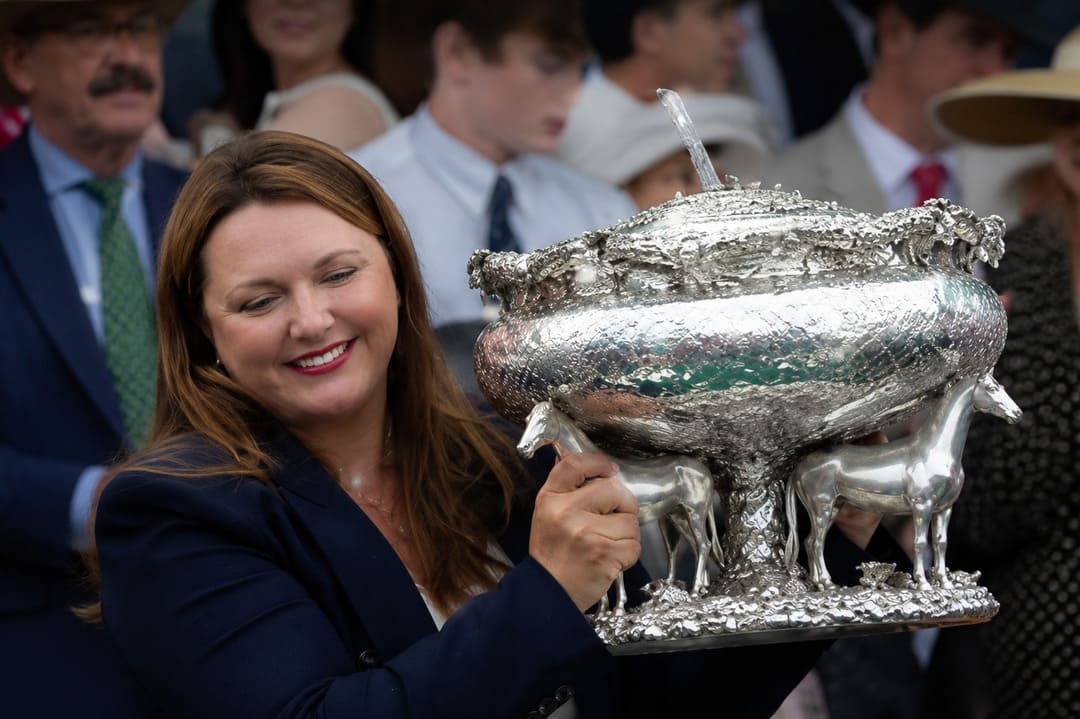
Cherie DeVaux Belmont Stakes history now carries a different weight after Golden Tempo delivered another defining Triple Crown performance. The victory was not only about one horse finishing first at Saratoga; it was about a trainer, a team, and a campaign that turned a Kentucky Derby breakthrough into something much harder to dismiss.
Golden Tempo entered the Belmont with a rare burden for a three-year-old: prove that the Derby was not a single perfect afternoon. By winning the 158th Belmont Stakes at Saratoga Race Course, he gave DeVaux and her barn a second classic celebration in the same season and pushed the sport into a more serious conversation about opportunity, patience, and historic achievement.
Cherie DeVaux Belmont Stakes History Became A Team Moment
The camera naturally finds the winning horse and trainer first, but Belmont victories are built long before the stretch run. DeVaux’s celebration mattered because it represented the work of riders, grooms, assistants, exercise riders, owners, and stable staff who kept Golden Tempo prepared after the emotional peak of the Kentucky Derby.
That is why this result felt larger than a single trophy presentation. Golden Tempo had already changed DeVaux’s profile by winning the Derby. The Belmont added confirmation. It showed that her team could manage the pressure that follows a classic win and still deliver the horse in race-ready condition for another major target.
The achievement also sharpened DeVaux’s place in racing history. She became the first woman to train a Kentucky Derby winner with Golden Tempo, and his Belmont victory made her the first female trainer to win two different Triple Crown races. That is not a symbolic footnote. It is a structural breakthrough in a sport where training success is often measured by classic results.
Golden Tempo Turned A Derby Story Into A Belmont Statement
A Derby winner returning to win the Belmont always changes the meaning of the spring. Golden Tempo did not run in the Preakness, so there was no Triple Crown sweep on the line. But that absence created a different test: could he come back after the Derby and prove he was still the class of the division?
He answered that question at Saratoga. The official Belmont Stakes recap placed the victory in its proper setting, with Golden Tempo winning the final leg of the Triple Crown after already capturing the Kentucky Derby.
For DeVaux and her team, the win was valuable because it did not depend on Derby nostalgia. It required fresh preparation, renewed focus, and a horse still able to produce his best effort when every rival knew what he could do.
That is what separates a memorable upset from a championship-level campaign. One race can make a headline. Two classic wins create a season-defining résumé.
The Preakness Decision Looks Different Now
Skipping the Preakness invited debate because racing fans naturally wonder what might have happened if a Derby winner had chased all three legs. That debate will not disappear, and it should not. Triple Crown history is built around ambition, risk, and the brutal timing of three demanding races.
But Golden Tempo’s Belmont win gives the decision a more practical reading. Instead of treating the Preakness absence as a missed opportunity only, it can also be seen as a management choice that kept the horse positioned for another peak performance.
That matters because modern racing increasingly rewards precision. A trainer must balance tradition against condition, recovery, travel, soundness, and the long-term future of the horse. DeVaux’s team did not get a Triple Crown attempt, but they did get a Derby-Belmont double.
| Moment | What Happened | Why It Matters |
|---|---|---|
| Kentucky Derby | Golden Tempo won the first Triple Crown leg | Gave DeVaux a historic Derby breakthrough |
| Preakness Stakes | Golden Tempo did not run | Shifted attention to recovery and Belmont preparation |
| Belmont Stakes | Golden Tempo won at Saratoga | Confirmed the Derby was not a one-race story |
| Team celebration | DeVaux’s barn celebrated another classic win | Highlighted the full operation behind the horse |
| Next campaign phase | Expectations now rise sharply | Future races will test whether Golden Tempo can sustain elite form |
The table shows why the Belmont victory reshaped the spring narrative. The story is not only what Golden Tempo won, but how the team managed the space between those wins.
Saratoga Made The Victory Feel More Personal
The Belmont at Saratoga gave this result a distinctive emotional layer. Belmont Stakes history is usually tied to Belmont Park, but the 2026 running took place at Saratoga Race Course while Belmont Park continued its renovation process.
That shift made the setting unusual. It also made DeVaux’s win feel more personal because Saratoga is deeply connected to her background and to the broader rhythm of American racing. Winning a classic there added hometown texture to an already historic season.
The official Kentucky Derby profile also shows how Golden Tempo’s rise was not a sudden appearance from nowhere. His path included earlier development, established connections, and the kind of progressive profile that often becomes clearer after major wins arrive.
For readers, Saratoga’s role matters because venues influence memory. A Belmont win at Saratoga during a temporary chapter in the race’s history will not feel like a routine edition years from now. It will be remembered as part of a strange, compressed, and unusually consequential Triple Crown season.
Golden Tempo’s Team Now Faces A Harder Kind Of Pressure
Winning creates celebration, but it also removes the advantage of being underestimated. Golden Tempo is no longer just a talented Derby winner with a strong finishing run. He is now the horse other trainers must plan around.
That changes the next phase for DeVaux’s team. Rivals will study his preferred setup, his timing, his traffic needs, and the way jockey Jose Ortiz positions him before the decisive move. Future races may become more tactical because opponents now understand what happens if Golden Tempo gets the right rhythm.
The pressure also reaches beyond race strategy. A dual-classic winner becomes a public story, a breeding story, a betting story, and a legacy story all at once. Every workout, target, and matchup will attract more attention.
That is the price of success. The barn now has less room for quiet preparation, even if quiet preparation helped produce the results in the first place.
A Celebration That Changes The Standard
Cherie DeVaux Belmont Stakes history is not just about breaking a barrier and moving on. It changes the reference point for what her team has already proven and what the racing world will expect from Golden Tempo next.
The Belmont win gave DeVaux a second classic victory, gave her barn another moment of validation, and gave Golden Tempo a stronger claim as the defining horse of his crop. It also reminded the sport that progress is not always announced through speeches or slogans. Sometimes it arrives with a horse charging home, a team waiting at the rail, and a trainer whose biggest win is suddenly no longer her only historic one.
That is why the celebration matters right now. Golden Tempo’s victory did more than complete a strong spring; it raised the standard for everyone around him. The next challenge will be protecting the horse, choosing the right targets, and proving that this historic run can become more than a brilliant Triple Crown chapter.