
Feeding a Retired Racehorse: A Safer Transition Plan
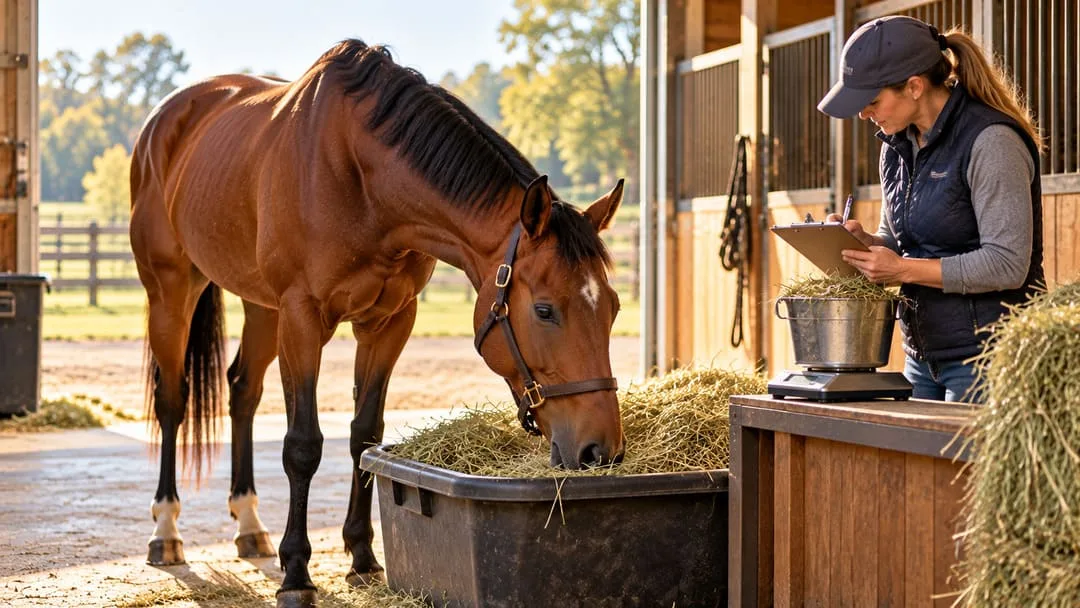
A Thoroughbred’s exercise level can change almost overnight when racing ends. Its diet should not. The sensible starting point is to learn exactly what the horse was eating, keep its routine recognizable, and gradually build a forage-led ration that matches its present condition. Some former racehorses will need fewer concentrated calories; a thin, recovering, or still-growing horse may need substantial nutritional support.
The transition is part of the second-career opportunity described in Alex Brown Racing’s off-track Thoroughbred resource. Whether the next job is eventing, trail riding, or simply living comfortably in a pasture, a feeding plan must suit the horse that arrives rather than an assumption about the breed.
Start with the racetrack feeding record
Ask the sending barn for the types and weighed daily amounts of hay, grain or other concentrate, and supplements, along with feeding times. Record any recent appetite changes, dental problems, digestive concerns, medications, and changes in work. If possible, obtain enough of the familiar feed to allow a gradual switch. A scoop is not a reliable unit of weight because different feeds have different densities.
A young OTTB may also be adapting to a later breakfast or to eating near other horses. In its guidance on feeding a still-growing OTTB, the Retired Racehorse Project discusses both the nutritional needs of young Thoroughbreds and the stress that unfamiliar meal schedules or competitive group feeding can create. Give the newcomer an opportunity to eat its full ration without being chased away, and do not assume retirement means growth has finished.
Work out the forage before changing the grain
Forage means hay and pasture grass. It supplies much of a horse’s energy while supporting the digestive system. The University of Minnesota Extension’s adult-horse feeding guidance gives roughly 1.5% to 2.5% of body weight per day in forage as a general range for mature horses. For a 1,000-pound horse, that works out to about 15 to 25 pounds daily. This is an illustration, not an individual prescription: forage quality, pasture intake, body condition, health, and workload all matter.
Forage alone does not automatically provide the right balance of protein, minerals, and vitamins. The Retired Racehorse Project’s nutrition-planning guidance recommends testing hay when possible and using that information to choose suitable additional feed. An easy keeper on good forage may need a ration balancer rather than a large concentrate meal; a young horse or one rebuilding condition may need more energy and carefully balanced nutrients. An equine nutritionist can help interpret forage tests and feed labels.
Change one part of the ration at a time
A sudden switch in hay or concentrate can disturb the microbes that help digest feed in the horse’s hindgut. As general guidance, Minnesota Extension recommends replacing around 20% to 25% of an old feed with the new feed every other day, completing the change over a week or longer. A horse adjusting to a very different forage intake, recovering from illness, or moving onto lush pasture may need a slower, veterinarian-guided approach.
When possible, avoid changing the hay, concentrate, turnout routine, and meal schedule all on the same day. Keep clean water available and observe appetite and manure during each step. Colic signs, a marked appetite loss, or other signs of illness warrant prompt veterinary attention, not another feed experiment.
Judge progress by the horse, not the bucket
An OTTB can look lean without being unhealthy, but visible weight loss deserves investigation. The University of Minnesota’s guidance on underweight horses explains the nine-point body condition score system and notes that scores around 4 to 6 suit many horses. More useful than a single number is the direction of change: record weight-tape estimates under consistent conditions, take comparable photographs, and check body condition regularly.
If the horse remains thin, do not assume a bigger grain meal is the answer. First review how much hay it actually eats, whether other horses interrupt feeding, and whether dental disease, parasites, pain, or other medical problems are involved. A veterinarian can investigate persistent weight loss; a qualified nutritionist can then help adjust forage and concentrate safely.
For the first month, make the handoff record, forage intake, feeding routine, and body-condition trend your checkpoints. Reassess the ration as the horse gains turnout time or starts retraining. A successful move away from the racetrack is not measured by how quickly grain disappears from the bucket, but by steady eating, comfort, and a diet that keeps meeting the horse’s changing needs.