
The Healing Power Of Horses Explained
The healing power of horses is not mystical, but it can feel profound when a person who feels guarded, anxious, disconnected, or physically limited begins to respond to a horse’s presence. Horses demand attention without forcing conversation, and that quiet exchange can create a rare kind of trust between human and animal. The real value is not that horses “fix” people, but that structured, ethical contact with them can open a path toward confidence, movement, self-awareness, and emotional steadiness.
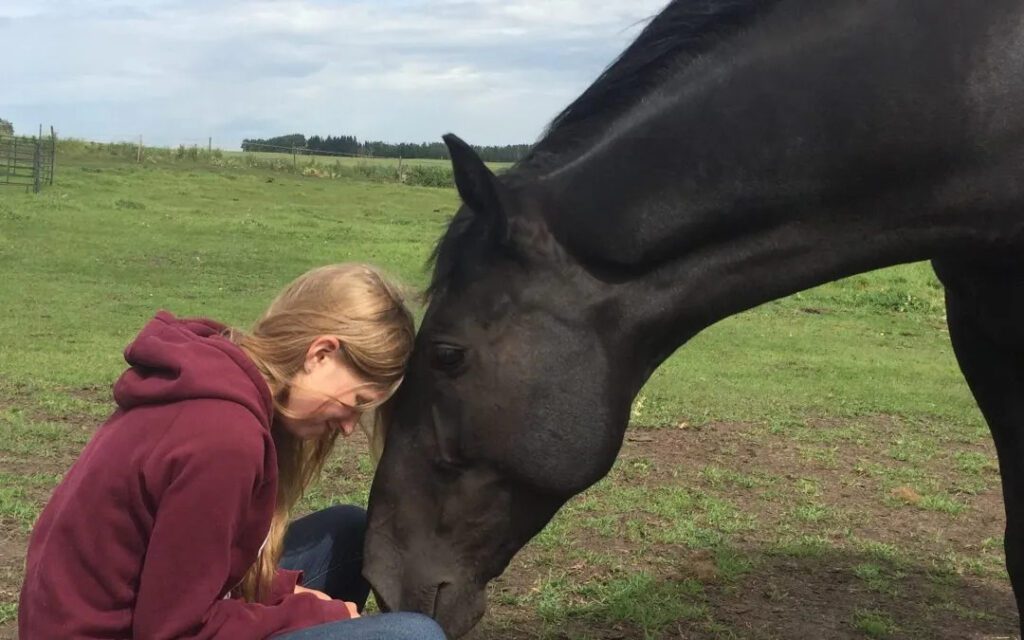
What The Healing Power Of Horses Really Means
The phrase can sound soft if it is not explained carefully. The healing power of horses does not mean that a horse replaces a doctor, therapist, physical therapist, counselor, or evidence-based treatment plan. It means that horses can become part of a guided setting where people practice regulation, connection, balance, communication, and presence in ways that may be difficult to access in a traditional room.
That distinction matters. Horses are not props. They are living, responsive animals with their own needs, instincts, boundaries, and personalities. Their value comes partly from that reality. A horse responds to posture, tone, timing, tension, breath, and intention. For many people, that feedback feels immediate and honest.
A person cannot simply pretend to be calm around a sensitive horse. The horse may step away, become alert, or show hesitation. That response is not judgment. It is information. When guided by trained professionals, the participant can notice the pattern, adjust, breathe, soften, and try again. That is where awareness begins.
This is why the field often uses more precise language than casual phrases like horse therapy. Professional resources on the healing power of horses often separate therapy, learning, adaptive riding, horsemanship, and other equine-assisted services because each setting has different goals, providers, and standards.
The language may feel technical, but it protects clarity. A mounted physical therapy session is not the same as a trauma-informed psychotherapy session involving horses. A therapeutic riding lesson is not the same as a leadership workshop. A youth confidence program is not the same as clinical mental health care. The horse may be the common thread, but the purpose changes the work.
Why Horses Reach People In A Different Way
Horses are prey animals, which means they are built to notice subtle shifts in their environment. They read body position, movement, emotional intensity, and changes in energy. That sensitivity is one reason people often describe horses as emotionally honest. They may not understand human stories, but they respond to human behavior with remarkable precision.
For someone struggling with anxiety, trauma, grief, or low self-worth, that kind of interaction can be powerful. A horse does not ask for a polished explanation. It does not demand the right words. It responds to what is happening in the moment. That can lower the pressure on people who are tired of explaining themselves.
The barn setting can also change the emotional atmosphere. There is texture, movement, smell, rhythm, weather, sound, and physical space. For some people, that is grounding. The work may involve grooming, leading, observing, riding, feeding, or simply standing quietly near the animal. Each activity asks the person to pay attention.
That attention can become a form of regulation. The participant notices the horse’s breathing, the brush moving across the coat, the weight of the lead rope, the rhythm of hooves, or the feeling of sitting upright in the saddle. The mind has something concrete to return to. In a culture that often pulls people into screens and noise, that physical immediacy has real value.
The relationship is also reciprocal. Horses require care. They need safe handling, consistent routines, and respectful boundaries. A person who feels powerless may discover that they can influence a 1,000-pound animal through patience rather than force. That lesson can reshape identity.
The Emotional Benefits Are Often Built Through Small Moments
The emotional benefits of horse-related programs rarely arrive as dramatic breakthroughs. More often, they come through repeated small moments: the first time a nervous participant touches a horse’s neck, the first time a child gives a clear cue, the first time a veteran feels safe enough to breathe deeply, or the first time a teen realizes the horse is responding to their calmness.
Those moments matter because they build evidence inside the person. Instead of being told, “You can be calm,” the participant experiences calmness working. Instead of being told, “You can lead,” the person leads a horse across the arena. Instead of being told, “You can set boundaries,” the person practices them with an animal that responds to consistency.
That is why equine-assisted work can feel different from conversation alone. Talking has enormous value, but some people need the body to learn alongside the mind. They need movement, practice, and visible feedback. Horses can help create that bridge.
The process can support emotional resilience because it invites people to try, fail, adjust, and try again without shame. A horse may not respond the first time. The person may become frustrated. A skilled facilitator can slow the moment down: What changed? What did your body do? What did the horse notice? What happens if you soften your shoulders?
That kind of reflection turns the horse into a mirror, not in a magical sense, but in a practical one. The horse’s response can make internal states visible. Once visible, they can be worked with.
How Horses Support Physical Confidence
The healing power of horses is not limited to emotional work. Horses can also support physical confidence, especially in structured adaptive riding, therapeutic riding, and physical or occupational therapy settings where appropriately trained professionals are involved.
Mounted work can challenge balance, posture, coordination, core strength, and body awareness. The horse’s movement creates a rhythmic, three-dimensional motion that the rider’s body must respond to. For some participants, that movement can encourage alignment and stability in ways that feel engaging rather than clinical.
Unmounted activities can also matter. Grooming develops sequencing, reach, hand strength, and bilateral coordination. Leading a horse requires spatial awareness and timing. Cleaning tack, placing equipment, and learning barn routines can support planning, memory, and physical discipline.
The key is matching the activity to the person. Not everyone should ride. Not every horse is suitable. Not every program has the same training or purpose. Physical benefit depends on safety, assessment, professional oversight, appropriate horses, and realistic goals.
That is where responsible programs stand apart from vague claims. A well-run program evaluates participant needs, horse suitability, risk, environment, tack, staff training, emergency plans, and progression. The horse may be inspiring, but the structure creates safety.
For many people, the psychological benefit of physical work is just as important as the physical outcome. Sitting taller, giving a cue, completing a grooming task, or walking beside a horse can create a feeling of capability. That feeling can be a powerful signal for someone who has felt limited by injury, diagnosis, fear, or disability.
The Role Of Trust, Boundaries, And Communication
Horses are excellent teachers of boundaries because they respond to inconsistency. A person who is unclear, rushed, or forceful may confuse the horse. A person who is firm but calm can often create a more reliable exchange. That lesson carries beyond the arena.
Healthy communication around horses is not loud dominance. It is measured leadership. The participant learns to notice distance, pressure, release, posture, and timing. They begin to understand that influence does not require aggression. It requires clarity and respect.
That can be especially meaningful for people who have experienced relationships marked by fear, unpredictability, or loss of control. With a horse, they can practice a different model. They can ask. They can wait. They can correct gently. They can notice when their own tension changes the interaction.
Trust also works both ways. A participant may need time to trust the horse, but the horse also needs reason to trust the person. That reciprocal nature is part of the work. It removes the participant from a purely self-focused frame and asks them to consider another being.
This creates accountability without harshness. The horse’s response is immediate, but not moralizing. The participant can learn from it without feeling attacked. In skilled hands, that feedback becomes a pathway to growth.
The same dynamic explains why horses have emotional power in competitive and public settings. The bond between horse, rider, trainer, and audience can carry meaning beyond the result, which is why racing narratives such as a deeper look at equine performance and public emotion resonate with readers who understand that horses are never just statistics. They become symbols of courage, timing, trust, and shared effort.
Where The Evidence Is Promising And Where Caution Is Needed
The responsible view is neither blind belief nor dismissive skepticism. Horse-assisted programs can be meaningful, and emerging literature has explored benefits for areas such as trauma, anxiety, confidence, social connection, physical function, and quality of life. At the same time, not every claim is equally proven, and program quality varies widely.
That balance matters. People seeking help deserve hope, but they also deserve honesty. Equine-assisted services should not be marketed as miracle cures. They are best understood as structured supports that may complement other care. For mental health concerns, they should be guided by licensed professionals when therapy is the goal. For physical rehabilitation, medical or therapy oversight matters.
Clinical literature on horse-assisted mental health support reflects growing interest, especially for groups such as veterans and people managing trauma-related symptoms. Still, the field needs careful standards, well-designed studies, consistent terminology, and long-term evaluation. That is not a weakness; it is how a serious field matures.
Program selection becomes crucial. A safe equine-assisted program should be clear about who provides services, what qualifications they hold, what role the horse plays, what outcomes are realistic, and how risk is managed. If a program promises guaranteed transformation, that is a warning sign.
The best programs respect both humans and horses. They do not overwork animals emotionally or physically. They match horses carefully. They give animals rest, turnout, veterinary care, and choice where possible. Healing that harms the horse is not healing. It is exploitation. Ethical practice requires responsibility.
What A Good Equine-Assisted Program Should Include
A strong program begins with clear purpose. Is the service therapy, adaptive riding, horsemanship, education, leadership development, or wellness support? Each path requires different expertise. A vague label can confuse participants and families.
The program should also explain who is leading the session. A licensed mental health professional should be involved when the work is psychotherapy. A physical therapist, occupational therapist, or speech-language professional should be involved when clinical rehabilitation is the goal. Certified instructors and equine specialists play important roles, but credentials should match the stated service.
Horse welfare should be visible. The horses should look healthy, calm, appropriately conditioned, and suitable for the work. Staff should be able to describe how horses are selected, rested, monitored, and removed from sessions when needed. A horse that is constantly stressed cannot support human healing responsibly.
Safety systems matter as well. Helmets, emergency procedures, trained staff, appropriate tack, safe fencing, clear participant screening, and weather plans all matter. Horses are generous animals, but they are still large, reactive, powerful beings. Respecting that reality protects everyone.
Here is a practical table for evaluating a program before enrolling:
| Program Feature | What To Look For | Why It Matters |
|---|---|---|
| Clear service type | Therapy, adaptive riding, learning, or horsemanship is defined | Prevents confusion about goals |
| Qualified staff | Credentials match the service being offered | Supports safety and effectiveness |
| Horse welfare practices | Rest, monitoring, veterinary care, and suitable workload | Protects the animal partner |
| Safety procedures | Helmets, emergency plans, screening, trained handlers | Reduces preventable risk |
| Realistic outcomes | No miracle claims or guaranteed cures | Builds trust and credibility |
| Participant fit | Goals, comfort, ability, and needs are assessed | Makes the work more appropriate |
A program that welcomes questions is usually a stronger choice than one that relies on emotional language alone. Professionalism does not weaken the experience. It protects its integrity.
Why The Horse-Human Bond Feels So Powerful
The horse-human bond is ancient, but its therapeutic meaning is not based only on history. Horses invite people into a relationship that is physical, emotional, and immediate. They are large enough to command respect, sensitive enough to respond to subtle signals, and social enough to engage with people in meaningful ways.
That combination can be transformative. A small child may feel brave while brushing a gentle pony. A person recovering from trauma may experience safety while standing beside a calm horse. A rider with a disability may feel freedom through mounted movement. A grieving adult may find comfort in a quiet barn routine.
The horse does not need to understand the full human story to participate in the healing process. It simply needs to be present, responsive, and safely supported by skilled people. That simplicity is part of the power.
There is also dignity in the work. Participants are not always positioned as patients. They become handlers, riders, caretakers, learners, partners. They have tasks to complete and relationships to build. That shift can restore agency.
For people who feel defined by diagnosis, injury, anxiety, or loss, that change in role can matter deeply. The barn asks, “What can you notice? What can you try? How can you communicate more clearly?” Those questions move attention toward capability.
The Risks And Trade-Offs Readers Should Understand
The emotional appeal of horses can make people overlook practical concerns. That is a mistake. Horses can injure people unintentionally. Programs can overpromise. Costs can be high. Access can be limited by location, disability accommodations, transportation, or insurance coverage. Not every participant will respond well.
Some people may feel intimidated by horses. Others may have allergies, mobility limitations, trauma triggers, or medical conditions that require extra screening. A good program will not treat hesitation as failure. It will adapt, slow down, or recommend another option when needed.
There are also emotional risks. Strong bonds can form with horses, and transitions can be difficult if a program ends, a horse retires, or a participant changes levels. Facilitators should be prepared to handle those attachments with care.
Financial trade-offs deserve mention. Equine programs require land, feed, veterinary care, farrier care, insurance, trained staff, equipment, and maintenance. Those costs affect pricing. A low-cost program may still be excellent, but it should not cut corners on safety or horse welfare.
The most ethical approach is transparency. Participants should know what the service is, what it is not, what it may help, what risks exist, and how progress will be reviewed. That kind of honesty strengthens credibility.
How To Begin Safely
Anyone interested in horse-assisted services should begin by identifying the goal. Is the need emotional support, trauma therapy, physical rehabilitation, confidence building, social connection, adaptive sport, or general wellness? The clearer the goal, the easier it is to choose the right program.
Next, ask about credentials. Who leads the session? What training do they have? Are licensed professionals involved where clinical care is advertised? How are horses selected? What safety procedures are in place? What happens if a participant becomes overwhelmed?
Visit before committing. Watch how staff handle horses. Notice whether the barn feels calm and organized. Look at the horses’ body language. Ask how progress is discussed. The best programs are usually willing to explain their methods without defensiveness.
Families should also speak with existing healthcare providers when the participant has medical, psychological, developmental, or mobility concerns. Horse-assisted work can complement care, but coordination helps avoid conflicting goals or unsafe assumptions.
Start modestly. A first session does not need to be dramatic. Sometimes the best beginning is grooming, observing, learning barn safety, or leading a quiet horse with support. Healing often begins with connection, not performance.
Why This Matters Beyond The Barn
The healing power of horses also reveals something about modern life. Many people are disconnected from their bodies, from nature, from quiet attention, and from relationships that require patience. Horses ask people to slow down and listen differently.
That does not make horses a universal solution. It makes them meaningful partners in the right setting. They remind us that growth can happen outside clinical walls, that movement can unlock emotion, and that trust can be practiced through action.
The broader opportunity is to take equine-assisted work seriously without exaggerating it. That means supporting ethical programs, respecting professional standards, investing in research, and protecting horse welfare. It also means listening to participants who describe meaningful change while remaining careful about what the field can responsibly claim.
The deepest lesson may be that healing is rarely one thing. It can involve therapy, medicine, community, routine, movement, nature, relationship, and hope. Horses can touch several of those pathways at once, which is why their influence can feel so layered.
The Healing Power Of Horses Is A Relationship, Not A Shortcut
The healing power of horses matters because it brings people into contact with something many forms of care struggle to create: embodied trust. A horse asks for attention, consistency, and respect. In return, it can offer feedback, movement, comfort, and a kind of nonverbal partnership that helps people rediscover strength.
The best equine-assisted work is not sentimental. It is structured, ethical, and grounded in safety. It respects the participant, the professional, and the horse. It allows room for emotional change without promising miracles.
For some people, a horse may help rebuild confidence. For others, it may support balance, communication, calm, courage, or social connection. The benefits vary, but the central principle remains the same: healing grows through relationship, repetition, and care.
That is why the healing power of horses continues to matter now. In a noisy world, horses offer a slower kind of lesson. They do not rush the process. They do not reward performance without presence. They ask people to show up honestly, and for many, that is where the first real step forward begins.