
The Jockey Club Gold Cup will carry more than its usual Grade 1 weight on Friday, September 18, 2026. The $1 million race is scheduled for Belmont Park’s return to live racing after renovation work, and its sporting value sits at the intersection of track renewal, international dirt form, and the final serious preparation window before the Breeders’ Cup Classic at Keeneland on October 31, 2026.
For a prep race, that is a demanding amount of context. The horses must still answer the oldest questions in the sport: who can stay 1¼ miles on dirt, who can adapt to race-day pressure, and who can produce a peak performance without leaving the best of the campaign behind in September. The surrounding storylines are useful only if they sharpen those questions rather than bury them beneath ceremony.
Jockey Club Gold Cup Returns To Belmont Park
Why The Jockey Club Gold Cup Setting Matters
The race’s return to Belmont is not a small scheduling note. NYRA lists the September 18 race as a Grade 1, $1 million event at 1¼ miles on dirt for horses three years old and upward, and identifies it as a “Win and You’re In” qualifier for the Breeders’ Cup Classic NYRA’s race announcement. The same release notes that the race had been staged at Saratoga Race Course from 2021 through 2025 while Belmont was affected by construction.
That matters because a race’s venue is part of its sporting identity. A 1¼-mile dirt test at Belmont has a different feel from the same class of race moved elsewhere, not because the name changes, but because configuration, surface composition, run-up patterns, and long-stretch demands can influence how stamina is revealed. For the Jockey Club Gold Cup, that means the winning performance on September 18 will be judged not only as a prep result but as an early competitive reading of the new Belmont main track.
Opening Day Gives The Race Extra Pressure
The 2026 Belmont Fall Stakes season has been framed around scale as well as symbolism. The meet is reported to include 72 stakes races, 32 of them graded, with $17.7 million in total purses, and the Gold Cup anchors the opening-day return Belmont fall meet report. That places the race in a public-facing position unusual even for a Grade 1 prep.
The risk, from an analytical view, is that the reopening narrative can outshine the race itself. A rebuilt facility can frame the day, but the form questions remain horse-centered. The new five-story grandstand, expanded paddock, two turf courses, synthetic one-mile oval, and new dirt main track are significant for the venue. The athletes still must handle the distance, the surface, the class, and the timing of a final Classic prep.
For readers interested in broader racing insights and analysis, racebookreview.com offers a connected perspective within the same network. This piece stays focused on core sporting elements: conditioning, pace, track adaptation, and the calendar leading toward Keeneland.
Forever Young Sets The Sporting Standard
Forever Young Gives The Jockey Club Gold Cup Its International Edge
Forever Young is the confirmed international centerpiece of the race build-up. The research identifies him as a five-year-old Japanese champion with 11 wins from 15 starts, undefeated in Japan, and scheduled to use the September 18 race as his only United States start in 2026 before defending his Breeders’ Cup Classic title on October 31 at Keeneland.
That profile creates a fascinating sporting tension. On paper, he brings established global dirt quality. In practice, one American start before the Classic asks whether his connections can sharpen him enough for a demanding Grade 1 without using too much of him before the championship target. That is not a criticism of the plan. Elite international horses often travel with conditioning patterns that differ from domestic campaigns. The question is how well that pattern fits a new Belmont dirt surface and a 1¼-mile Grade 1 against top-class older rivals.
His unbeaten record in Japan is particularly relevant because it suggests reliability in familiar conditions. The Gold Cup asks something more specific: whether that reliability transfers cleanly after travel, at Belmont, over the Classic distance, against a field preparing for the same autumn summit. A visually impressive effort would strengthen his claim as a dirt horse with repeat Classic credentials. A workmanlike performance could still serve the larger campaign if it leaves him forward enough for Keeneland.
Sovereignty Questions Remain Central
Sovereignty Could Shape The Jockey Club Gold Cup Pace Picture
The supplied research also places Sovereignty at the center of the September 18 discussion. He is described as Godolphin’s Horse of the Year, targeting the Gold Cup after a 2026 Saratoga campaign that included Grade 1 Whitney success on August 6, plus wins in the Travers Stakes and the Grade 2 Jim Dandy. The same notes state that he won the Belmont Stakes in 2025 and skipped the 2026 Preakness.
Those details make him more than a local counterweight to Forever Young. Sovereignty’s profile, as presented in the research, suggests a horse with proven class at the upper tier of American dirt racing and enough recent activity to arrive with race fitness rather than rust. That is the clearest contrast with Forever Young: one arrives with international stature and a targeted American stop; the other is described as coming through a domestic campaign that has already required repeated high-level efforts.
The pace implications are not fully known from the research alone, so caution is necessary. The race shape will depend on the final field, post positions, rider decisions, and the way the new Belmont dirt plays on opening day. Still, the potential meeting matters because neither leading storyline is purely ceremonial. Forever Young’s connections need a prep that confirms readiness. Sovereignty’s camp, based on the supplied target, would be asking whether a strong Saratoga sequence can carry into a 1¼-mile Grade 1 at a newly reopened Belmont.
Belmont’s New Configuration Faces A Stakes Test
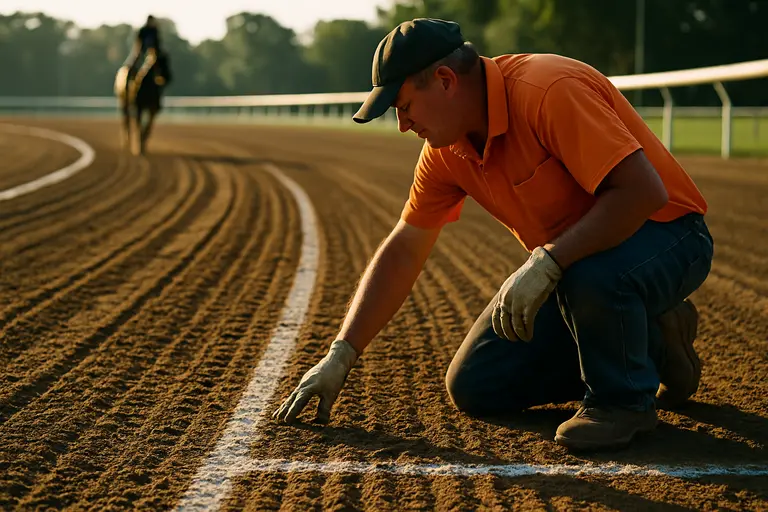
The Dirt Track Will Be Read In Real Time
The new Belmont dirt main track may be the most under-discussed sporting variable. Renovations can be described before a meet opens, but racehorses supply the meaningful evidence once they begin running under stakes pressure. Early-race observations on September 18 will matter: whether speed carries, whether closers make sustained progress, how kickback affects position, and whether the surface appears to reward inside paths or wider momentum.
That does not mean one race can define a surface. Track condition changes with weather, maintenance, moisture, and use. A single opening-day Grade 1 should be treated as evidence, not a verdict. Still, a 1¼-mile dirt race featuring elite older horses and Classic candidates gives horsemen and analysts a serious first reading. The Gold Cup will test stamina, but it will also test how quickly riders and horses interpret the rebuilt track.
Surface shifts have been a repeated theme in prep analysis across the country; our recent look at Del Mar surfaces examined how track composition and race placement can alter the meaning of a performance. Belmont’s reopening creates a similar need for restraint. A horse who excels on September 18 may have done more than beat his rivals; he may also have adapted best to a fresh racing environment.
What The Jockey Club Gold Cup Can Clarify
The September 18 race can clarify three sporting points before the Breeders’ Cup Classic. First, it can show whether Forever Young’s 2026 American route gives him enough competitive sharpness without compromising his Keeneland target. Second, it can indicate whether Sovereignty’s reported Saratoga form translates to Belmont’s new dirt at the same distance as the Classic. Third, it can provide the first Grade 1 measure of how the rebuilt Belmont plays in a major dirt route.
Those answers may not be absolute. A horse can win a prep and regress later; another can finish behind the winner while gaining the conditioning needed for the Classic. That is why the quality of the performance matters more than the bare finishing order. Energy distribution, composure in the paddock, rider confidence, and the ability to finish through the final furlong will all deserve close attention.
If the Jockey Club Gold Cup produces the Forever Young-Sovereignty meeting outlined in the build-up, Belmont’s reopening day will have a sporting anchor worthy of the setting. The race will not decide the Breeders’ Cup Classic by itself. It can, though, separate horses who merely carry strong reputations from those who are ready to sustain top-level dirt form into the final day of October.