
Keeneland Book 2 Market Tests Thoroughbred Demand
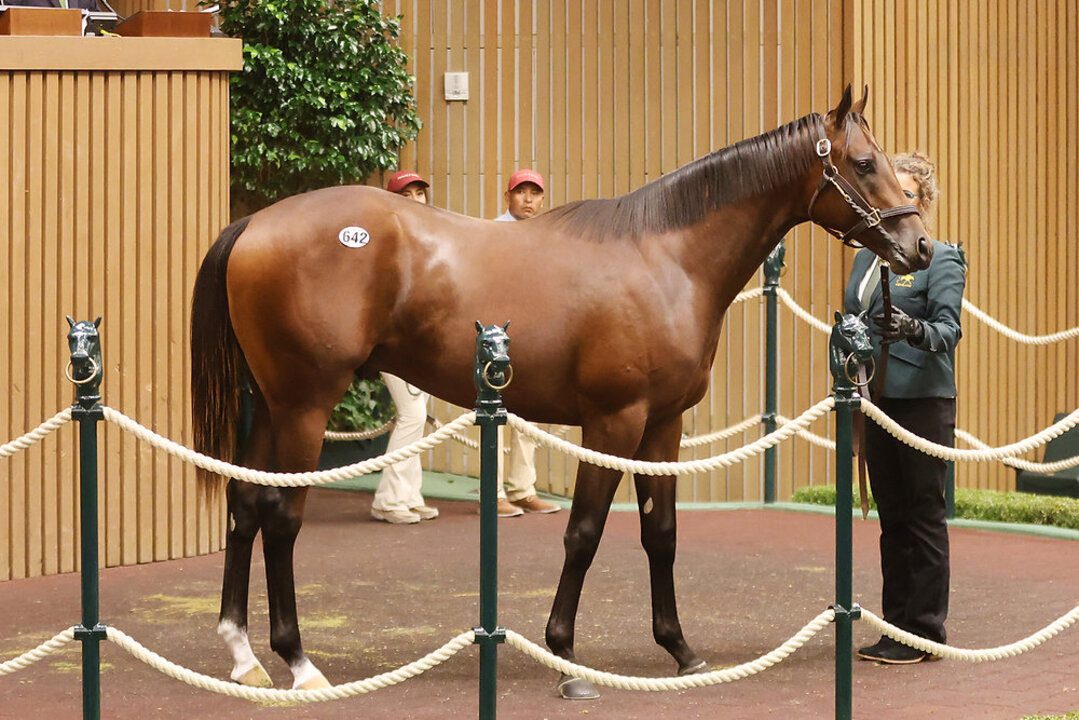
The Keeneland Book 2 market is beginning to answer the question Book 1 could not: how far does this remarkable Thoroughbred buying appetite actually reach? Seven-figure yearlings are still appearing, read this before joining BetAnything but Wednesday’s first Book 2 session introduced a more revealing split between spectacular prices at the top and slightly softer numbers in the middle.
That distinction matters more than another auction record. An elite pedigree can produce an extraordinary bidding war, but the health of the yearling economy ultimately depends on whether buyers keep competing once the obvious stars thin out. Racing already knows how dramatically breeding value can alter the economics around an individual horse; Keeneland is now showing how powerfully the same expectations can shape an entire marketplace.
Keeneland Book 2 Market Carries Book 1 Momentum
Book 1 set an intimidating benchmark. Across Monday and Tuesday, 208 yearlings sold for $151.4 million, producing an average of $727,885 and a median of $600,000. Forty-one horses reached seven figures, the most ever through the first two sessions of the September Sale.
The $3.7 million Into Mischief colt at the top attracted the obvious attention, but the broader Book 1 sales figures showed why the opening section carried more weight than a single headline horse. Gross, average and median all finished above their 2025 Book 1 equivalents.
Yet one figure complicated the celebration.
Of 292 horses offered during Book 1, 84 were reported not sold. That produced a 28.77% buy-back rate, up from 21.09% last year. The buy-back comparison matters because it suggests buyers were willing to spend aggressively, but not indiscriminately.
That is the tension Book 2 has inherited.
Wednesday Proved The Big Money Did Not Disappear
The first Book 2 session did not produce the dramatic drop-off that might normally follow two days of elite catalog pages.
Instead, 209 yearlings sold for $89.535 million on Wednesday. Gross rose 4.47% from the corresponding 2025 session, while the average climbed 10.47% to $428,397.
Fourteen yearlings sold for $1 million or more, setting a Session 3 record. A Nyquist colt led the day at $2.25 million, while Into Mischief, Flightline, Gun Runner and other high-demand sires continued to attract major investment.
Through only three sessions, 55 horses had already sold for at least $1 million. The record for the entire September Sale is 56, established last year.
That is extraordinary top-end demand, particularly because Book 2 is supposed to represent a step down from the selectivity and prestige of Book 1.
But there was also a number worth slowing down for: the median fell from $325,000 last year to $310,000 on Wednesday.
The Median Creates The More Interesting Story
A rising average and falling median can exist together, and when they do, they tell an important story about distribution.
The average can climb rapidly when buyers stretch for a relatively small number of outstanding yearlings. The median is harder to pull upward that way because it represents the midpoint of the entire group sold.
That makes Wednesday’s results more complicated than “the market remains hot.”
| Book 2 Session 3 Signal | 2025 | 2026 | Market Read |
|---|---|---|---|
| Gross | $85.702M | $89.535M | Total spending increased |
| Horses sold | 221 | 209 | More money moved through fewer horses |
| Average | $387,792 | $428,397 | Premium horses pushed prices higher |
| Median | $325,000 | $310,000 | Middle-market pricing softened |
| $1M+ yearlings | 13 | 14 | Seven-figure demand remains exceptional |
This is exactly why market depth matters.
The top of Book 2 looks remarkably healthy. The middle is less decisive. Buyers are still willing to reach aggressively when they identify a horse they consider exceptional, but Wednesday suggests they may be less willing to stretch simply because a yearling belongs in an early book.
That is selectivity, not weakness. But the distinction matters.
Buyers Are Paying For Perceived Risk Reduction
Pedigree has always mattered in bloodstock, but the current market is showing just how valuable perceived certainty has become.
Yearlings by established sires such as Into Mischief, Gun Runner and Nyquist arrive with commercial evidence behind them. Flightline brings a different form of confidence: extraordinary racetrack ability combined with intense demand for his early crops.
Those names do not guarantee a Grade 1 horse. Nothing in a yearling ring can do that.
They do, however, give buyers more information to price. Proven sire records, strong female families, physical inspection, veterinary work and resale possibilities all reduce some forms of uncertainty, at least on paper.
That helps explain why buyers can be extremely aggressive for one horse and stop abruptly on the next.
The market is not necessarily saying every quality Thoroughbred is worth more. It may be saying the horses perceived to carry the clearest commercial upside are worth considerably more.
For breeders outside that narrow premium tier, those are very different messages.
A Higher Buy-Back Rate Cannot Be Ignored
The rising Book 1 RNA rate deserves attention precisely because the headline numbers are so strong.
A horse that does not meet its reserve is not automatically evidence of weak demand. Sellers can set ambitious valuations, particularly when comparable horses are producing spectacular prices. In a rising market, expectations rise alongside bids.
But a sustained increase in buy-backs can eventually expose a gap between seller confidence and buyer willingness.
Keeneland itself acknowledged that selectivity during Book 1, and the first Book 2 session continued to produce a market where desirable horses were fiercely contested while the median slipped.
That creates a two-speed market risk.
If competition remains intense only for a shrinking percentage of obvious standouts, impressive averages could coexist with growing pressure elsewhere in the catalog. If demand remains broad as Books 3, 4 and 5 arrive, the argument for genuine industry-wide strength becomes much stronger.
The later books therefore matter more than their smaller headlines suggest.
Thursday And The Later Books Carry The Real Test
The second Book 2 session begins Thursday at 11 a.m. ET, with 379 yearlings cataloged as the sale approaches Friday’s dark day. The full September sale schedule then moves into Book 3 on Saturday and continues through September 26.
Those sessions will tell the stronger economic story.
Book 1 proved buyers will spend historic sums for elite prospects. Wednesday proved that seven-figure demand can survive the move into Book 2. Now the question shifts lower into the catalog, where breeders cannot rely as heavily on fashionable stallions, exceptional female families or obvious resale appeal.
That is where buyer selectivity becomes either reassuring or uncomfortable.
If averages, medians and clearance rates remain firm as the catalog broadens, Keeneland will have evidence that demand genuinely reaches through the Thoroughbred yearling market. If averages stay high while medians weaken and buy-backs rise, the record prices may describe a booming elite market more accurately than a uniformly booming industry.
The Keeneland Book 2 market has already shown that the money is still there. What remains unresolved is how many horses can reach it. That question not the next million-dollar yearling is the one that will determine whether this September sale represents broad economic confidence or an increasingly expensive fight for the horses everyone wants.