
Napoleon Solo’s Preakness Breakthrough: How Paco Lopez and Chad Summers Stole the Spotlight at Laurel Park
Napoleon Solo Preakness breakthrough was not just another upset in a Triple Crown race; it was a reminder of how quickly a wide-open classic can rewrite reputations. At Laurel Park, Paco Lopez and Chad Summers turned opportunity into a defining moment, taking a race shaped by uncertainty and making it belong to them.
How Laurel Park Turned The Preakness Into A Different Kind Of Test
The 151st Preakness Stakes already felt different before the field loaded. With Pimlico Race Course undergoing redevelopment, Laurel Park became the temporary stage for one of American racing’s most recognizable events. That venue shift mattered because it changed the atmosphere around the race.
The Preakness is usually measured against history, tradition, and the emotional weight of Baltimore’s racing identity. At Laurel, the race carried those same stakes but with a transitional feel. It was familiar in name, unfamiliar in setting, and open enough for a horse like Napoleon Solo to seize the moment.
That is what made the result more interesting than a simple longshot narrative. The official Preakness race recap described Napoleon Solo taking control into the homestretch and holding off Iron Honor, a finish that gave the race a decisive shape after days of uncertainty around the field.
For readers, the key takeaway is that venue, pace, and field composition can all change the way a classic race is run. Laurel did not diminish the Preakness. It made the race feel more exposed, more tactical, and more available to the connections willing to act boldly.
The Napoleon Solo Preakness Breakthrough Was Built On Timing
Napoleon Solo entered the race with enough back class to be taken seriously, but not enough recent momentum to be treated like an obvious winner. That tension is what made the result compelling. He was not a mystery horse, but he was also not the comfortable choice.
A breakthrough like this often happens when a horse’s previous form is interpreted too narrowly. Disappointing finishes can make bettors and observers underestimate a horse’s ability if the conditions, race shape, or setup change. Napoleon Solo’s win showed why racing form is not just a list of past results; it is a reading of context.
Paco Lopez gave the ride its sharp edge. He placed Napoleon Solo where he could respond when the race began to unfold, then asked for the decisive move at the point where hesitation would have been costly. That is the difference between being involved in a race and owning its most important moment.
For Chad Summers, the win carried a different kind of weight. A trainer’s breakthrough in a Triple Crown race is not only about the trophy. It confirms judgment, patience, and placement under pressure. In a race without the Kentucky Derby winner, Summers found the opening and converted it into a career-defining result.
Why Paco Lopez Became The Face Of The Moment
Jockeys often become most visible in races where the margin between patience and urgency is thin. Lopez’s ride mattered because it looked assertive without becoming reckless. He did not wait for the race to hand him a perfect lane. He helped create the winning position.
That is why the story quickly became about more than Napoleon Solo’s finish. It became about a rider who understood the opportunity. In a 14-horse classic, traffic, timing, and confidence can decide everything. Lopez handled the pressure as if the race’s turning point had to be claimed, not discovered.
The larger implication is clear: in modern Triple Crown races, the best ride is not always the most dramatic one. Sometimes it is the ride that makes the winning move look inevitable only after it has already happened. Lopez’s performance gave Napoleon Solo room to show stamina and composure when the race tightened.
The Associated Press race account noted that Napoleon Solo held off Iron Honor by 1 1/4 lengths, a margin that captured both the decisiveness of the move and the pressure of the final stretch. It was not a runaway. It was a controlled finish under classic-race stress.
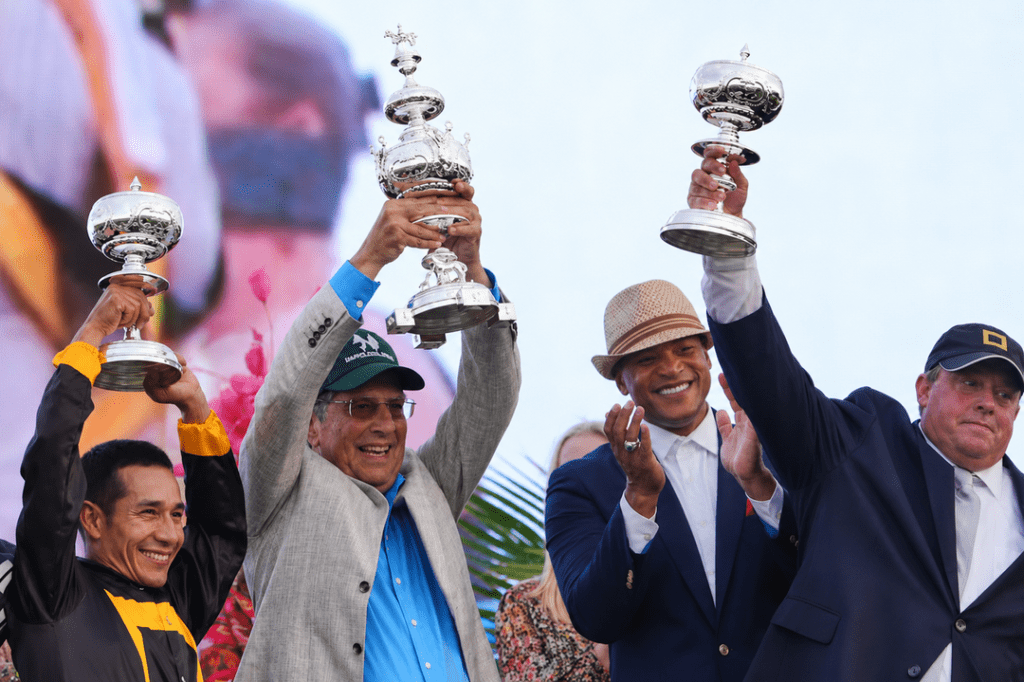
The Chad Summers Angle Makes This Upset Feel Larger
Every Triple Crown upset has a horse at the center, but the trainer story often determines how the win is remembered. Summers did not simply benefit from chaos. He placed Napoleon Solo in a race where the colt could be dangerous, then watched that judgment hold up under the brightest kind of scrutiny.
That is why this victory feels larger than one Saturday result. It showed a trainer’s calculated conviction at a moment when many connections were weighing risk, spacing, and future targets. Running in the Preakness is never just about entering a horse. It is about believing the timing, condition, and competitive landscape justify the attempt.
The absence of the Kentucky Derby winner also changed the emotional architecture of the race. Without a Triple Crown bid on the line, the Preakness became less about defending a crown and more about who could seize a vacant spotlight. Summers and Lopez did exactly that.
For deeper race context, the broader account of Napoleon Solo’s stunning Preakness upset helps frame why the result landed with such force. It was not only a win; it was a reshuffling of the season’s conversation.
The Pressure Points Behind The Result
A clean way to understand the race is to separate the visible outcome from the forces underneath it.
| Pressure Point | Why It Mattered | Reader Takeaway |
|---|---|---|
| Venue shift to Laurel Park | The race carried a different atmosphere and tactical feel | Tradition remained, but the setting changed the story |
| Wide-open field | No Derby winner meant no single dominant narrative | Opportunity mattered more than reputation |
| Lopez’s timing | The winning move came when hesitation could have cost position | Execution turned potential into separation |
| Summers’ placement | The decision to run proved strategically sound | Bold race selection can define a season |
| Iron Honor’s chase | The runner-up kept pressure on the winner late | The victory had to be earned, not inherited |
The table shows why the race should not be reduced to luck. Napoleon Solo benefited from circumstances, but the connections still had to make the right decisions inside those circumstances. That is where the upset becomes instructive.
The Next Signal Is Whether This Becomes A Turning Point
The hard part after a classic breakthrough is proving it was not a one-race peak. Napoleon Solo now carries a different set of expectations. Before Laurel, he was a talented horse looking for a statement. After Laurel, he is a Preakness winner whose next move will be judged through a much sharper lens.
That creates opportunity and risk. The opportunity is obvious: a classic win can reset a horse’s season, elevate a trainer’s profile, and make every future start more meaningful. The risk is just as real. A breakthrough can invite overreaction, especially if the public starts treating one perfect setup as proof of automatic superiority.
For Lopez, the next signal is consistency under renewed attention. A Preakness-winning ride raises visibility, and visibility brings scrutiny. For Summers, the next test is placement. The smartest follow-up will not necessarily be the flashiest one; it will be the race that best protects Napoleon Solo’s development while respecting what he has just accomplished.
That is the tension that makes the story worth following. Momentum needs confirmation, and classic winners do not get to return quietly.
Napoleon Solo Preakness breakthrough mattered because it gave Laurel Park a memorable chapter, Paco Lopez a defining ride, and Chad Summers the kind of victory that can change how a barn is viewed. The result also offered a useful reminder: in a wide-open Triple Crown race, the spotlight does not always go to the obvious favorite. Sometimes it goes to the team that recognizes the opening first and has the nerve to take it.