
Racehorse Veterinary Scratches: What HISA Data Reveal
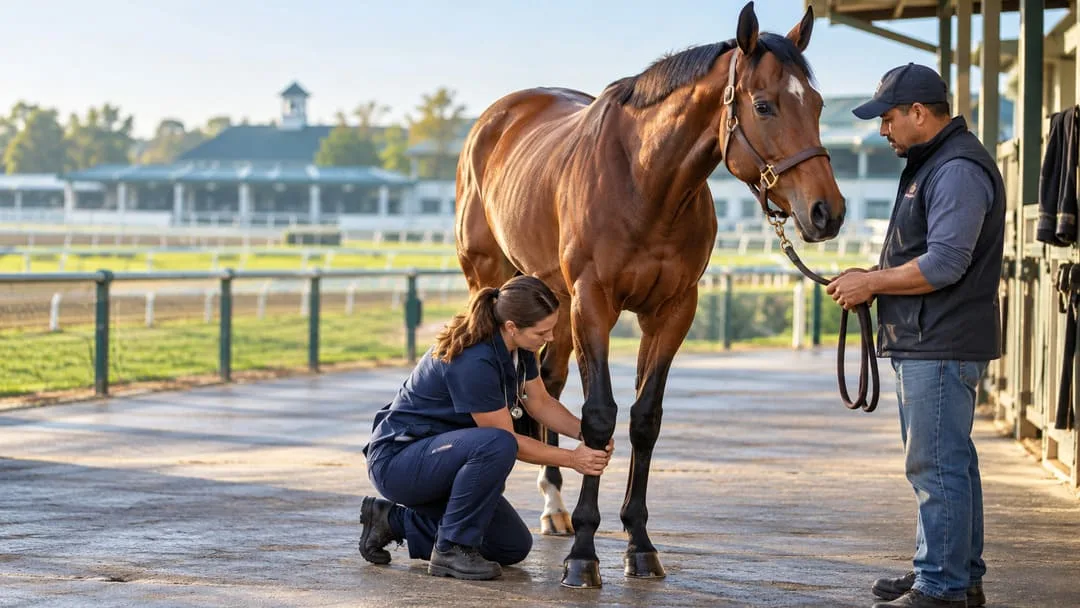
When a Thoroughbred is scratched from a race because a veterinarian considers it unsound, one immediate danger has been avoided. But removing the horse from the starting lineup does not establish what caused the problem, whether it has recovered or when racing should resume.
New findings from the Horseracing Integrity and Safety Authority (HISA) show why racehorse veterinary scratches deserve attention well beyond the day a horse is withdrawn.
In 2025, regulatory veterinarians at HISA-covered racetracks placed 3,297 individual horses on the Veterinarians’ List as unsound. By March 31, 2026, 1,904 of those horses had not made another start. HISA also identified a concerning connection between previous veterinary warnings and a portion of subsequent racing and training fatalities.
Alex Brown Racing’s longstanding horse-welfare advocacy reflects an important principle: responsibility for a Thoroughbred should continue throughout its working life and beyond.
The findings make a practical case for treating a veterinary scratch as the beginning of a health-management decision, not merely a change to a racecard.
What the HISA Veterinary Data Actually Show
The Veterinarians’ List is an established racing oversight tool used to identify horses subject to veterinary restrictions, including those considered unsound.
Its purpose is protective. A regulatory veterinarian can identify a concern that prevents a horse from competing, while the horse’s connections and attending veterinarian determine the appropriate next steps.
HISA’s May 2026 equine health advisory provided two particularly important findings.
First, approximately 58% of horses placed on the list as unsound during 2025 had not returned to racing by March 31, 2026.
That does not mean 58% were permanently injured or retired. Some may have been resting, undergoing treatment, changing careers or following other management plans. The statistic describes subsequent racing activity, not the final welfare outcome of every horse.
Second, HISA reported that approximately 20% of racing- and training-related fatalities involving covered horses through the first quarter of 2026 occurred in horses with specified recent veterinary warning histories. These included horses still listed as unsound, horses recently scratched by regulatory veterinarians and horses removed from the unsound list within the preceding six months.
That 20% figure is not the fatality risk for horses placed on the list. It describes the share of fatalities involving horses with those warning histories.
The distinction is critical. The data identify a potentially important safety signal, but they do not establish that a previous scratch caused a later fatal injury or that every horse returning from the list faces the same risk.
Why Racehorse Veterinary Scratches Need Consistent Records
One of the less visible weaknesses in racing oversight is how veterinary and administrative decisions are recorded.
A horse may be scratched because a regulatory veterinarian identifies unsoundness. Another withdrawal may originate with a trainer or attending veterinarian. Different circumstances can result in different regulatory records and return-to-racing requirements.
HISA’s 2026 review found that racetracks were not always classifying and managing scratches consistently.
In some circumstances, even field size influenced whether a withdrawal was recorded as a trainer scratch or veterinary scratch.
That creates a problem beyond paperwork.
If similar health-related concerns are documented differently, regulators may struggle to identify meaningful patterns across tracks. An important part of a horse’s recent history could also be less visible in the records available for future safety decisions.
In August 2026, HISA expanded its review through an industry-wide survey on Veterinarians’ and Stewards’ List procedures. The consultation, which accepted responses through September 11, sought to improve consistency, transparency and the quality of safety information.
A standardized record does not guarantee a safer outcome. It does, however, make it easier to understand why a horse was withdrawn and what occurred before it returned.
The Important Decision Comes After the Scratch
A veterinary scratch should prompt more than a review of the next available race.
The first responsibility is to investigate the concern that led to the withdrawal. Depending on the finding, an attending veterinarian may recommend further examination, diagnostic imaging, treatment or a period away from strenuous work.
The horse’s return should then be guided by its clinical condition and applicable regulatory requirements, not merely by the availability of another race.
Three considerations deserve particular attention:
- The original finding: Was the concern temporary, unexplained or associated with a condition requiring further evaluation?
- The response to rest and treatment: Has the horse demonstrated appropriate recovery during veterinary assessment and subsequent training?
- The longer-term outlook: Does continued racing remain suitable, or should retirement and a different career be considered?
These are individualized veterinary and management decisions. They cannot be reduced to a universal recovery period.
HISA’s advisory also discussed the potential use of wearable biometric sensors to contribute additional information during training. Such technology may help support assessment, but it should not replace veterinary judgment or be treated as proof that a horse is sound.
Better Records Should Lead to Better Horse-Welfare Decisions
That principle is particularly relevant when a horse encounters repeated physical concerns.
A regulatory restriction is useful because it can interrupt participation before an additional risk is taken. Yet meaningful welfare protection also depends on what happens afterward.
Owners and trainers need clear veterinary information. Racing officials need reliable records that remain useful when horses move between jurisdictions. Veterinarians need sufficient time and evidence to assess recovery without pressure to satisfy a racing schedule.
Equally important, retirement must remain a legitimate outcome when continuing competition is no longer in the horse’s interests.
The 2026 HISA findings should not be read as evidence that veterinary scratches are failing. They demonstrate why early warnings are valuable and why the system recording those warnings needs to be consistent.
Scratching an unsound horse protects it from one race. Understanding and acting on the reason for that scratch is what can protect its future.