
Santa Anita Horse Safety Faces A New Training Test
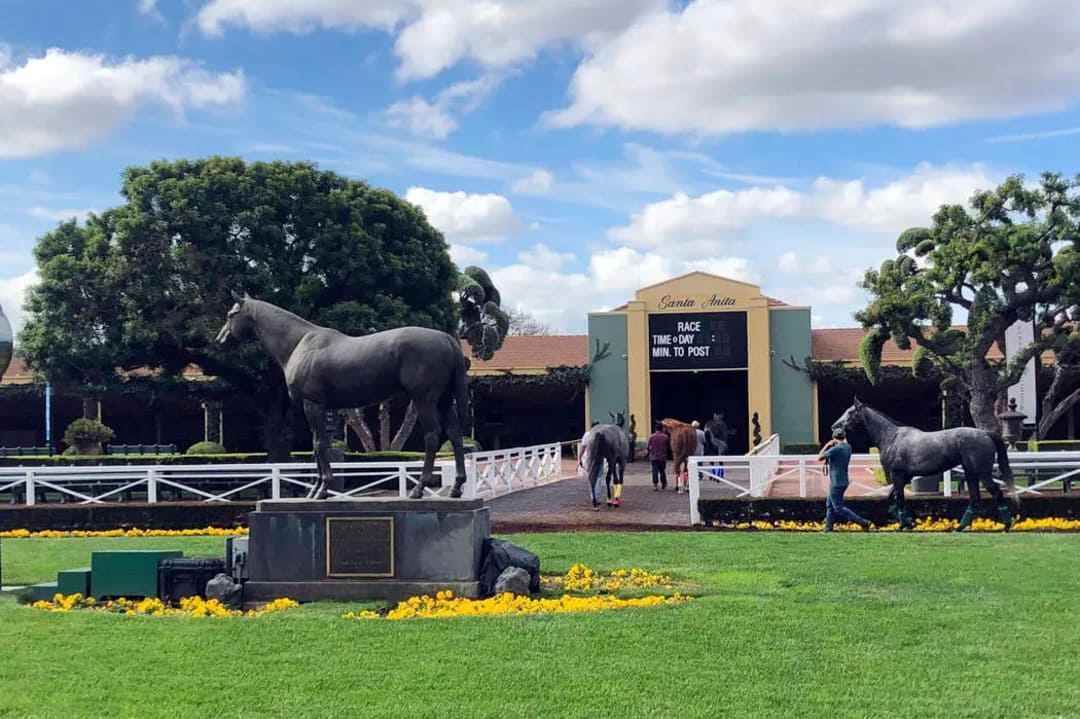
Three training fatalities at Santa Anita Park within eight days create an uncomfortable test for California racing. The deaths of Scam Alert, Single Vision and Eye of the Smiley do not erase the safety reforms introduced since the track’s 2019 crisis, but they do make one thing clear: long-term improvement cannot become a reason to dismiss a short-term warning signal.
That distinction matters for Santa Anita horse safety because both facts can be true at once. California can have made meaningful progress over several years while a sudden concentration of training injuries still deserves investigation. The useful question is not whether the reforms “worked” or “failed.” It is whether the current system can identify what happened quickly enough to reduce the chance of another cluster.
Three Training Fatalities Change The Question At Santa Anita
Scam Alert suffered a fatal training injury on September 19. Single Vision suffered a fatal injury while training on September 24. Eye of the Smiley followed on September 26.
All three were young Thoroughbreds, and all three incidents occurred during training rather than during a race. California maintains public equine fatality records covering musculoskeletal, non-musculoskeletal and infectious-disease deaths under California Horse Racing Board jurisdiction.
The timing is what makes the cluster difficult to treat as ordinary background risk. Santa Anita’s autumn racing period was beginning just as the deaths occurred, meaning scrutiny was inevitably going to extend beyond the individual horses to workout oversight, veterinary screening and the training environment itself.
No responsible conclusion about a common cause can be made yet. Three incidents close together do not prove that the surface, a training practice or a regulatory failure caused all three.
But absence of proof is not absence of a signal.
A safety system should be designed to investigate clusters before certainty exists, not after another series of injuries makes the pattern impossible to ignore.
Santa Anita Horse Safety Is Better Than It Was In 2019
The latest deaths need the longer history around them.
Santa Anita’s 2019 fatality crisis triggered a broad overhaul of California racing. The CHRB describes subsequent changes in veterinary practice, training oversight and racetrack operations as producing a dramatic reduction in fatalities and a wider culture shift around horse safety.
That progress should not be minimized simply because another difficult period has emerged.
California strengthened pre-race veterinary review, expanded the use of diagnostic imaging, changed medication practices, improved surface monitoring and developed additional controls around horses returning from layoffs or undertaking high-speed exercise.
The January 2026 racing reform review shows how far that work has moved beyond broad promises. Santa Anita developed a system requiring trainers to apply before conducting certain workouts, with veterinary certification involved. The review also discusses fitness examinations before workouts, research using PET imaging and closer examination of training histories.
Those are meaningful safeguards.
The important question now is whether the safeguards are producing enough actionable information when risk begins to concentrate.
Training Deaths Require A Different Kind Of Review
Race-day fatalities naturally receive the most public attention because they happen in competition. Training injuries can be more revealing from a prevention standpoint.
A workout occurs inside a controlled preparation program. Connections know the horse’s recent exercise history, veterinary treatment, planned distance and intended speed. Regulators and track veterinarians may also have access to medical and training information before high-speed work takes place.
That creates several questions after a training fatality.
What did the horse’s recent workload look like? Was there a rapid increase in the number or intensity of high-speed furlongs? Had diagnostic imaging been performed? Were there previous areas of soreness or veterinary concern? What did the surface data show during that morning’s training period?
Those questions are not accusations. They are precisely the information a serious injury-prevention system should examine.
The CHRB’s earlier Santa Anita investigations demonstrated why this matters. Postmortem reviews have previously identified pre-existing lesions and repetitive stress changes that were not necessarily obvious before catastrophic injury.
The strongest safety model therefore does not begin with the moment a bone fails. It works backward through the entire risk history that preceded it.
A Cluster Should Trigger Pattern Analysis, Not Speculation
There is a temptation after several deaths to look for one explanation.
That can be dangerous.
If all three horses suffered musculoskeletal injuries, that does not automatically establish one mechanical cause. Different structures may have failed. The horses may have had different training histories, veterinary findings and workloads.
The more useful response is comparative analysis.
Investigators can examine whether the horses worked on the same part of the track, whether their injuries involved similar anatomical structures, whether their recent exercise loads followed similar patterns and whether previous imaging or examinations contained warning signs.
Track maintenance records should be part of that review, but not treated as the presumed answer.
So should veterinary histories, workout videos, rider observations and postmortem findings.
The key is to identify shared risk factors, if any, rather than fitting three deaths into a theory before the evidence exists.
That distinction protects both horses and credibility. Declaring the track unsafe without evidence is not useful. Declaring the deaths unrelated before the investigations are complete is not useful either.
Prevention Has To Work Before A Horse Looks Injured
Racing’s welfare standard increasingly depends on detecting risk in horses that still appear capable of training.
That is why the recent decision surrounding preventive welfare decisions is relevant. Nysos was retired while sound after routine imaging identified subtle changes, demonstrating what prevention can look like when connections have information before a visible injury occurs.
The harder welfare question is whether the same degree of caution reaches horses without elite value.
Advanced imaging cannot reasonably be performed on every horse after every workout. Resources are finite, and imaging findings themselves require skilled interpretation.
But racing can become better at identifying which horses warrant closer examination.
Exercise history, previous injury, unusual recovery, changes in gait, declining performance and repeated high-speed stress can all help narrow that decision.
Prevention depends on selection: knowing which horse needs another look before the next demanding piece of work.
Transparency Is Santa Anita’s Next Safety Test
The investigations into Scam Alert, Single Vision and Eye of the Smiley matter beyond determining three individual causes of death.
The useful outcome would be a clear explanation of whether the cases shared anything meaningful and, if so, what changed because of it.
California already has a stronger safety infrastructure than it did before 2019. That is precisely why the latest cluster deserves careful scrutiny rather than defensive comparisons with the past.
Progress should raise expectations.
If necropsies show three unrelated injuries without a common training, veterinary or surface pattern, that information matters. If investigators find a recurring warning sign, that matters more.
The next test for Santa Anita horse safety is therefore not whether officials can point to better long-term statistics. It is whether a system built after one of racing’s most serious welfare crises can recognize a new concentration of risk, explain what the evidence shows and act on it before the numbers become a trend.
Three deaths do not prove California’s reforms have failed.
They do prove those reforms still have work to do.