
Saratoga’s Late Distance Change Shows Safety Decisions Cannot Wait Until Post Time
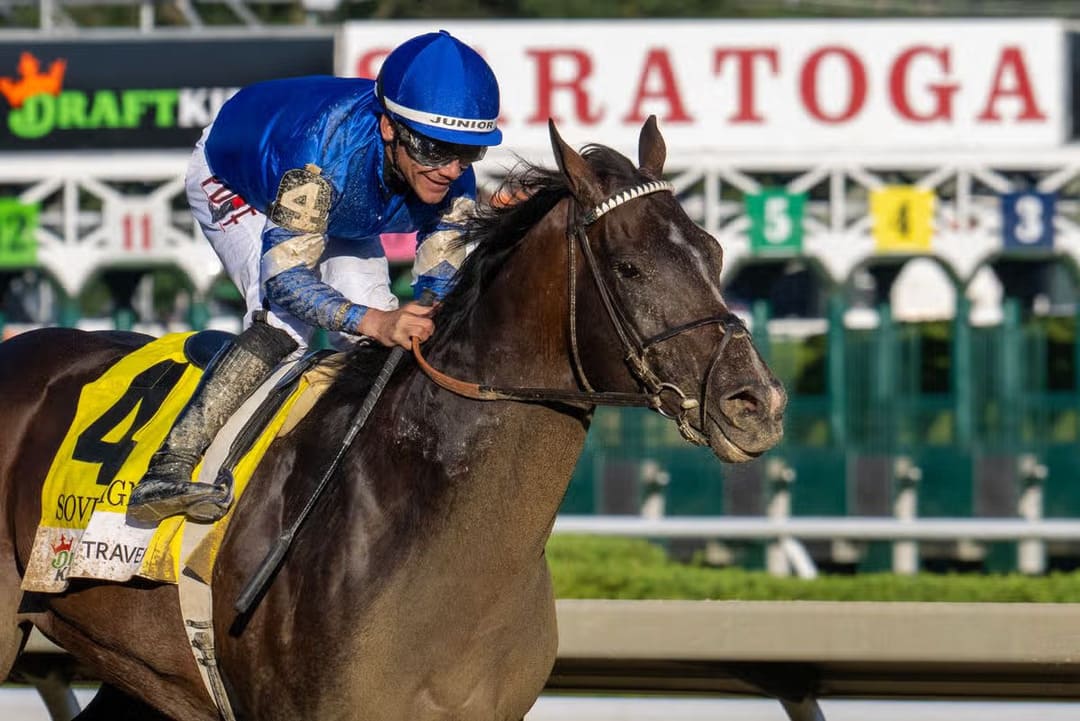
Saratoga jockey safety became the central issue of Sunday’s fourth race before the horses ever entered the starting gate. Changing the inner-turf contest from one mile to 1 1/16 miles addressed a legitimate concern about the short approach to the first turn, but the late timing created a 40-minute delay, disrupted major wagers, and left bettors asking why the problem was not resolved earlier.
The decision proves that horse and rider protection must outrank schedule convenience. It also fits a broader pattern found throughout the sport’s horse racing archive: when safety, communication, and public confidence collide, the final result rarely tells the whole story.
Saratoga Jockey Safety Became The Race Before The Race
Race 4 on Sunday, July 12 was originally carded as a one-mile inner-turf event for two-year-olds. Before the race was run, the distance was extended by one-sixteenth of a mile following jockey concerns about the short run into the first turn.
Ten horses eventually started. That field size mattered because young, inexperienced horses approaching a tight first turn can create an immediate positioning problem. Riders may be forced to establish places quickly while horses are still settling, increasing the possibility of crowding, clipping heels, or an uneven start to the race.
Moving the starting point gave the field a longer approach. From a pure safety standpoint, the reasoning was understandable.
The sharper concern is how late the change arrived. A decision can be correct while the process behind it remains inadequate. Safety came first, but it should have come earlier.
The Right Decision Arrived With The Wrong Timing
The Jockeys’ Guild presented a different timeline. Its riders’ safety statement said NYRA management had been informed of concerns on Friday, July 10 and notified again at approximately 12:15 p.m. Sunday.
That disagreement is not a minor public-relations dispute. It goes directly to whether racing’s communication channels worked.
If officials learned about the concern only after racing began, the sport needs a better system for riders to flag course-layout problems. If management received earlier notice, the question becomes why the distance was not changed before bettors began building wagers around the original conditions.
Either version points to a preventable process failure.
The Short First-Turn Run Was A Genuine Risk
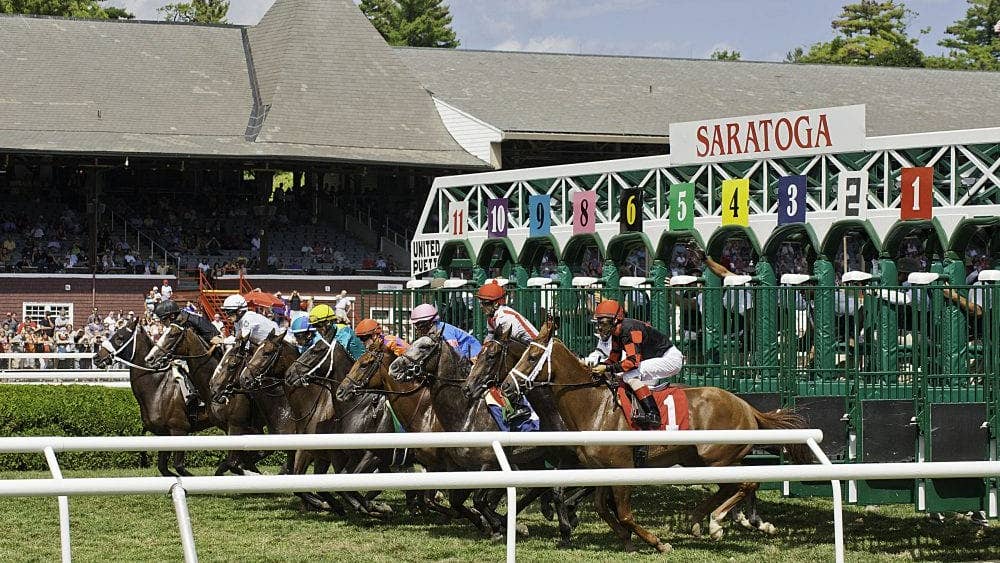
The inner turf’s one-mile configuration creates a short run from the starting gate into the first turn. That can be manageable under some conditions, but field size, horse age, experience, rail placement, and starting-gate position all affect the risk.
Two-year-old maidens are especially relevant because many are still learning how to break, settle, respond to pressure, and handle turns in race conditions. A crowded approach asks those horses and their jockeys to make several decisions almost immediately.
The Guild said riders had not agreed to fields larger than eight for two-year-old races at that distance on the inner turf. Sunday’s race had 10 starters.
That does not mean every large field will produce an incident. Safety standards should not require an accident before a concern is treated seriously. The purpose of race planning is to identify predictable hazards before speed and competition remove the margin for correction.
Prevention is the real standard, not whether everyone happened to return safely this time.
Bettors Paid For A Problem They Did Not Create
The distance change altered more than the physical race. It changed the handicapping conditions after bettors had already formed opinions and placed multi-race wagers.
The $1 Pick 6, scheduled to begin with Race 4, was cancelled. Its $166,702 carryover was moved to Thursday’s card. Pick 4 and Pick 5 wagers that had already begun were assigned “ALL” for Race 4, while the Double and Pick 3 scheduled to start with the fourth race were cancelled.
Those decisions were intended to protect bettors, and cancelling the Pick 6 was more defensible than pretending a one-mile selection remained unchanged after the race became 1 1/16 miles.
Still, refunds and wager adjustments cannot completely restore the original betting decision. Distance affects pace, stamina, post-position pressure, tactical intent, and which horse appears best suited to the race.
Late communication carried a cost even when the wagering response tried to be fair.
Key Signals From Saratoga’s Distance Dispute
The incident exposed several decision points that racing should review before another full field approaches the same configuration.
| Key Signal | What Happened | What Racing Must Address |
|---|---|---|
| Course-layout concern | Riders questioned the short run into the first turn | Set field-size and age limits before entries close |
| Timing dispute | NYRA and the Guild described different notification timelines | Create a documented safety-reporting process |
| Distance alteration | Race changed from one mile to 1 1/16 miles | Announce changes before wagering sequences begin |
| Race-day delay | Fourth race ran roughly 40 minutes late | Build a faster decision and communication chain |
| Wager disruption | Pick 6 and other pools were cancelled or modified | Protect bettors without relying on emergency fixes |
| Public confusion | Fans received competing explanations | Issue one transparent sequence of events |
The lesson is not that races should never be changed. Conditions can shift, and safety concerns can emerge. The lesson is that recurring, identifiable configuration risks should be resolved before the card reaches the betting public.
Safety And Betting Integrity Are Connected
Racing sometimes treats safety and wagering as separate departments. One protects horses and riders; the other manages bettors and pools. Sunday showed why that division is too narrow.
A late safety decision can alter the race condition, invalidate a handicap, delay the card, and force the cancellation of bets. That makes wagering integrity part of operational safety planning.
Bettors do not have the right to demand that a race proceed under questionable conditions. They do have the right to expect clear, timely information about the contest they are wagering on. The official distance-change notice said the alteration was made by order of the stewards after jockeys expressed concerns on Sunday. The nine-race card had already started, and Race 4 was pushed approximately 40 minutes beyond its original post time.
The strongest approach protects both groups by acting early. Establishing maximum field sizes, reviewing rail settings, consulting the jockey colony, and confirming starting configurations before entries or wagering would reduce the chance of another last-minute conflict.
Wagering integrity is operational, not merely financial.
Saratoga Must Fix The Process Before The Next Full Field
The distance change should not be remembered as proof that safety caused confusion. Safety did not create the problem. Delayed resolution did.
The next pressure point is whether NYRA, the stewards, and the jockey colony can agree on clear standards for two-year-old fields using Saratoga’s one-mile inner-turf configuration. Those standards should define acceptable field sizes, communication deadlines, and who has authority to act before wagering begins.
Saratoga jockey safety should never depend on an argument unfolding during the race card. Nor should bettors learn that the conditions of a wager have changed after their money is committed.
Sunday’s decision may have prevented a dangerous first-turn situation, which matters more than maintaining the original schedule. The opportunity now is to turn that intervention into a stronger procedure—one where riders are heard, horses are protected, bettors receive stable information, and the right decision is made long before the horses reach the paddock.