
Train Like a Jockey: The Boot Camp Producing Winners
Horse racing may seem like a sport where the animal does most of the work, but when you dig deeper, it’s clear that winning jockeys are elite athletes themselves. In Newmarket, England the historic heart of UK horseracing a special boot camp at the British Racing School is redefining what it means to train like a jockey and shaping the next generation of equestrian champions.
Beyond the Stereotypes: Jockeys as Athletes
The image of the “old-school” jockey a professional who simply showed up at the track, made weight, and focused on race results has dramatically shifted. Today’s jockeys are expected to have the same level of fitness, discipline, and mindset as any Olympic competitor. As flat racing jockey Martin Lane explained to CNN, “Fitness has changed massively from the days when jockeys were just turning up at the races and were drinking. Now we’re at the peak of our fitness. It’s definitely not just sitting on a horse!”
Inside the British Racing School’s Jockey Boot Camp
At the British Racing School in Newmarket, former jockey Richard Perham oversees an intensive training program aimed at preparing riders for the physical and mental demands of modern racing. Trainees follow a highly structured regimen that extends far beyond riding, covering all aspects of elite athletic preparation.
Core Elements of Jockey Training
Building Strength and Stability
A jockey must master the skill of controlling a powerful, 1,000 pound animal moving at 40 mph. This demands rock-solid core strength, outstanding balance, and explosive muscular endurance. Perham’s program incorporates weight training, stability exercises, and custom drills designed to mimic the motion and stresses of riding at top speed.
Endurance, Nutrition, and Weight Management
Endurance workouts on foot and on exercise bikes help build stamina for races that push both horse and rider to their limits. Just as crucial is healthy weight management. Modern jockeys focus on maintaining lean muscle rather than resorting to unhealthy crash diets, working with sports nutritionists to develop effective eating plans that optimize performance and recovery.
Mental Resilience and Race-Day Preparation
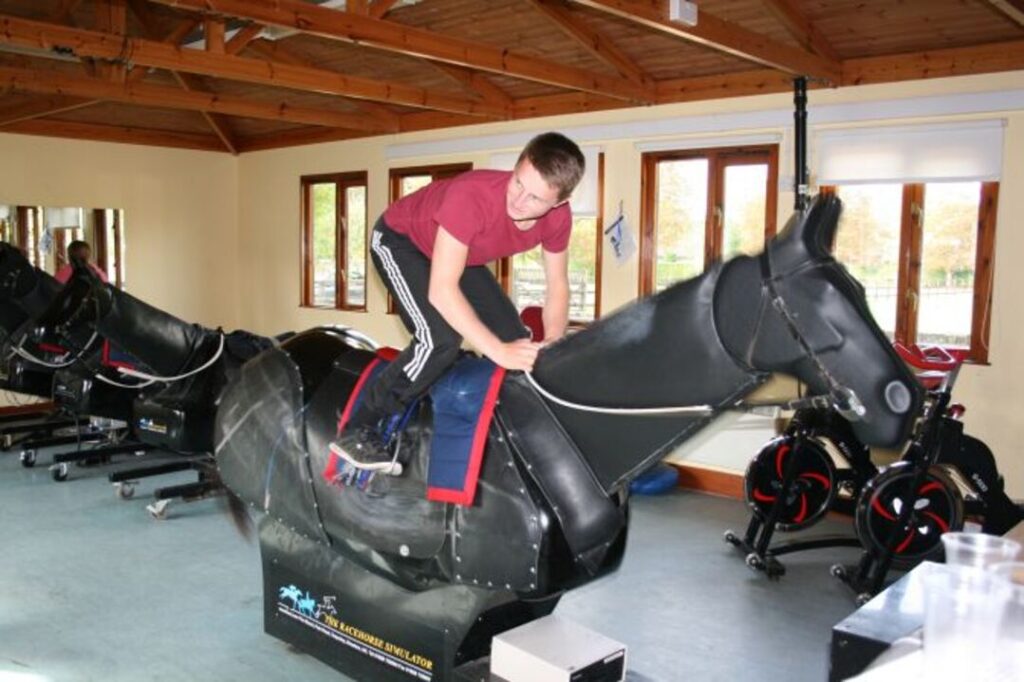
Riding isn’t just a physical feat; it’s a mental one. The boot camp simulates race day pressures, including split-second decision-making and adapting to rapidly changing conditions. Jockeys train on mechanical horses and study video analysis to learn from their performances. Mindfulness and mental resilience sessions are included to help riders deal with the unique stresses of competitive racing.
The Evolution of Jockey Training: Tradition Meets Science
Decades ago, fitness for jockeys often meant simply staying light enough to meet strict weight requirements. Today, training at the British Racing School reflects the merging of sport science with horseracing tradition. Programs now include recovery protocols, injury prevention, and collaboration with physiotherapists and sports psychologists.
The Results: From Boot Camp Trainee to Champion
Graduates of Perham’s training regimen not only improve their race results, but also enjoy longer, healthier careers. Injury rates drop, confidence soars, and they gain the respect of both the racing community and sports scientists. The boot camp’s formula for success is increasingly recognized as the gold standard for aspiring jockeys.
Shaping the Next Generation of Champions
Training to become a professional jockey is a rigorous and transformative process, going far beyond simply learning how to ride. The British Racing School’s boot camp exemplifies a new era where athleticism, preparation, and scientific support are central to every rider’s journey. Aspiring jockeys who immerse themselves in these programs not only enhance their competitive edge but also build the foundation for safer, more sustainable careers. With elite training and a commitment to continuous improvement, today’s jockeys are proving that behind every winning horse is an athlete powering their way to the finish line.