
What You Need to Know About Your Horse’s Gut Microbiome

As we transition into the competitive spring and summer riding seasons, sudden dietary changes from lush pastures and travel stress are pushing equine digestive systems to their absolute limits. Protecting the delicate balance of the digestive tract is no longer just a matter of basic feeding; it is a critical daily defense against catastrophic metabolic failures like colic and laminitis. In my years analyzing equine sports medicine and stable management, I have found that the most successful equestrian programs share a unified, fundamental philosophy: they do not merely feed the horse, they feed the complex ecosystem of microbes living inside the horse.
The Hidden Engine of Equine Energy
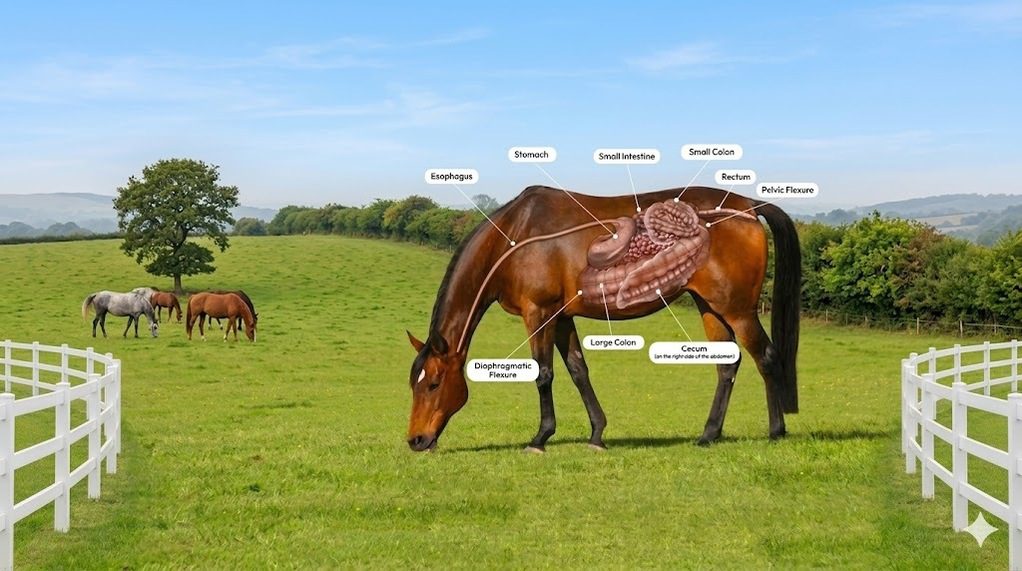
To truly understand equine nutrition, one must first recognize the sheer anatomical scale of the horse’s digestive tract. The equine hindgut, comprising the cecum and the large colon, is essentially a massive, highly active fermentation vat. Unlike humans or dogs, who rely heavily on enzymatic digestion in the stomach and small intestine to break down food, the horse derives up to seventy percent of its daily energy from the fermentation of complex fibrous plant material.
This fermentation process is entirely dependent on billions of microscopic organisms, including bacteria, protozoa, and fungi. When a horse consumes forage, these microbes break down the structural carbohydrates—like cellulose and hemicellulose—that the horse’s own digestive enzymes cannot process. The byproduct of this microbial feast is a steady supply of volatile fatty acids, which are absorbed through the intestinal wall and utilized as the primary energy source for everything from maintaining body heat to fueling a grand prix show jumping round. Maintaining the stability of your horse’s gut microbiome is therefore the absolute foundation of its athletic performance and overall vitality.
The Tipping Point of Digestive Dysbiosis
The microbial population within the hindgut is highly specialized and remarkably sensitive to environmental and dietary shifts. In a natural, grazing environment, a horse trickles a continuous supply of fibrous roughage through its system, maintaining a stable, neutral pH in the hindgut that favors beneficial fiber-fermenting bacteria. However, modern stable management often introduces high-starch cereal grains and concentrated feeds designed to meet the extreme caloric demands of performance horses.
When a horse consumes a large volume of starch in a single meal, the small intestine may fail to digest and absorb it completely. This undigested starch spills over into the delicate ecosystem of the hindgut. Suddenly, the microbial balance shifts. Bacteria that thrive on lactic acid rapidly multiply to consume the starch, producing massive amounts of acidic waste in the process. This sharp drop in the hindgut’s pH creates a highly acidic environment, a condition known as hindgut acidosis.
As the pH drops, the beneficial fiber-fermenting microbes die off in massive numbers, releasing lethal endotoxins through the intestinal wall and directly into the bloodstream. This toxic cascade is the biological trigger for systemic inflammatory crises, most notably endotoxemia and laminitis. I have seen perfectly sound, elite athletes crippled within hours simply because a carbohydrate overload fundamentally altered their internal microbial landscape.
| Hindgut State | Primary Fermentation Source | Internal pH Level | Clinical Health Risk |
| Balanced Ecosystem | Fibrous Forage (Hay, Grass) | Neutral (6.5 – 7.0) | Low; Optimal Digestion |
| Moderate Imbalance | Mixed Forage and High Grain | Slightly Acidic (6.0 – 6.4) | Medium; Mild Colic, Poor Coat |
| Severe Dysbiosis | High Starch Overload | Highly Acidic (Below 6.0) | High; Laminitis, Endotoxemia |
Strategic Management of Dietary Transitions
Because specific microbes adapt to digest specific types of feed, the golden rule of equine nutrition is the gradual implementation of any dietary change. If a stable suddenly switches from a late-cut winter grass hay to an exceedingly rich, early-spring alfalfa, the resident microbe population will not be equipped to process the new nutrient profile efficiently. The resulting digestive upset is entirely predictable.
Veterinarians universally advise taking ten to fourteen days to transition a horse onto a new forage or grain. By mixing the old feed with the new in gradually shifting ratios, we provide the microbiome the necessary time to selectively breed the specific bacterial populations required to digest the new diet. Furthermore, dividing grain rations into multiple small, frequent meals rather than one or two massive dumps ensures that starches are fully processed in the foregut, protecting the hindgut from dangerous spillage.
Environmental Stressors and Medical Interventions
Beyond feed management, the modern performance horse faces immense psychological and physiological stressors that can wreak havoc on digestive stability. Intensive training, long-distance trailering, and prolonged stall confinement all trigger stress responses that can alter gut motility. When the physical movement of the digestive tract slows down or speeds up abnormally, the fermentation process is disrupted, often leading to gas buildup and impaction colic.
Equally concerning is the necessary, but highly disruptive, use of oral antibiotics. While crucial for fighting off respiratory or soft-tissue infections, antibiotics are indiscriminate killers. They eradicate the beneficial microbes in the hindgut just as effectively as they target the pathogenic bacteria causing the primary illness. Whenever I observe a horse recovering from an intensive course of antibiotics, I also witness the struggle to rebuild that internal ecosystem, a process that can take weeks or even months of careful management and targeted probiotic support.
The Immediate Importance of Biome Management
Understanding the complexities of the equine digestive tract matters right now because we are entering the most volatile season of the year for horse management. Spring pastures are flushing with highly fermentable sugars, competition travel is escalating, and stables are adjusting feed programs to meet peak performance demands. We cannot afford to view equine nutrition simply in terms of crude protein and caloric intake. By shifting our perspective to view the horse as a vessel for a delicate, life-sustaining microbial engine, we can make proactive, analytical management decisions. Safeguarding the hindgut through consistent forage, slow transitions, and stress mitigation is the most powerful tool an owner possesses to ensure their horse survives the rigors of the season and thrives in the arena.