
Woodbine’s Saturday Turf Card Is Really A Breeders’ Cup Stress Test
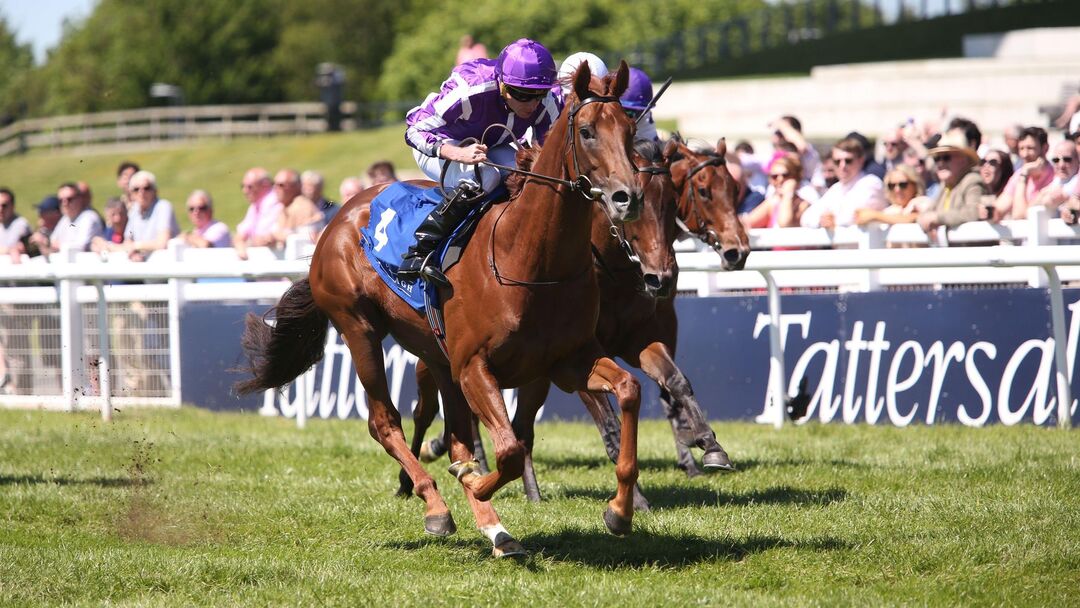
Woodbine Turf Champions Day is not just a strong Saturday card with a famous mile race at the center. It is a Breeders’ Cup market test, asking bettors to decide which turf performances are championship signals and which are merely perfect-trip illusions.
That is why today’s card matters beyond Toronto. The Woodbine Mile gives the afternoon its headline, but the deeper story is how one race day can reshape opinions on older turf milers, 2-year-old grass prospects, fillies and mares, and the prices bettors will be willing to accept later in the fall. The same pressure shows up whenever pace-map discipline becomes more important than reputation.
Woodbine Turf Champions Day Carries More Than Local Stakes Value
The Saturday race card lists the Woodbine Mile at one mile with a $1 million purse, the E.P. Taylor at 1 1/4 miles with a $750,000 purse, and both juvenile turf races at one mile with $500,000 purses. That is not ordinary late-summer programming. That is a card built to test several divisions at once.
The strength of the card is its concentration. The Woodbine Mile, E.P. Taylor Stakes, Summer Stakes, and Natalma Stakes are all Grade 1 races on the E.P. Taylor turf course, with each carrying Breeders’ Cup “Win and You’re In” implications.
The Mile is the obvious magnet. The defending winner Notable Speech is part of the recent Woodbine Mile history, and a returning high-class runner always changes the tone of a race. But the whole afternoon deserves a wider lens because the supporting races are not filler. They are part of the championship runway.
For bettors, that creates compressed decision-making. There is no single race to isolate. The card demands constant adjustment from one turf question to the next.
The Woodbine Mile Is The Market Anchor
The Woodbine Mile is the race most likely to move the conversation immediately. A one-mile Grade 1 turf race is unforgiving because there is not much time to recover from a bad break, a poor early position, or a rider forced into Plan B before the far turn.
That is why post position and race shape matter so much here. A classy horse drawn into a clean stalking trip becomes easier to trust. A closer who needs cover and pace can become vulnerable if the draw forces too much traffic. A speed horse can look dangerous until another pace player makes relaxation impossible.
The market often wants to simplify that into one question: who is best?
That is not enough.
The sharper question is who is best at the expected price under today’s conditions. The favorite may deserve respect and still be short enough to create poor value. A second-tier runner may be less likely to win but more attractive if the draw, pace map, and expected odds all point in the same direction.
That is where trip risk becomes more important than name recognition.
Juvenile Turf Races Create The Biggest Guessing Game
The Summer Stakes and Natalma Stakes may produce the most fragile reads of the afternoon because 2-year-old turf form can change quickly. Juvenile races invite projection, and projection is where the betting market can get too confident too fast.
A young horse can look brilliant when everything goes right. Clean break, smooth position, clear running, and a visually sharp finish can create a reputation in one afternoon. But Breeders’ Cup-caliber juvenile races often ask a different question later: what happens when the pace is hotter, the field is deeper, and the trip is not handed over neatly?
That is why the Summer and Natalma should be judged carefully. Winning matters, but so does the way the winner wins.
Did the horse settle? Did the horse quicken when asked? Did the horse handle traffic? Did the horse show professionalism, or simply outrun a favorable setup?
A juvenile turf winner from Woodbine can become a serious fall player. But bettors should be careful about treating every strong juvenile victory as proof of finished quality. With young horses, the market is often betting on what they might become, not what they have already proven.
Saturday’s Four Grade 1 Races Ask Different Questions
The cleanest way to understand Woodbine’s card is to separate the races by the kind of pressure they create. All four Grade 1s connect to the Breeders’ Cup, but they do not test the same skills.
| Race | Division Signal | Main Betting Question |
|---|---|---|
| Woodbine Mile | Older turf milers | Which horse can turn class and position into a clean one-mile finish? |
| E.P. Taylor Stakes | Fillies and mares on turf | Which runner can sustain quality over 1 1/4 miles without wasting ground? |
| Summer Stakes | Juvenile turf males/open 2-year-olds | Which young horse has talent that can travel beyond one favorable setup? |
| Natalma Stakes | Juvenile turf fillies | Which filly combines ability with enough professionalism for fall pressure? |
The comparison shows why the day is more complex than a headline race. A horseplayer moving through this card has to shift from older-horse class evaluation to route stamina, then into juvenile uncertainty.
That variety is the appeal. It is also the trap.
The same betting logic cannot be copied from race to race. A proven miler may be judged by pace and post. A 1 1/4-mile turf runner may be judged by ground loss and timing. A juvenile may be judged by maturity as much as speed.
Breeders’ Cup Implications Can Distort The Price
The Breeders’ Cup connection gives the card urgency, but urgency can be dangerous in a wagering market. A “Win and You’re In” label makes a race feel more important, and more important races tend to attract stronger opinions.
The Challenge Series schedule lists all four Woodbine Grade 1 races today as qualifiers tied to the Mile, Filly & Mare Turf, Juvenile Turf, and Juvenile Fillies Turf divisions. That gives each result a direct championship consequence.
But a qualifying win is not the same as a championship prediction.
Woodbine’s turf course, local conditions, field composition, and pace dynamics can create a result that is completely legitimate without being easily transferable. A horse can love this course and still face a different problem at the Breeders’ Cup. A juvenile can win today and still need to grow up quickly. A filly or mare can control a race at Woodbine and later meet a deeper international field.
That is why bettors should resist the urge to overreact. The result matters. The context matters more.
The Signal Comes After The Wire
The most useful information from Woodbine Turf Champions Day will not be limited to the winners. The real value may come from the horses who run better than the chart suggests, the favorites who win without answering every question, and the beaten runners who had legitimate excuses.
That is where market memory becomes important. The public remembers winners. Better bettors remember trips.
A horse stuck wide in the E.P. Taylor may be more interesting next time than the margin suggests. A juvenile who finishes strongly after learning on the job may be worth following. A Woodbine Mile runner who gets the wrong pace setup may still be a Breeders’ Cup factor if the underlying performance holds up.
Saturday’s card should be treated as a sorting exercise, not a final verdict.
Woodbine Turf Champions Day matters because it forces the racing market to price several different kinds of turf evidence in one afternoon. Class, draw, maturity, pace, and trip all matter, but none of them matter in isolation. The winners will get the headlines. The sharper players will be watching how the races were won, which performances can travel, and where the next betting mistake may appear.