
Kalpana Is About To Find Out If Class Alone Can Survive Royal Ascot Pressure
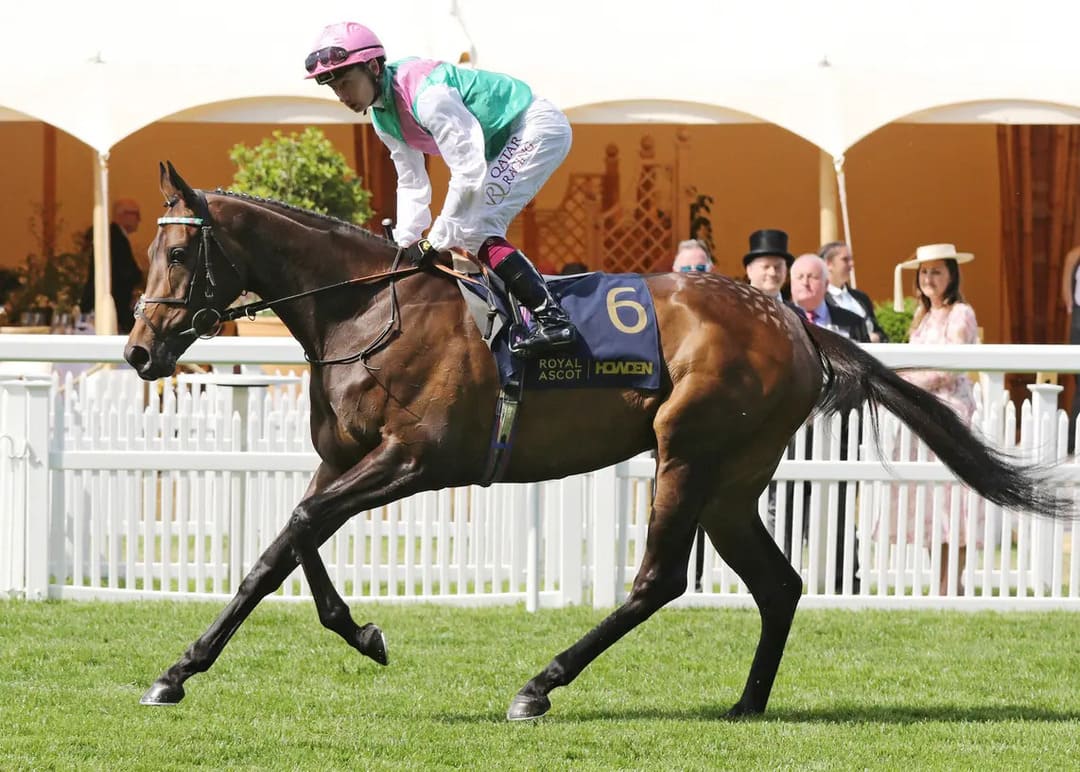
The Kalpana Hardwicke Stakes question is not whether she belongs in the conversation. It is whether her class, Ascot record and recent Newbury return are enough to control a race that looks closer to Group 1 pressure than an ordinary Group 2 assignment.
That is what makes this Royal Ascot test so revealing. Kalpana has already built the profile of a serious older mare, but the Hardwicke Stakes asks a different kind of question from autumn championship company, and Alex Brown Racing’s Derby pressure analysis shows why major-race form only matters when it survives the next examination.
Kalpana Hardwicke Stakes Pressure Comes From Timing
Kalpana arrives at the Hardwicke Stakes at a delicate point in her campaign. She is not trying to introduce herself to the top level. She is trying to confirm that her best work still has forward momentum.
That matters because older-horse races can change quickly in early summer. Some horses are building toward midsummer targets. Others are still tightening after seasonal returns. A race such as the Hardwicke can expose whether a horse is peaking, holding form, or being asked to bridge from preparation into full pressure.
Kalpana’s recent return at Newbury gives her a timely foundation. The official Kalpana profile notes her winning comeback in the Group 3 Aston Park Stakes in May 2026, where she began her five-year-old season by beating five rivals while carrying a Group 1 penalty.
That is a meaningful starting point. But Royal Ascot rarely lets a horse win purely on profile. Timing now becomes the test.
The Hardwicke Looks Deeper Than Its Label
The Hardwicke Stakes is officially a Group 2, but this year’s field carries more weight than that label may suggest. Kalpana is not being asked to beat exposed handicappers or horses looking for a soft placement. She is facing rivals with genuine class, international standing and enough depth to punish any tactical weakness.
The current Hardwicke Stakes racecard lists the race over 1m3f211y at Royal Ascot, with good-to-firm going and a field strong enough to make the favorite work for everything.
Jan Brueghel brings Ballydoyle significance. Goliath adds proven top-end danger. Giavellotto brings the profile of a hardened, battle-tested older horse. Others in the field may not have Kalpana’s headline pull, but they create the kind of pressure that can turn a smooth-looking favorite into a vulnerable one.
That is why the Hardwicke matters beyond the result. It can clarify whether Kalpana is merely the right favorite or the older-horse division’s most reliable reference point.
Ascot Form Helps, But It Does Not Guarantee Control
Kalpana’s Ascot connection is one of the strongest parts of her case. Horses who handle the track, the long straight and the rhythm of a Royal Ascot race deserve respect, especially at this distance.
Still, course form should never be treated as a free pass. Ascot can reward familiarity, but it also magnifies small inefficiencies. A horse can travel well for a long time and still be forced into an uncomfortable question when the serious move begins.
For Kalpana, the issue is how much control she can establish before the race gets serious. If she settles, moves cleanly and gets the right position, her class can speak loudly. If the pace becomes awkward or the race turns tactical, the advantage can narrow quickly.
That is the danger of relying only on past course success. Royal Ascot form is evidence, not insurance.
The Main Threats Make This A Proper Examination
Kalpana’s challenge is sharper because the opposition does not need her to fail badly. They only need her to be slightly below her best.
| Horse | Why The Threat Matters | Pressure On Kalpana |
|---|---|---|
| Jan Brueghel | Carries Ballydoyle depth and high-class staying influence | Forces Kalpana to beat a major stable rival |
| Goliath | Brings serious older-horse quality and international danger | Tests whether Kalpana can dominate strong males |
| Giavellotto | Battle-hardened and experienced at a high level | Makes the race less forgiving if tempo gets demanding |
| West Wind Blows | Reliable enough to expose a below-par favorite | Keeps pressure on form and finishing strength |
| Kalpana | Proven class, strong Ascot record and recent winning return | Must turn status into authority |
This is why the betting and form discussion around Kalpana should be more careful than casual favorite talk. She has obvious credentials, but the race is not short of credible alternatives.
Jan Brueghel’s presence gives the race a tactical and stable-power edge. Goliath ensures there is international substance. Giavellotto adds toughness and older-horse experience. That mix means Kalpana cannot simply run well and expect the field to fold.
She may be the best horse in the race. The Hardwicke will test whether she can prove it in the most public setting of the week.
Ground And Race Shape Could Decide More Than Reputation
Good-to-firm ground is a crucial part of the Hardwicke equation. It can help horses with pace, balance and a clean action, but it also reduces the margin for error. A poor position, a slightly mistimed move or a moment of lost rhythm can matter more when the ground is lively.
Kalpana’s Newbury return suggested she retained appetite and professionalism. Royal Ascot may demand sharper execution. The race could become a smooth class test if the pace is honest and the best horses have room to build. It could become more complicated if the field stacks up, forces an early move, or turns the home straight into a tactical sprint.
That is the difference between being the obvious horse and being the safest horse. Favorites at Royal Ascot often look solid on paper because their form is the cleanest. But the race itself decides whether that form has been priced correctly.
For Kalpana, the risk sits in race shape. She does not need everything perfect, but she cannot afford a contest that turns her strengths into late recovery work.
The Hardwicke Result Could Redirect The Older-Horse Picture
The wider importance of this race is what it does to the older-horse division. If Kalpana wins with authority, she strengthens her position as one of the most dependable middle-distance mares in training and gives her campaign a sharper midsummer platform.
If she wins narrowly, the interpretation becomes more layered. A victory would still matter, but it may leave questions about how much she had in hand and whether stronger assignments will demand more.
If she is beaten, the result could shift attention quickly. Jan Brueghel, Goliath or another rival could use the Hardwicke to claim a bigger place in the division, while Kalpana would still have class but lose some of the certainty attached to her current profile.
That is why this race should not be treated as a routine favorite assignment. The Hardwicke has enough depth to redraw perceptions, especially because Kalpana’s reputation is already established. Established horses do not only run for trophies. They run to keep control of the story around them.
The Kalpana Hardwicke Stakes test is therefore about class, timing and authority arriving at the same moment. She has the form to win, the course evidence to command respect and the profile of a mare still capable of shaping the season, but Royal Ascot’s final-day pressure will decide whether she remains the division’s most convincing answer or becomes part of a much wider debate.
FAQ’s
What race is Kalpana running in at Royal Ascot?
Kalpana is set for the Hardwicke Stakes, a Group 2 race over 1m3f211y at Royal Ascot. The race is for older horses and is one of the major final-day contests.
Why is Kalpana a major Hardwicke Stakes contender?
Kalpana is a proven high-class mare with strong Ascot form and a recent winning return at Newbury. Her profile makes her a natural favorite, but the field gives her a serious test.
Who are Kalpana’s main rivals in the Hardwicke Stakes?
Jan Brueghel, Goliath and Giavellotto are among the major threats. Each brings a different kind of pressure, from stable strength and international class to older-horse toughness.