2026 Claiming Crown: 101 Entries and New Aftercare Pledge
horse racing

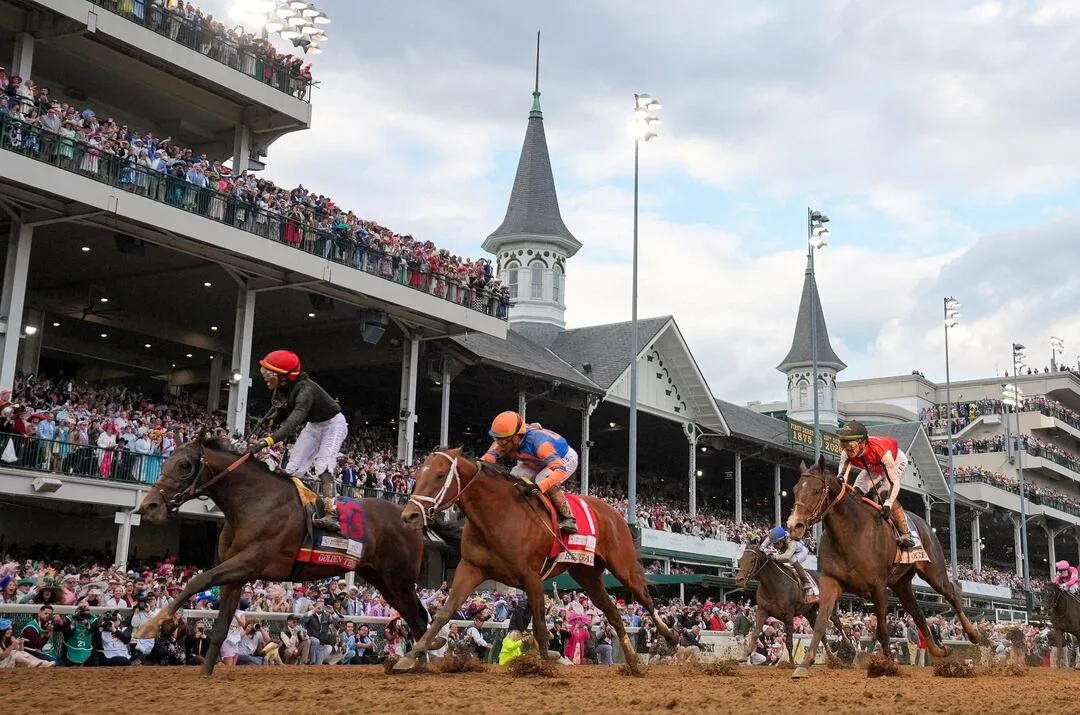
The 2026 Claiming Crown has attracted 101 horses across nine championship races scheduled for Saturday, November 14, at Churchill Downs in Louisville, Kentucky. The 28th edition will distribute a combined $1.2 million in advertised purses across its featured races, giving claiming-level Thoroughbreds an opportunity to compete for rewards more commonly associated with higher-profile racing.

The November 9 Claiming Crown entry report, prepared by Kentucky Horsemen’s Benevolent and Protective Association communications, confirms an average of approximately 11.2 horses in the nine main fields. The event also introduces a partnership with the Retired Racehorse Project, connecting the upcoming championship with opportunities for horses after their racing careers end.

Why the 2026 Claiming Crown entries matter

The Claiming Crown was established in 1999 by the National Horsemen’s Benevolent and Protective Association and the Thoroughbred Owners and Breeders Association. Its purpose was to create a championship-style competition for horses that had competed in claiming races.

Claiming races are a major part of American Thoroughbred racing. In an ordinary claiming race, eligible buyers can acquire a competing horse under the race’s published claiming conditions. Such races create opportunities for horses that may not be competing at the highest stakes level.

The Claiming Crown recognizes the accomplishments of those horses and the connections who manage them.

However, there is an important distinction: the Claiming Crown races themselves use starter-allowance conditions. Eligibility is based on a horse having competed at an applicable claiming level during a qualifying period. The entrants are not automatically being offered for sale simply because they participate in the Claiming Crown.

The 2026 program includes horses with different racing backgrounds, experience levels and competitive records. Its appeal comes from giving established claiming performers a championship opportunity rather than restricting major race-day recognition to elite stakes horses.

A new sprint expands the championship program

One notable development for 2026 is the return to a nine-race Claiming Crown program for the first time since 2021.

The additional race is the $100,000 Claiming Crown Empress, a six-furlong sprint for fillies and mares that meet its qualifying claiming conditions.

The Empress creates another opportunity for female claiming-level runners to compete for a substantial purse against horses with comparable eligibility backgrounds.

The nine Claiming Crown races offer purses ranging from $100,000 to $200,000, with additional supplements available for eligible Kentucky-bred horses.

They form part of a larger 12-race Churchill Downs card that also includes the $300,000 Dream Supreme Stakes.

That distinction is worth remembering when interpreting the entry figures. The reported 101 horses are in the main fields of the nine Claiming Crown races, not the entire day’s racing program. Some races also have alternate entrants who may become eligible to start if scratches occur.

Experienced claiming horses bring compelling stories

The championship fields include returning Claiming Crown winners and horses attempting to extend impressive winning records.

Among the notable entrants is Concrete Glory, a seven-year-old gelding who will attempt to become the first three-time Claiming Crown winner. His previous achievements demonstrate how experienced claiming horses can remain competitive over multiple seasons.

Another prominent entrant is Kerness K, a four-year-old gelding trained by Jamie Ness. He enters the $100,000 Ready’s Rocket Express seeking a 12th consecutive victory.

Neither achievement guarantees another win. Both, however, illustrate why the Claiming Crown has developed a following among owners and trainers whose horses compete outside racing’s most prestigious stakes divisions.

For many of these connections, a championship appearance represents years of careful management, suitable race placement and continued competitive performance.

A new partnership connects racing success with aftercare

The 2026 Claiming Crown will also introduce a charitable initiative supporting former racehorses.

The Retired Racehorse Project’s official partnership announcement confirms that the organization has been named the event’s official charity.

Through the new Claiming Crown Pledge, participating owners and trainers can voluntarily commit a portion of their horses’ race earnings to support Thoroughbred second-career opportunities.

The program offers several pledge options, including 1%, 2%, 5% and 10%, as well as other percentages.

For illustration, if a participating connection received $10,000 in eligible race earnings and pledged 2%, the resulting donation would be $200. That is a hypothetical calculation, not a reported donation or a prediction of any horse’s earnings.

The initiative is voluntary. It does not mean every participant has pledged, nor does it establish how much money will ultimately be raised.

The funds are intended to support the Retired Racehorse Project’s work promoting Thoroughbreds in second careers through education, industry connections and programs such as the Thoroughbred Makeover.

Why second careers deserve attention alongside racing achievements

The Claiming Crown celebrates horses that have contributed to the racing industry through consistent competition. Yet their responsibilities and welfare needs do not end when they are no longer racing.

Horses that compete in claiming races can move between owners, trainers and racetracks during their careers. Those transitions make accurate records, appropriate veterinary care and responsible retirement arrangements important.

Alex Brown’s fictional account of a racehorse moving through the claiming system provides a literary perspective on the uncertainty that can accompany repeated changes in ownership and management. Although fictional, it raises questions about continuity of care that remain relevant to discussions of racing welfare.

For a retiring Thoroughbred, the appropriate next step depends on its health, temperament, physical capabilities and available opportunities.

Some former racehorses become successful riding or sport horses. Others need rehabilitation, a quieter retirement or long-term sanctuary.

An aftercare partnership cannot resolve every challenge facing retired Thoroughbreds. It can, however, encourage racing connections to consider what happens after the final start.

What to watch on November 14

The 2026 Claiming Crown is scheduled for Saturday, November 14, at Churchill Downs, with the full 12-race program beginning at 1 p.m. Eastern Time.

The nine Claiming Crown races are scheduled to begin with Race 4 at 2:28 p.m. Eastern. Final fields may change because of scratches and other race-day decisions.

Beyond the winners, two developments deserve attention: how the expanded nine-race championship performs and whether the new charitable partnership generates meaningful participation from racing connections.

The Claiming Crown has long demonstrated that major racing achievements are not limited to the most expensive or heavily promoted Thoroughbreds.

With 101 horses entered in its main championship fields and a new initiative supporting life beyond racing, the 2026 event offers a chance to recognize both the contributions of claiming horses and the responsibilities that follow their competitive careers.

Breeders Cup Aftercare Pledge Tops $100K in 2026

breeders cup

New Vocations Racehorse Adoption Program says its 2026 Breeders’ Cup Pledge generated more than $100,000 in early estimated donations. Announced on November 4, the result followed the October 30-31 championships at Keeneland and involved connections associated with 47 horses. The figure is encouraging, but it is not a final audited total: donations were still being tallied when the organization announced it.

The November 4 fundraising announcement describes a campaign in which participating owners and trainers voluntarily pledge a portion of their Breeders’ Cup earnings. That is an important distinction. The money is not a standard deduction from every winning bet, and the announcement does not suggest that every racing connection participated. Support depends on who signs up and what their horses earn.

How the 2026 pledge turned finishes into aftercare support

New Vocations identified winning performances by horses with pledging connections, including Further Ado, Kathynmarissa, Hughes, Benvenuto Cellini, Haffner and Sun Goddess. Other participating connections contributed through notable placings, including those of Explora and Golden Tempo. A horse did not have to win for its connections’ pledge to produce support.

The campaign dates to 2009 and is now in its 17th edition. New Vocations says cumulative fundraising from the Breeders’ Cup Pledge has passed $1 million. Those are program-reported figures; the new $100,000-plus number remains provisional, so it should not be presented as cash already disbursed to individual horses.

Why a dollar pledged is not a horse rehomed

A racing career can end for very different reasons. Some horses need recovery and rest; others are healthy but need time to understand new cues, footing and routines before they can become reliable riding partners. Adoption programs may need to evaluate soundness, provide veterinary care, retrain a horse, screen prospective homes and maintain follow-up relationships.

New Vocations explains in its overview of its rehabilitation, retraining and rehoming program that it has worked with retired Thoroughbreds and Standardbreds since 1992. The organization reports serving more than 600 retired racehorses annually. That overall workload is not a measure of how many horses the 2026 Breeders’ Cup campaign alone can support. It would be misleading to divide the announced donation estimate by an assumed cost per horse and present the answer as a verified number of new adoptions.

The Breeders’ Cup result has a second finish line

The central welfare question is what follows a horse’s last race. The historic off-track Thoroughbred resource at Alex Brown Racing highlights the range of careers retired horses can pursue, from eventing and dressage to pleasure riding and companionship. Those opportunities usually take more than a change of address; suitable assessment, time and matching matter.

The 2026 pledge connects high-profile racing results with one practical part of that work. It also shows a way for owners and trainers to share in the responsibility after a horse’s racing usefulness ends. But the pledge does not replace other aftercare funding, and it does not establish what happens to every retiring racehorse.

For now, the reliable takeaway is both significant and limited: New Vocations has reported more than $100,000 in early estimated support, with the final amount still to be confirmed. The more enduring test will be the program’s continued ability to prepare horses for safe, suitable homes, not just the size of one championship-weekend headline.

Sovereignty Retires: Classic Win and $150K Stud Fee

sovereignty retires

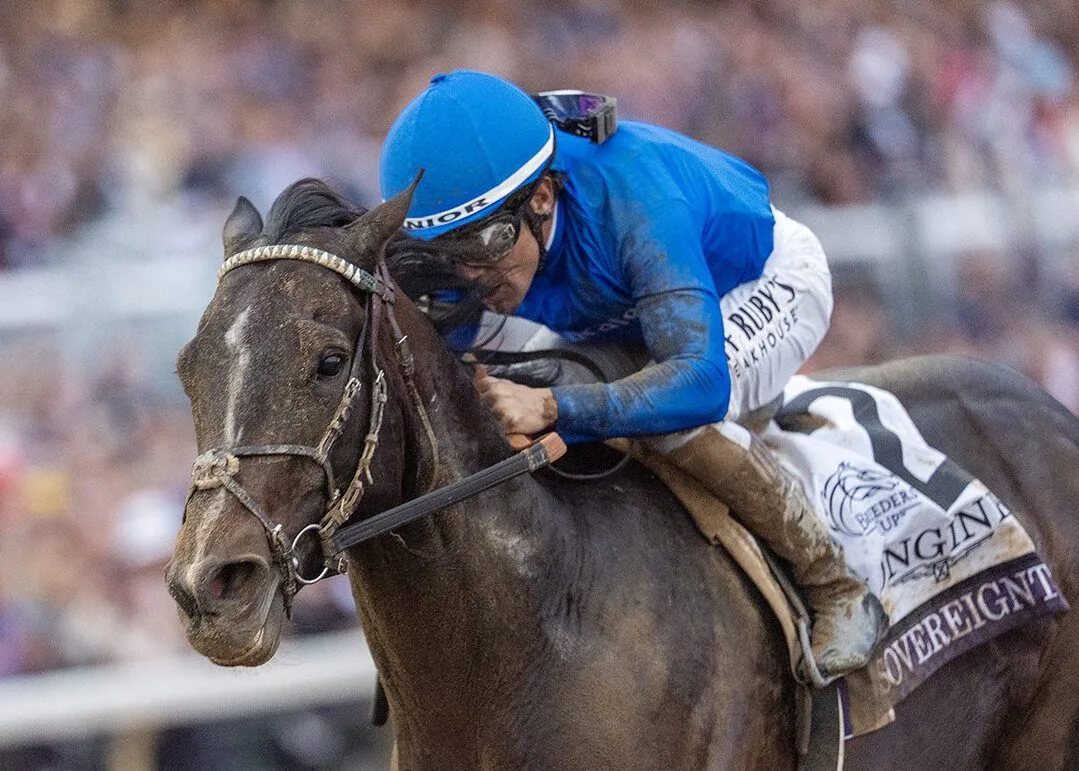
Sovereignty closed his racing career with a 1 3/4-length victory in the $7 million Breeders’ Cup Classic at Keeneland on October 31, 2026. The four-year-old Godolphin homebred defeated The Puma, with stablemate Knightsbridge third, and retired with eight wins from 13 starts and $10,516,550 in career earnings. The next stage is already taking shape: a breeding career at Darley’s Jonabell Farm in Kentucky, beginning in 2027.

Darley has set his first-season fee at $150,000, according to its 2027 fee announcement. That is the published price for an eligible breeding arrangement, not the amount for which the horse was sold. The difference matters when a champion moves from the racetrack to the breeding shed.

Why Sovereignty’s final race mattered

The Classic was more than a farewell appearance. Trained by Bill Mott and ridden by Junior Alvarado, Sovereignty passed the leading horses in the stretch and finished 1 3/4 lengths ahead of The Puma. Knightsbridge took third; defending Classic winner Forever Young finished fifth. The result gave Godolphin its first Breeders’ Cup Classic victory.

It also completed an unusual sequence of top-level wins. Sovereignty took the 2025 Kentucky Derby, Belmont Stakes and Travers Stakes, then added the Whitney and Breeders’ Cup Classic in 2026. Darley identifies him as the first horse to win the Kentucky Derby, Travers and Breeders’ Cup Classic. He had missed the 2025 Classic after developing a fever, while a reported hoof abscess interrupted his intended 2026 prep schedule. Neither interruption, on its own, establishes why his connections elected to retire him after this victory.

The published $7 million Classic figure is the race’s purse, not Sovereignty’s individual paycheck. His $10.5 million-plus career total covers prize money earned across all 13 starts, so those two figures should not be added together.

What a $150,000 stud fee actually means

Sovereignty is a son of Into Mischief out of Crowned, a daughter of Bernardini. His racing record and pedigree make him a prominent new addition to Darley’s 2027 roster, but a stallion’s advertised fee and eventual breeding income are different things.

Darley’s published $150,000 is a first-season fee. Breeding contracts can include conditions about successful foaling, payment and eligibility, and a published fee does not tell the public how many mares will be bred or what revenue a season will produce. Nor does the fee establish the horse’s sale price, current health, or the future racing ability of his offspring. Those outcomes remain to be seen.

The separate $1 million breeding-right sale

Just two days after the Classic, the Fasig-Tipton November Sale report recorded a $1 million sale of a lifetime breeding right to Sovereignty. White Birch Farm purchased that right on November 2, 2026. The transaction did not mean the farm bought the horse himself.

A breeding right is a contractual interest connected to breeding access; its value is not the same as the advertised fee for a single season’s service. The duration, privileges, conditions and possible future value must be understood through the underlying agreement. Without those details, dividing $1 million by $150,000 would be an oversimplified way to estimate the buyer’s return.

This is the distinction behind the headline numbers: the $150,000 announcement describes an initial breeding fee, while the $1 million auction result describes what one buyer paid for a particular long-term right. Both reflect market expectations; neither is proof of future success as a sire.

One champion’s retirement is not every Thoroughbred’s retirement

Sovereignty’s move into a prominent stallion career is one highly visible path after racing, not the normal destination for every retired horse. Many horses need retraining, rehoming, long-term care or other individual arrangements. The off-track Thoroughbred resources at Alex Brown Racing reflect that broader responsibility beyond a horse’s final race.

The distinction is worth preserving when retirement announcements are celebrated. A major stallion opportunity tells readers about a champion’s breeding prospects; it does not, by itself, describe the aftercare resources available to horses without comparable racing records or pedigrees.

For Sovereignty, the immediate facts are settled: a Classic victory, the end of his race record, and a planned first stud season in 2027. The value of his offspring, his long-term record at stud, and the success of this next career remain future questions. His last race can be judged today; his breeding legacy cannot.

OTTB Dental Exam: What to Check Before Retraining

Equine Dental Check in the_Stable

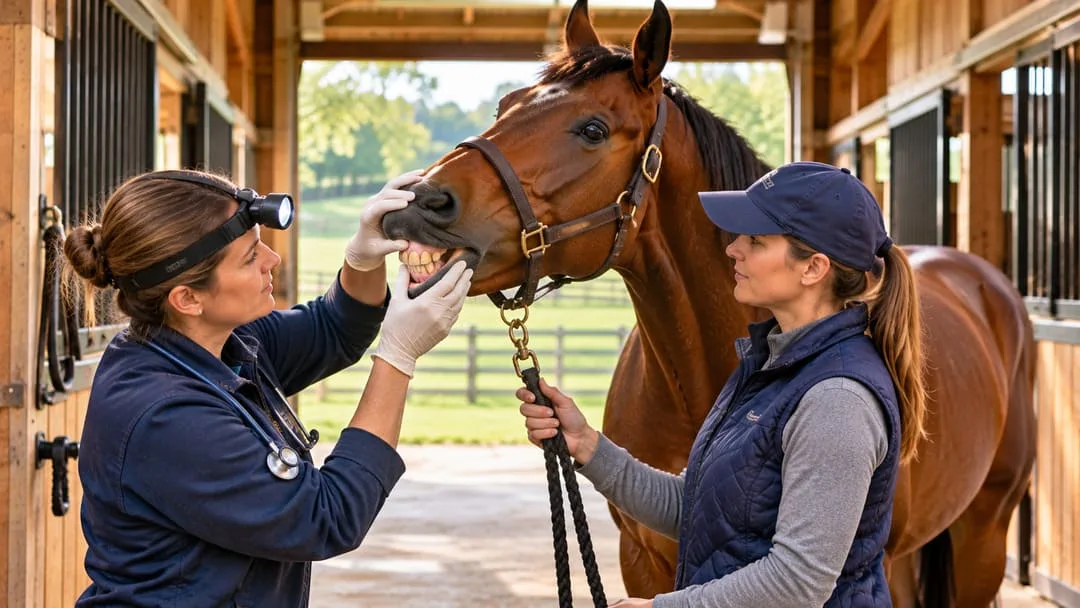
An off-track Thoroughbred that tosses its head, avoids the bit or drops half-chewed hay is not necessarily being difficult. Mouth pain is one possible explanation, and an OTTB dental exam before retraining offers a more useful starting point than guessing at a new bit or schooling technique. Even horses with no obvious symptoms benefit from an established dental-care schedule.

A horse’s identity and race record are only part of its handoff. Alex Brown Racing’s off-track Thoroughbred resource helps readers trace former racehorses and their second careers. For a new owner, the next step is to request the date of the last dental examination, any findings or treatment, and the sending barn’s veterinary contact. An absent record is a reason to establish a new baseline, not proof that something was missed.

Why a young ex-racehorse’s mouth deserves attention

Horse teeth erupt throughout life as chewing wears them down. Because the upper and lower jaws differ in width, uneven wear can leave sharp edges near the cheeks or tongue. Young horses also shed their baby teeth and develop permanent teeth. The University of Florida’s equine dental-care guidance identifies roughly ages two through five as a period when dental changes and irregularities deserve particular attention.

That age range matters in aftercare: some horses begin new careers while their mouths are still developing. The university summarizes a veterinary examination schedule of about every six months for young horses through age five and at least yearly afterward, adjusted to the individual’s needs. A calendar reminder is useful, but a new problem should be assessed sooner.

Read the feeding signs and riding signs differently

The bucket may provide a more specific clue than a training session. A horse that chews unusually slowly, drops partially chewed bundles of hay, struggles to hold weight, or develops mouth odor warrants evaluation. Virginia Tech’s equine dentistry guidance also identifies facial discomfort, abnormal riding behavior and one-sided nasal discharge among reasons for dental attention. Facial swelling, significant discharge or an inability to eat should prompt timely veterinary assessment; choke or colic signs require urgent help.

Under saddle, head tossing, resistance in one direction or reluctance to accept the bit may suggest discomfort, but these signs do not diagnose a dental problem. The Merck Veterinary Manual’s explanation of dental disorders notes that wolf teeth may or may not contribute to bit resistance. Poorly fitted tack, pain elsewhere and training confusion can produce similar behavior. Avoid punishing a horse or assuming that removing a tooth will fix a problem before a professional assessment identifies the cause.

An OTTB dental exam is more than a routine float

Floating is the filing or smoothing of sharp or uneven tooth surfaces when treatment is needed. It is not a substitute for inspecting the gums, tongue, cheeks, tooth surfaces and overall oral health. For a thorough examination, a veterinarian may use appropriate sedation, a mouth speculum, lighting and additional diagnostic tools when indicated. Ask what was examined and what was actually found, rather than booking an automatic procedure without an assessment.

The American Association of Equine Practitioners position on equine dentistry treats diagnosis and invasive dental procedures as veterinary work, with limited technician involvement where local law allows and appropriate supervision is provided. Owners should not attempt invasive dental work themselves or assume a non-veterinary service has authority to diagnose and treat dental disease.

Before the appointment ends, request a written dental chart or findings summary. It should tell the next caretaker whether treatment was performed, whether further investigation is needed and when the veterinarian recommends reassessment. Also ask whether any temporary feeding or bitting adjustments are appropriate for this individual horse.

Turn the findings into a sensible training plan

If the horse shows pain with a bridle, stop the work that triggers it and arrange veterinary assessment before escalating training demands. When mouth problems are treated, resume work according to the veterinarian’s advice and watch whether eating and behavior improve. If they do not, investigate other causes rather than repeating dental procedures by default.

The useful goal is not to guarantee that every former racehorse needs floating on arrival. It is to make dental health part of the transition record, catch discomfort early and avoid mistaking pain for a bad attitude. A clear veterinary baseline gives horse and rider a better start to the next career.