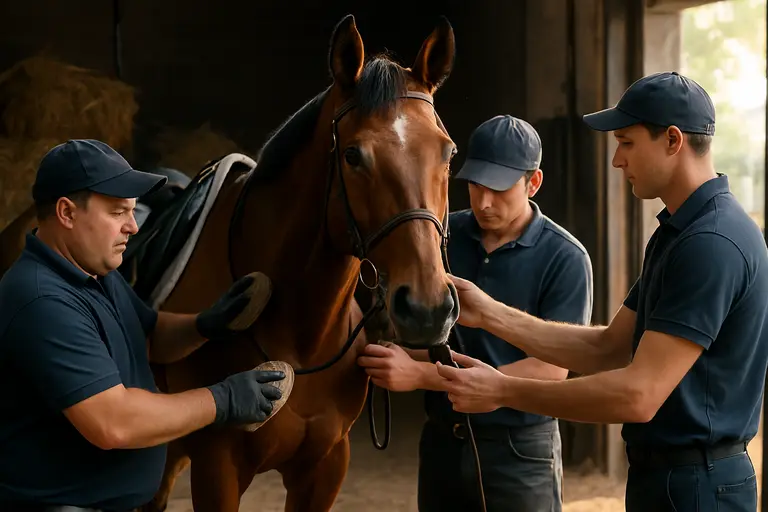
The progress of young Thoroughbred talent in 2026 is best read through verified prep-race evidence rather than reputation alone. By September 21, 2026, the Kentucky Derby trail had already produced a clear points record, the Travers Stakes had supplied a late-summer upset, and several older or international runners had offered useful comparison points for judging development.
This review stays on the sporting record: race results, prep patterns, class tests, and the limits of what can be verified from the supplied research. It does not infer outcomes that are not in the notes, and it treats build-up form as evidence to be weighed rather than a script for what must happen next.
Young Thoroughbred Talent On The Prep Trail
Young Thoroughbred Talent And Derby Points
The 2026 Road to the Kentucky Derby leaderboard gives the clearest numerical starting point. Commandment led that table with 150 points after major prep wins that included the Fountain of Youth on February 28, 2026, and the Florida Derby on March 28, 2026. Further Ado followed with 135 points, Renegade stood third with 125, and the next cluster included So Happy on 115, Fulleffort on 110, and The Puma on 106, with The Puma credited with the Tampa Bay Derby on March 7, 2026, according to the FanDuel Research leaderboard.
Those totals matter because prep points are not abstract labels. They reflect repeated placement in graded or major qualifying races, often across different tracks and race shapes. For a developing three-year-old, the ability to produce more than one meaningful effort can be more informative than one visually sharp performance. Commandment’s position at the head of the list came from winning at Gulfstream Park in both the Fountain of Youth and Florida Derby, a sequence that suggests more than a single well-timed peak.
Reading Points Without Overstating Them
The same table also warns against reading standings as a complete hierarchy of ability. Further Ado and Renegade were close enough in points to remain central figures in the 2026 crop, while So Happy, Fulleffort, and The Puma had already done enough in prep terms to belong in the discussion. Yet the leaderboard alone does not tell pace, trip, surface condition, or whether a horse benefited from a favorable race shape. For that reason, points are best treated as verified participation and achievement markers, not as final rankings of talent.
That distinction has been a recurring issue in the history of prep racing. Juvenile form can be useful, but the supplied research notes that two-year-old stakes races have become less predictive of Kentucky Derby success than in earlier eras. Modern Derby winners are more likely to emerge from major three-year-old prep races than from juvenile prominence alone. The shift places greater weight on spring evidence, especially races that test stamina, maturity, and the ability to handle pressure from several rivals.
Three-Year-Old Form After The Derby Trail
Commandment And The Point Leaders
Commandment’s prep résumé is the strongest single thread in the notes because it combines total points with named race wins. The Fountain of Youth and Florida Derby were both completed before the first Saturday in May, so they should be analyzed retrospectively as part of the 2026 trail rather than as pending tests. His 150-point total placed him above the rest of the group, but the margin over Further Ado and Renegade was not so large that the rest of the division could be dismissed.
The sporting question is what kind of development those preps showed. A horse that wins multiple preps may be demonstrating consistency, tactical adaptability, or simply a strong fit with the conditions he encountered. Without sectional times, official charts, or surface-condition data in the supplied research, it would be unsafe to claim which explanation is correct. What can be said is narrower and stronger: Commandment had the most points in the cited 2026 Derby qualifying table, and those points were tied to two named spring victories.
Silent Tactic, Potente, And Repeat Evidence
Silent Tactic offers a different profile. The research states that he won the Grade III Southwest Stakes on February 6, 2026, then finished second in both the Rebel Stakes and the Arkansas Derby, reaching 100 points. That is not the same as a series of victories, but repeated high finishes across the Oaklawn path can still be significant. The Arkansas Derby has been identified in the supplied notes as one of the increasingly influential preps of the 21st century, tied with the Santa Anita Derby in recent production of Kentucky Derby winners.
Potente also reached 100 points after a Grade I runner-up finish in the Santa Anita Derby on April 3, 2026. That result places him in the same broad evidence category as Silent Tactic: not a points leader, but a horse whose prep record included a serious performance in a high-grade spring race. For historians of the sport, these profiles are useful because they show why development is rarely linear. A colt can build a résumé through wins, placings, or steady progression through increasingly demanding company.
The supporting context also belongs here. Race conditions can alter how prep performances should be read, from pace pressure to surface response. That is why work on prep race conditions remains relevant when comparing horses whose points totals look similar but whose paths were not identical.
Travers Stakes Upset Reframes Development
Leading Change’s Third-Start Leap
The late-summer evidence shifted attention toward Leading Change. The supplied research states that, in just his third career start, he won the Grade I Travers Stakes at Saratoga on August 31, 2026, defeating leading three-year-olds that included the Kentucky Derby, Preakness, and Belmont winners. UPI reported that result in its account of the Travers Stakes upset.
That fact is striking because the Travers has long served as a demanding late-summer test for three-year-olds, and the Saratoga setting often exposes whether a horse is still moving forward after the spring classics. The research does not provide final time, margin, pace fractions, or trip detail, so analysis must stop short of explaining exactly how Leading Change achieved the win. Still, the bare record is important: a lightly raced horse defeated a group that included the winners of the Triple Crown races.
Why Light Experience Matters
A third career start can be a source of both promise and caution. On one hand, a horse capable of winning a Grade I race so early in his career may have considerable scope for further growth. On the other, a limited record leaves fewer data points for judging consistency. This is where the idea of young Thoroughbred talent needs discipline. Talent is visible in a result like the Travers, but durability, repeatability, and adaptability require more evidence than one race can provide.
For a racing historian, Leading Change’s Travers success belongs in the same conversation as the Derby-trail point leaders, but not for the same reason. Commandment, Further Ado, Renegade, Silent Tactic, and Potente supplied evidence through the prep structure. Leading Change supplied a single high-impact Grade I result at Saratoga. Both forms of evidence matter, though they answer different questions about readiness and development.
Older Stakes Context For Measuring Youth
Magnitude Sets A High Performance Reference
The research also mentions Magnitude, a four-year-old who had earned more than $8.3 million in 2026 and was undefeated as a four-year-old after wins including the Grade III Razorback Handicap in February, the Dubai World Cup on March 28, 2026, and the Stephen Foster Stakes on June 27, 2026. He is not part of the same age cohort as the Derby-trail horses, but his profile supplies a benchmark for what sustained older-horse excellence looked like in the same racing year.
That comparison should be made carefully. A four-year-old campaign cannot be mapped directly onto three-year-old development. Mature horses may have different training patterns, stronger physical foundations, and more experience under race pressure. Still, a horse such as Magnitude helps frame the gap between emerging promise and established performance. The younger runners are being assessed for where they may go; the older horse’s record, as supplied, shows repeated high-level achievement already recorded.
Forever Young And A Result Not Supplied
Forever Young of Japan appears in the research in a narrower way. The notes state that he galloped at Belmont Park before the Grade I, $1 million Jockey Club Gold Cup on September 18, 2026. Because today is September 21, 2026, that race has already taken place. The supplied research, however, does not include the result, so this article does not state or imply how he performed.
That restraint is not a weakness; it is part of sound racing analysis. Training activity before a Grade I race is relevant to preparation, but it is not the same as race evidence. Without the result or an official chart in the supplied notes, the only verified point used here is the pre-race gallop and the fact that he was a confirmed contender heading into that September 18 race.
How To Track Prep Progress Responsibly
Separate Evidence From Reputation
The strongest readings of young Thoroughbred talent separate verified achievement from projection. A prep win, a Grade I placing, a points total, and a major upset each carry different evidentiary weight. None should be ignored, but none should be stretched beyond what the record supports. The sport has often elevated young horses quickly after one major performance; history argues for patience until the next test either confirms or complicates the impression.
Use prep points as proof of achievement within a qualifying structure, not as a complete ability ranking.
Read Grade I results differently from lower-grade prep wins, while still asking how the race was run.
Treat lightly raced horses with care because upside and uncertainty often arrive together.
Do not infer results from training notes when the official race outcome is not in the record being used.
Comparing the coverage of races within the same network can offer additional insights. For more detailed reviews and comparisons, Racebook Review serves as a related reference point. However, this analysis remains focused on the sporting record of prep races and stakes performance.
Young Thoroughbred Talent Before Stakes Tests
What The 2026 Evidence Supports
The clearest supported picture is that the 2026 crop produced several credible development lines. Commandment led the Derby prep standings with 150 points and named wins in the Fountain of Youth and Florida Derby. Further Ado and Renegade followed closely enough to remain central in the same record. Silent Tactic and Potente reached 100 points through different paths, one through a Southwest win and repeated Oaklawn placings, the other through a Grade I runner-up finish at Santa Anita.
Then Leading Change altered the late-summer discussion by winning the Travers in his third career start on August 31, 2026. That result did not erase the spring prep record; it added a new kind of evidence. His achievement showed that young Thoroughbred talent can emerge outside the neat sequence of early-season points accumulation, especially when a late-developing runner proves himself in Grade I company.
The proper reading is cautious but not timid. The research supports the view that 2026 offered multiple strands of emerging quality: established prep performers, steady graded-stakes accumulators, and a lightly raced Travers winner. What it does not support is a claim that one strand fully explains the division. As of September 21, 2026, the best analysis keeps those records in conversation and waits for verified race evidence before assigning broader historical meaning.
The Breeders’ Cup Contenders emerging from 2026 prep races present a useful but incomplete map toward Keeneland on October 30-31, 2026. As of September 21, 2026, the clearest evidence comes from horses who have already won Challenge Series or major prep events, including Magnitude in the Stephen Foster Stakes, Nitrogen in the Ogden Phipps Stakes, and Embroidery in the Victoria Mile. TwinSpires lists the 2026 Breeders’ Cup prep schedule and qualifying structure, including several “Win and You’re In” races tied to specific divisions at Keeneland Breeders’ Cup prep races.
That evidence should be read with restraint. A prep win can secure a position or strengthen a divisional profile, but it does not settle the question of how form from Churchill Downs, Saratoga, Tokyo, York, Monmouth Park, Gulfstream Park, or Saudi Arabia will transfer into the conditions of a championship race. The sporting task is to separate what has been verified from what remains a projection. For insightful commentary on the racing scene, RacebookReview.com discusses the racing ecosystem comprehensively; however, this analysis remains focused on race performance, calendar position, and divisional fit.
Breeders’ Cup Contenders From Recent Preps
How Breeders’ Cup Contenders Earned Places
The first dividing line is between horses who earned automatic berths and horses whose recent victories place them firmly in the discussion without necessarily closing every question. Magnitude’s Grade I Stephen Foster Stakes victory at Churchill Downs on June 27, 2026, is one of the most direct examples. The race is identified as a “Win and You’re In” qualifier for the Breeders’ Cup Classic, which means Magnitude secured a guaranteed spot in that division at Keeneland.
Nitrogen’s Grade I Ogden Phipps Stakes win at Saratoga on June 5, 2026, carries similar clarity for the Distaff. The research record identifies the Ogden Phipps as part of the Breeders’ Cup Challenge, with Nitrogen’s victory earning a guaranteed slot in the 2026 Breeders’ Cup Distaff. Fully Subscribed added another Distaff marker by winning the Grade I Personal Ensign Stakes on August 29, 2026, a prep that qualified her for the same championship division.
For Breeders’ Cup Contenders, the automatic element matters because it clarifies access, not superiority. These wins establish that the horses handled Grade I or major prep pressure on a given date. They do not, by themselves, prove which runner will bring the strongest form into late October.
Documented Prep Winners By Division
Magnitude: Grade I Stephen Foster Stakes, June 27, 2026, Churchill Downs; Classic berth.
Skippylongstocking: Pegasus World Cup Invitational Stakes, January 24, 2026; Classic prep winner.
Forever Young (JPN): Saudi Cup, February 14, 2026; Classic-linked “Win and You’re In” event.
Sovereignty: Grade I Whitney Stakes, August 8, 2026; major Classic prep winner.
Nitrogen: Grade I Ogden Phipps Stakes, June 5, 2026, Saratoga; Distaff berth.
Fully Subscribed: Grade I Personal Ensign Stakes, August 29, 2026; Distaff qualifier.
Embroidery: Grade I Victoria Mile, May 17, 2026, Tokyo; Filly & Mare Turf berth.
Item: Juddmonte International Stakes, August 19, 2026, United Kingdom; international turf profile.
Kalpana (GB): Yorkshire Oaks, August 20, 2026; major filly-and-mare turf marker.
Classic Division Winners Set The Early Reference Points
Magnitude And The Stephen Foster Signal
Magnitude’s Stephen Foster win is significant because it gave the Classic division one of its clearest domestic qualifying results before midsummer. The June 27 timing also matters from a preparation standpoint. It left a measurable gap before the Breeders’ Cup at Keeneland, allowing connections time to decide whether to use another start or train forward from the Churchill Downs performance. The research confirms the result and the berth, but does not supply margin, pace details, or post-race comments; any deeper claim about the quality of the win would need chart evidence beyond the present record.
That caution is not a weakness in the case; it is the proper limit of the evidence. Magnitude has the concrete achievement of winning a Grade I Classic qualifier. The remaining evaluation turns on how that June form compares with horses who won later summer or international preps.
Multiple Classic Paths, Different Dates
The Classic group includes prep winners from a broad part of the racing calendar. Skippylongstocking won the Pegasus World Cup Invitational Stakes on January 24, 2026. Forever Young (JPN) captured the Saudi Cup on February 14, 2026. Baby Vino won the Haskell Stakes on July 18, 2026. Sovereignty secured the Grade I Whitney Stakes on August 8, 2026.
Those dates create an analytical challenge. A January or February victory can establish elite form early, but the championship is scheduled for the end of October. A July or August victory sits closer to the target, but it still requires that the horse maintain condition through the closing weeks of the campaign. The records supplied here do not rank those races by speed, margin, or field strength, so the fairest interpretation is that the Classic division has several verified winners with different timing profiles rather than a single settled leader.
This is where recent related analysis of Breeders’ Cup prep tests remains relevant: a prep race can reveal stamina, composure, and class, but it can also reflect a particular race setup that may not repeat at Keeneland.
Distaff And Filly-Mare Turf Lines Have Clear Markers
Nitrogen And Fully Subscribed Share A Distaff Thread
The Distaff line is unusually direct in the available research. Nitrogen won the Grade I Ogden Phipps at Saratoga on June 5, 2026, earning a guaranteed slot in the 2026 Breeders’ Cup Distaff. Fully Subscribed followed with a Grade I Personal Ensign Stakes victory on August 29, 2026, another prep tied to the same division.
Those two results give the Distaff picture a useful sequence: an early June Grade I marker and a late August Grade I marker. Without margins, running styles, or official charts in the research supplied, it would be unsound to claim which performance was stronger. What can be said is that both horses reached the championship conversation through victories in Grade I races identified with the Distaff route.
Embroidery Brings Tokyo Form Into The Discussion
Embroidery’s Grade I Victoria Mile win at Tokyo Racecourse on May 17, 2026, is the central international fact in the Filly & Mare Turf group. The Paulick Report recorded that the victory earned her an automatic fees-paid berth into the 2026 Breeders’ Cup Filly & Mare Turf through the Breeders’ Cup Challenge Series Embroidery’s Victoria Mile win.
That makes her case different from a horse merely being discussed as a possible traveler. The berth was earned on the racecourse in a Grade I event. The remaining question is comparative rather than administrative: how will that Tokyo form match fillies and mares arriving from North American and European routes?
International Turf Form Adds A Different Test
Item And Kalpana Extend The Grass Picture
Item’s Juddmonte International Stakes victory in the United Kingdom on August 19, 2026, gives the turf division another high-profile winner from outside North America. The research describes the race as a turf prep oriented mainly toward international grass contenders who might point toward the Breeders’ Cup Turf or Turf Mile divisions. That wording is properly cautious. It identifies the relevance of the race without declaring a final target.
Kalpana (GB) won the Yorkshire Oaks on August 20, 2026. The research identifies that race as a top-level Group 1 turf event for fillies and mares and a common stepping stone toward the Filly & Mare Turf. As with Item, the key value is not certainty about destination but evidence of high-level grass form close to the championship window.
Why Turf Comparisons Require Restraint
International turf form can be difficult to compare using only race names and dates. Different courses, race tempo, field composition, and seasonal targets can shape the result. The present record confirms that Item and Kalpana won major turf races in August 2026. It does not confirm their final Breeders’ Cup divisions, travel plans, or how their races were run. Those details would require official entries, charts, and connection statements closer to Keeneland.
Even so, the timing is meaningful. August victories leave less of a gap to bridge than winter or spring wins, but they still require sustained condition into October 30-31, 2026. That is especially true for horses whose campaigns may involve international travel and a shift into the Keeneland championship environment.
Breeders’ Cup Contenders Need More Than Prep Wins
What The Verified Record Supports
The verified record supports a disciplined reading. Magnitude, Nitrogen, Fully Subscribed, and Embroidery have the clearest berth-related evidence from the supplied research. Skippylongstocking, Forever Young, Sovereignty, Baby Vino, Item, and Kalpana have major prep victories that define their sporting relevance, though the available notes do not provide enough detail to rank them definitively across divisions.
The present list of Breeders’ Cup Contenders is best treated as a framework rather than a forecast. Prep wins identify horses who have already answered significant questions under pressure. They do not remove the need to assess race conditions, recovery time, final entries, and the specific demands of Keeneland once the championship fields are drawn.
That distinction is central to sound racing history and race analysis. The prep season records achievement first and expectation second. As of September 21, 2026, the achievements are clear: several major winners have earned or strengthened Breeders’ Cup positions. The expectation remains open until those horses meet under championship conditions on October 30-31, 2026.
Forever Young Won Easily At Belmont—But Keeneland Will Ask Much More
The Forever Young Breeders’ Cup Classic conversation should have become simpler after Friday’s Jockey Club Gold Cup. Instead, a 3 1/4-length victory at the new Belmont Park created an unusual problem: Forever Young won comfortably without proving that the version needed to defend his Classic title has arrived yet.
That is not criticism of a horse returning from six months away. It is the reason the performance deserves a closer look. Forever Young achieved the immediate objective, but his connections clearly treated Belmont as preparation rather than a finished product. That distinction was already central to the Jockey Club Gold Cup buildup, where conditioning, distance and adaptation mattered as much as reputation.
Forever Young Breeders’ Cup Classic Prep Did Its Basic Job
Forever Young was supposed to win Friday, particularly after scratches reduced the Grade 1 Jockey Club Gold Cup to four starters.
He did.
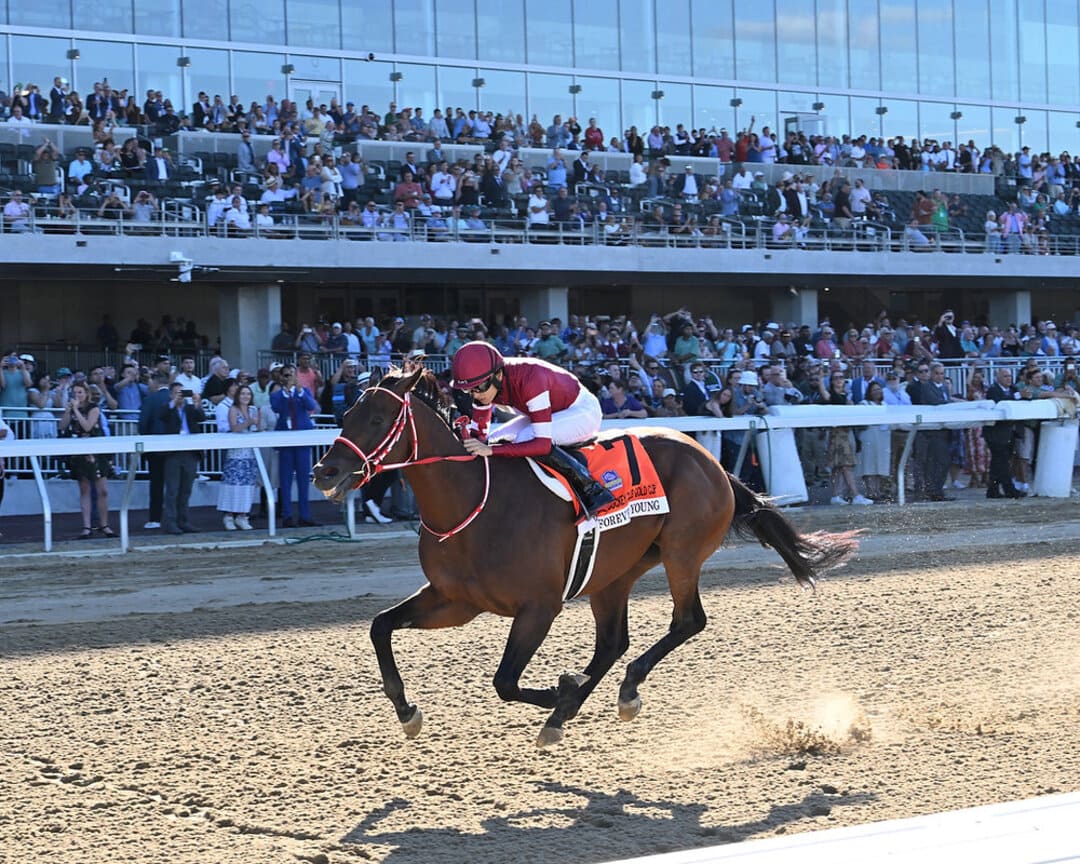
The Japanese star tracked Phileas Fogg through a controlled early tempo, moved past him approaching the stretch and finished 3 1/4 lengths clear of Stars and Stripes. The final time for 1 1/4 miles was 2:01.23, and the victory improved Forever Young’s career record to 12 wins from 16 starts.
As a result, this cannot be framed as a disappointing comeback. Forever Young handled the distance, defeated the horses placed in front of him and gained the competitive work his connections wanted before Keeneland.
The question is what the win actually proved.
A four-horse field running at a moderate pace is very different from a Breeders’ Cup Classic containing deeper speed, stronger tactical pressure and horses specifically trained to peak on championship day.
Belmont confirmed fitness. It did not settle superiority.
Yahagi’s Reaction Changes How The Win Should Be Read
Trainer Yoshito Yahagi made the post-race interpretation unusually clear. He was fully satisfied with winning, but said he was only around 50 percent satisfied with Forever Young’s actual performance.
That is a striking assessment after a Grade 1 victory.
Forever Young was estimated by his camp to be around 80 percent physically fit, while the long layoff appeared in smaller details. Most notably, he remained on his left lead through the stretch rather than changing leads as he normally would.
Those imperfections matter because this was always meant to be a bridge rather than a destination.
Jockey Ryusei Sakai also would have preferred a stronger pace to better replicate the conditions Forever Young could face in the Classic. Instead, the race became a controlled comeback where Forever Young’s class was sufficient to overcome circumstances that did not necessarily force him to show his championship ceiling.
That leaves significant improvement available, which can be interpreted as either encouraging or cautionary depending on the price.
Belmont’s New Dirt Makes The Numbers Harder To Trust
Normally, handicappers would use the clock and speed figures to establish a clearer benchmark.
Belmont complicates that process.
Friday was the opening day of racing at the rebuilt venue, meaning analysts have very little evidence for how the new main track translates across distances, pace scenarios and weather conditions.
Forever Young earned a 105 Beyer Speed Figure, but even his own camp expressed uncertainty about how to evaluate the final time because the dirt surface was so new. His assistant trainer Yuki Araki described the track as demanding, while other horsemen also indicated that the surface was playing differently from what their horses had previously experienced.
That makes the Belmont number useful but incomplete.
A 105 Beyer shows Forever Young did not simply stroll around the track. But treating it as a precise forecast for Keeneland would ignore the context. Surface speed, race shape and the quality of opposition can all change dramatically before October 31.
The comparison is more useful when the race is broken into what it answered and what remains unresolved.
Belmont Signal
What Forever Young Showed
What Remains Unclear
Result
Won by 3 1/4 lengths
Strength against a deeper Classic field
Distance
Handled 1 1/4 miles comfortably
Response to stronger pace pressure
Fitness
Returned successfully after six months
Whether he can reach peak form by Oct. 31
Speed figure
Earned a 105 Beyer
How the new Belmont surface affected the number
Stretch mechanics
Finished clearly best
Failure to switch leads showed some rust
Race shape
Stayed close to moderate pace
Ability to handle a crowded championship trip
The table is why the performance deserves neither dismissal nor overreaction. The right reading sits between the two.
The Small Field Made Victory Easier To Manage
The original Gold Cup field was deeper before scratches changed its character.
Forever Young ultimately faced Stars and Stripes, Baeza and Phileas Fogg. With only four horses remaining, traffic risk disappeared almost completely, and Sakai could keep Forever Young outside and within striking distance without sacrificing position.
That is almost the opposite of the problem he could face at the Breeders’ Cup.
The **2026 championship schedule places the Breeders’ Cup at Keeneland on October 30-31, with the Classic contested on Saturday. Championship fields can accommodate as many as 14 starters, creating a fundamentally different tactical equation.
A bigger field introduces kickback, post-position pressure, contested early position and the possibility that a rider cannot simply place a horse wherever he wants.
Forever Young has proven internationally that he can handle difficult racing environments. Belmont did not require him to prove it again.
Winning The Prep Is Different From Winning The Championship
Prep races create a strange handicapping problem because the best possible performance is not necessarily the fastest possible performance.
Connections want enough work to advance fitness without emptying the tank. They want a competitive race without creating a physical setback five or six weeks before the real target.
Forever Young’s Belmont performance fits that description almost perfectly.
He won. He received 1 1/4 miles of race conditioning. He came out of the race in good order, though his camp said he was somewhat tired the following morning. The plan is for him to remain at Belmont before shipping to Keeneland on October 20.
From a training perspective, that looks constructive.
From a betting perspective, there is still uncertainty.
If the market treats the 3 1/4-length margin as proof that Forever Young has already returned to championship form, the price could become less attractive. If bettors focus too heavily on Yahagi’s dissatisfaction and the modest pace, they could underestimate how much improvement remains available.
That tension is exactly what makes the performance useful.
Keeneland Will Provide The Real Answer
The next month matters more than Friday’s winning margin.
Forever Young now has competitive foundation beneath him after a six-month layoff. His connections have identified areas that can improve. They have also chosen to keep him in New York long enough to build from the race rather than immediately changing environments.
The signals from here are straightforward: training progression, how sharply he finishes his serious works, whether the lead-change issue disappears and, eventually, the Classic draw and projected pace.
Belmont gave Forever Young what a prep is supposed to give an elite horse—fitness, confidence and a clean path forward.
It did not make October 31 predictable.
The Forever Young Breeders’ Cup Classic case is stronger because he returned with a Grade 1 victory and weaker only in the sense that the performance exposed how much projection remains between a four-horse prep and a championship race.
That is what Keeneland will settle. Belmont proved Forever Young remains very good. The Breeders’ Cup will determine whether he is ready to be great again.
Keeneland Book 2 Market Tests Thoroughbred Demand
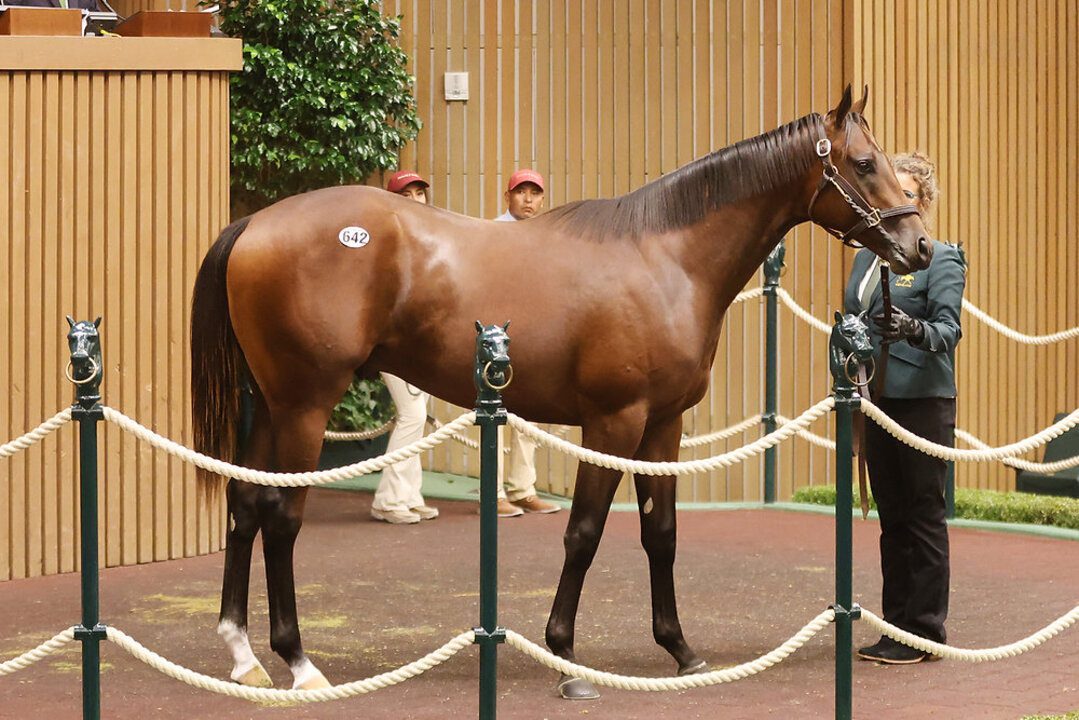
The Keeneland Book 2 market is beginning to answer the question Book 1 could not: how far does this remarkable Thoroughbred buying appetite actually reach? Seven-figure yearlings are still appearing, read this before joining BetAnything but Wednesday’s first Book 2 session introduced a more revealing split between spectacular prices at the top and slightly softer numbers in the middle.
That distinction matters more than another auction record. An elite pedigree can produce an extraordinary bidding war, but the health of the yearling economy ultimately depends on whether buyers keep competing once the obvious stars thin out. Racing already knows how dramatically breeding value can alter the economics around an individual horse; Keeneland is now showing how powerfully the same expectations can shape an entire marketplace.
Keeneland Book 2 Market Carries Book 1 Momentum
Book 1 set an intimidating benchmark. Across Monday and Tuesday, 208 yearlings sold for $151.4 million, producing an average of $727,885 and a median of $600,000. Forty-one horses reached seven figures, the most ever through the first two sessions of the September Sale.
The $3.7 million Into Mischief colt at the top attracted the obvious attention, but the broader Book 1 sales figures showed why the opening section carried more weight than a single headline horse. Gross, average and median all finished above their 2025 Book 1 equivalents.
Yet one figure complicated the celebration.
Of 292 horses offered during Book 1, 84 were reported not sold. That produced a 28.77% buy-back rate, up from 21.09% last year. The buy-back comparison matters because it suggests buyers were willing to spend aggressively, but not indiscriminately.
That is the tension Book 2 has inherited.
Wednesday Proved The Big Money Did Not Disappear
The first Book 2 session did not produce the dramatic drop-off that might normally follow two days of elite catalog pages.
Instead, 209 yearlings sold for $89.535 million on Wednesday. Gross rose 4.47% from the corresponding 2025 session, while the average climbed 10.47% to $428,397.
Fourteen yearlings sold for $1 million or more, setting a Session 3 record. A Nyquist colt led the day at $2.25 million, while Into Mischief, Flightline, Gun Runner and other high-demand sires continued to attract major investment.
Through only three sessions, 55 horses had already sold for at least $1 million. The record for the entire September Sale is 56, established last year.
That is extraordinary top-end demand, particularly because Book 2 is supposed to represent a step down from the selectivity and prestige of Book 1.
But there was also a number worth slowing down for: the median fell from $325,000 last year to $310,000 on Wednesday.
The Median Creates The More Interesting Story
A rising average and falling median can exist together, and when they do, they tell an important story about distribution.
The average can climb rapidly when buyers stretch for a relatively small number of outstanding yearlings. The median is harder to pull upward that way because it represents the midpoint of the entire group sold.
That makes Wednesday’s results more complicated than “the market remains hot.”
Book 2 Session 3 Signal
2025
2026
Market Read
Gross
$85.702M
$89.535M
Total spending increased
Horses sold
221
209
More money moved through fewer horses
Average
$387,792
$428,397
Premium horses pushed prices higher
Median
$325,000
$310,000
Middle-market pricing softened
$1M+ yearlings
13
14
Seven-figure demand remains exceptional
This is exactly why market depth matters.
The top of Book 2 looks remarkably healthy. The middle is less decisive. Buyers are still willing to reach aggressively when they identify a horse they consider exceptional, but Wednesday suggests they may be less willing to stretch simply because a yearling belongs in an early book.
That is selectivity, not weakness. But the distinction matters.
Buyers Are Paying For Perceived Risk Reduction
Pedigree has always mattered in bloodstock, but the current market is showing just how valuable perceived certainty has become.
Yearlings by established sires such as Into Mischief, Gun Runner and Nyquist arrive with commercial evidence behind them. Flightline brings a different form of confidence: extraordinary racetrack ability combined with intense demand for his early crops.
Those names do not guarantee a Grade 1 horse. Nothing in a yearling ring can do that.
They do, however, give buyers more information to price. Proven sire records, strong female families, physical inspection, veterinary work and resale possibilities all reduce some forms of uncertainty, at least on paper.
That helps explain why buyers can be extremely aggressive for one horse and stop abruptly on the next.
The market is not necessarily saying every quality Thoroughbred is worth more. It may be saying the horses perceived to carry the clearest commercial upside are worth considerably more.
For breeders outside that narrow premium tier, those are very different messages.
A Higher Buy-Back Rate Cannot Be Ignored
The rising Book 1 RNA rate deserves attention precisely because the headline numbers are so strong.
A horse that does not meet its reserve is not automatically evidence of weak demand. Sellers can set ambitious valuations, particularly when comparable horses are producing spectacular prices. In a rising market, expectations rise alongside bids.
But a sustained increase in buy-backs can eventually expose a gap between seller confidence and buyer willingness.
Keeneland itself acknowledged that selectivity during Book 1, and the first Book 2 session continued to produce a market where desirable horses were fiercely contested while the median slipped.
That creates a two-speed market risk.
If competition remains intense only for a shrinking percentage of obvious standouts, impressive averages could coexist with growing pressure elsewhere in the catalog. If demand remains broad as Books 3, 4 and 5 arrive, the argument for genuine industry-wide strength becomes much stronger.
The later books therefore matter more than their smaller headlines suggest.
Thursday And The Later Books Carry The Real Test
The second Book 2 session begins Thursday at 11 a.m. ET, with 379 yearlings cataloged as the sale approaches Friday’s dark day. The full September sale schedule then moves into Book 3 on Saturday and continues through September 26.
Those sessions will tell the stronger economic story.
Book 1 proved buyers will spend historic sums for elite prospects. Wednesday proved that seven-figure demand can survive the move into Book 2. Now the question shifts lower into the catalog, where breeders cannot rely as heavily on fashionable stallions, exceptional female families or obvious resale appeal.
That is where buyer selectivity becomes either reassuring or uncomfortable.
If averages, medians and clearance rates remain firm as the catalog broadens, Keeneland will have evidence that demand genuinely reaches through the Thoroughbred yearling market. If averages stay high while medians weaken and buy-backs rise, the record prices may describe a booming elite market more accurately than a uniformly booming industry.
The Keeneland Book 2 market has already shown that the money is still there. What remains unresolved is how many horses can reach it. That question not the next million-dollar yearling is the one that will determine whether this September sale represents broad economic confidence or an increasingly expensive fight for the horses everyone wants.
The Sovereignty Absence changes the sporting pitch for the Grade 1 Jockey Club Gold Cup at Belmont Park on September 18, 2026, but it does not make the attendance question simple. Sovereignty had been a central attraction because of the expected meeting with Japanese star Forever Young, and his scratch removes a high-profile head-to-head from a race tied to Belmont Park’s first grandstand reopening since 2023.
As of September 14, 2026, the cleanest reading is cautious: the race loses a star, yet the venue itself may now be the larger attraction. Public visitor information for Belmont’s opening weekend has listed ticket inventory as sold out, which points to strong advance demand. That does not equal a confirmed turnstile count, and it does not measure late no-shows, but it reduces the risk that one horse’s absence alone will visibly thin the crowd.
Sovereignty Absence And The Attendance Question
Sovereignty Absence And Forever Young
Sovereignty was ruled out of the Jockey Club Gold Cup because of a left hind-foot abscess, according to Pick Pony’s report. The same report identified the lost matchup with Forever Young as a key sporting loss for the race. That is the relevant point for attendance analysis: star horses do not merely affect race quality; they shape why casual spectators decide a card feels special.
The core sporting loss from Sovereignty Absence is narrative clarity. Before the scratch, the race could be framed around a direct clash between an American headliner and an international standout. That sort of pairing gives a Grade 1 event an easy public hook. It helps occasional racegoers understand the stakes of the afternoon without needing a full reading of form cycles, pace preferences, or prior campaigns.
Without Sovereignty, Forever Young can still anchor the card from a competitive and international standpoint. The difference is that the race no longer presents the same two-horse question. For serious racing followers, that may shift attention toward depth, pace, and how the remaining field uses a major prep stage. For attendance, the concern is whether the missing marquee clash lowers urgency among those who bought tickets mainly for the anticipated showdown.
Why A Scratch Does Not Automatically Reduce The Gate
A race-day scratch of a leading attraction can weaken same-week walk-up interest, but the September 18, 2026 card is not a normal isolated stakes day. It is attached to the reopening of a rebuilt Belmont Park grandstand, and the ticket status was already constrained before race week. If the public inventory is sold out, late sporting news may affect mood and secondary movement, but it is less likely to create a large visible decline in paid attendance.
That distinction matters. Paid attendance, actual on-site turnout, and crowd energy are related but not identical. A sold ticket can remain unused. A racegoer can arrive for the building, the paddock, and the novelty of the reopening rather than for one runner. The strongest conclusion supported by the available facts is not that the scratch has no effect. It is that the effect may show more in conversation and anticipation than in the published crowd figure.
Belmont Reopening Changes The Frame
A Venue Event As Much As A Race Event
Belmont Park’s modernization gives the Jockey Club Gold Cup a broader frame. New York State has described a $455 million project involving racing surfaces, seating, the clubhouse, and the saddling area, with the rebuilt facility retaining an overall capacity of about 50,000 people while reconfiguring seats, suites, standing areas, and open space to better handle large crowds Governor Kathy Hochul’s office.
That changes how to read the event. A standard Jockey Club Gold Cup attendance forecast would begin with the field, recent stakes form, weather, and the race’s placement on the calendar. This version also includes curiosity about the grandstand itself. The reopening is a one-day civic and sporting marker for New York racing, and that can support attendance even after a major horse exits.
The project’s scale also means the facility is built to absorb a large event. The capacity figure does not predict how many people will be present on September 18, 2026, but it sets the context for crowd management. A sold-out ticket notice at a reconfigured venue should be read carefully: it may reflect capped public inventory, distribution among seats and open areas, or operational choices for an opening weekend, not necessarily the old building’s crowd pattern repeated exactly.
Capacity Versus Turnstile Count
Capacity is an upper boundary. Turnstile count is what matters after the card. The most cautious attendance analysis separates those two numbers and waits for an official race-day figure. A full allocation of tickets can still produce empty spaces if some buyers decide the lost Sovereignty-Forever Young matchup reduces the day’s appeal. It can also produce a strong crowd if the reopening, the Grade 1 race, and the remaining field keep the sporting occasion intact.
For now, the best supported expectation is resilience rather than certainty. The scratch removes a powerful attraction, but the opening weekend status limits the size of any attendance decline that can be inferred before the race. For more insights into racing events, Racebook Review within the network provides extensive coverage and analysis.
How Star Power Affects A Prep Race Crowd
The Difference Between Quality And Recognition
Star power works differently from depth. A deep Grade 1 field can satisfy committed racing observers because it offers tactical questions: who controls the pace, which horse handles the surface, and which runner exits the prep in stronger condition. A recognizable star can draw a broader public because the story is easier to grasp. Sovereignty’s presence would have provided both name recognition and a sporting benchmark for Forever Young.
That is why his absence matters even if the race remains credible. The Jockey Club Gold Cup can still function as a serious prep race. It can still reveal stamina, conditioning, and tactical maturity among the remaining runners. Yet the public-facing story changes from a featured duel to a wider evaluation of the field. That shift may not reduce attendance sharply, but it can change how the crowd experiences the race.
In prep races, a scratch can also alter the pace profile. The research supplied for this article does not provide confirmed revised entries, post positions, or a pace map, so any detailed projection would be speculative. The safe sporting point is narrower: removing a major contender changes how rivals are assessed, and it can reduce the sense that the race will answer one clean head-to-head question.
Attendance Signals To Treat With Care
The most useful indicators are not all equal. A sold-out notice tells us demand existed before race day. It does not tell us how many people will pass through the gates. A major horse scratch tells us the card lost a specific attraction. It does not prove that ticket holders will stay home. A grandstand reopening tells us there is venue-driven interest. It does not guarantee full use of every space.
Strong signal: opening-weekend ticket inventory being listed as sold out before the card.
Mixed signal: the loss of the expected Sovereignty-Forever Young matchup.
Unknown signal: the actual September 18, 2026 turnstile count, which remains unavailable before race day.
Those distinctions protect against overreaction. Attendance stories in racing often become too neat: star appears, crowd rises; star scratches, crowd falls. Belmont’s reopening makes this case less direct. The sporting loss is real, but the event has more than one source of demand.
What To Watch On September 18
Crowd Energy Around The Paddock
The most revealing sign may be where attention gathers before the race. If the paddock remains crowded for the Jockey Club Gold Cup despite the scratch, that would suggest the remaining field and the reopening setting kept the card’s pull. If the energy concentrates more around the facility than the horses, that would show the building itself became the main attraction.
That does not diminish the race. It simply separates two forms of interest. One is horse-centered, built around Sovereignty, Forever Young, and the competitive meaning of the prep. The other is venue-centered, built around the first use of the reconstructed Belmont grandstand. On September 18, 2026, those forms of interest will overlap, but they will not be identical.
How The Race Can Regain Focus
The race can still regain a clear sporting focus if the remaining field produces a strongly run Grade 1. A decisive performance by Forever Young, or a breakthrough from another runner, would shift the conversation from the missing horse to the horses who performed on the day. That is often how prep races repair a lost storyline: the race itself supplies a new one.
For analysts, the fair approach is to avoid treating the scratch as either fatal or irrelevant. It is neither. It removes one of the race’s most compelling public angles, but it occurs in a setting where tickets, venue curiosity, and the significance of Belmont’s return already created demand. For related racing coverage across the network, Racebook Review offers another entry point into the sport’s major events.
Sovereignty Absence At Belmont Park
Sovereignty Absence does not erase the Jockey Club Gold Cup’s value as a Grade 1 prep, but it changes the way the event will be judged. The sporting expectation has shifted away from a headline duel with Forever Young and toward how the remaining runners handle a major stage at a reopened Belmont Park.
For attendance, the key word is restraint. The scratch likely reduces some of the race-specific excitement, especially among spectators drawn by the anticipated matchup. Yet the sold-out ticket status and the reopening of a rebuilt venue point toward continued strength in paid demand. Until an official September 18, 2026 attendance figure is released, the most evidence-based reading is that Belmont lost star power, not necessarily the crowd.
The question behind Surface Testing at major tracks is not whether one reading can explain a race. It is whether repeated measurement can help officials, horsemen, and analysts separate surface condition from performance, race shape, and injury risk. For prep races, that distinction matters because these events often ask young or developing horses to progress under added pressure, sometimes across changing seasons and track conditions.
The strongest available research in the notes comes from New Zealand turf racing, not from a single North American prep circuit. That matters. The findings are useful because they cover a large racing sample, but they should not be transferred without caution to every dirt, synthetic, or turf course. A prep race at a major American track sits inside a different regulatory and climatic setting. Still, the evidence gives a practical framework: measure often, relate the readings to race speed, and test whether injury patterns move with surface condition rather than relying on appearance or tradition alone.
For racing enthusiasts seeking related insights, Racebook Review provides coverage that complements this article by exploring how race surfaces influence competitive integrity, horse safety, and the analysis of preparation form.
What Surface Testing Can Prove
Measurement Before Surface Testing Claims
A study of New Zealand Thoroughbred Racing turf events covered 16 flat racing seasons, from August 1, 2008, to July 31, 2024. The data set included 437,506 race starts on turf, with only 3% of those starts made by 2-year-olds. It also recorded 40,824 flat turf races, of which 47.1% had published penetrometer readings and 99.9% had a Track Condition Score, or TCS, reported the turf surface study.
That level of TCS reporting is the key sporting point. Surface assessment becomes useful only when it is routine enough to compare across dates, seasons, and race types. A single number on a high-profile afternoon can be descriptive, but a long series of readings can reveal whether a course is behaving as expected. For prep races, where form is often judged by whether a horse accelerated, sustained speed, or struggled late, surface records give analysts a way to ask whether the track helped create that performance.
Surface Testing And Prep Race Timing
Prep races are rarely neutral tests. They come at defined points on a calendar, often when horses are being stretched in distance, shifted in class, or asked to handle a surface at race intensity after works and earlier starts. The New Zealand evidence showed that median TCS was 5.0, with an interquartile range of 3.0 to 8.0. The seasonal split was clear: December and January produced firmer conditions, with a median near 4.0, while June through August produced softer conditions, near 10.
That pattern matters because two prep races at the same distance can place different demands on a horse if the surface has changed. A firmer track can produce faster sections, but the research does not support a simple belief that harder is always better. A softer course can reduce speed and change how a horse finishes. The analyst’s task is to treat the race as a combination of class, pace, distance, and surface, rather than isolating the horse’s effort from the ground beneath it.
Track Scores And Race Speed
Why Moderate Scores Matter
The New Zealand study found a strong nonlinear relationship between TCS and speed over the final 600 meters. Speed peaked around moderate TCS values, near 3 to 4, and fell at both extremes: very hard and very soft or heavy. That is a valuable finding because it pushes the discussion away from slogans. A very quick surface may not be the ideal sporting surface if it increases stress or produces a narrow kind of performance. A very soft surface may be safer in some respects but can reduce speed and place extra demands on stamina.
Surface Testing is persuasive only when it helps define a working range. In the research sample, only 3% of starts between the 2011/12 and 2021/22 seasons were run on a TCS below 3, a threshold New Zealand policy aimed to avoid. That does not prove that every track should adopt the same number, but it shows how policy and measurement can be linked. A standard becomes meaningful when racing authorities can check how often a course falls outside the intended range.
Reading Prep Form With Surface Context
A prep winner who quickens sharply on a moderate turf score may be showing a different quality from a horse who labors through heavy ground and still finishes well. Both efforts can be useful, but they should not be treated as equivalent. The New Zealand final-600-meter finding supports a cautious reading: late speed is partly a horse attribute and partly a surface outcome.
This is where prep race analysis benefits from surface records. If a horse improves its finishing section on a day when the TCS sits near the range associated with peak speed, the result may confirm ability without proving the same acceleration will appear on deeper ground. If another horse fails to quicken when the track is very soft, the performance may need a gentler interpretation. A related discussion of how conditions alter timing and safety review appears in this site’s piece on race conditions in prep stakes.
Regulation At Major Tracks
From Local Practice To Federal Standards
The United States regulatory setting is different from the New Zealand turf sample. The Horseracing Integrity and Safety Act was enacted in 2020, and the Federal Trade Commission describes its oversight role for the Horseracing Integrity and Safety Authority. The framework includes a racetrack safety program, with requirements tied to track surface quality maintenance, pre-meet inspections, seasonal inspections, daily measurements, and standards for consistency FTC HISA oversight.
For major tracks, the shift is not just administrative. It changes what can be reviewed after a prep race. If a track conducts daily measurements and keeps those records within a common safety program, the surface becomes part of the official record of racing conditions. That is a better basis for sport analysis than relying on a visual impression of whether a track looked fast, tiring, or holding moisture.
What The Evidence Does Not Yet Prove
The research notes also report a musculoskeletal injury incidence rate in New Zealand turf flat racing of 2.22 per 1,000 race starts across the seven seasons listed for that outcome, with seasonal changes in injury incidence mirroring seasonal changes in TCS. The reported association was inverse, with r = -0.28. That is useful but not absolute proof of cause. Race class, horse age, training background, weather, rail placement, and veterinary screening can all influence injury patterns.
For that reason, the future of surface review should be judged by linked evidence rather than by confidence in any one instrument. The best case for testing is cumulative: high compliance in measurement, a demonstrated relationship between surface scores and speed, and injury surveillance that can be compared against those readings. The weakest case would be a system that measures surfaces but does not connect those readings to race outcomes or safety decisions.
Prep Race Review After Surface Testing At Major Tracks
A Practical Standard For Racing Analysis
The future standard for judging major prep races should be modest but firm. Analysts should ask four questions after a race: what the surface reading was, whether it sat within the track’s intended range, how the final part of the race compared with expected speed, and whether any safety review raised surface-related concerns. Those questions do not reduce a race to a number. They protect against overreading one result.
Surface Testing will matter most when it is treated as part of the sporting record. Prep races are designed to sort readiness, stamina, tactical speed, and adaptability. Surface data cannot name the best horse by itself, but it can explain why a performance looked unusually fast, why late speed disappeared, or why a promising horse may deserve a more cautious reading after difficult ground.
The evidence now supports a careful position. Routine measurement is feasible. Track scores can be reported at high rates. Final-600-meter speed has shown a clear relationship with TCS in a large turf data set. Injury patterns can be studied against those same records, though cause should be argued with care. For major tracks, that is enough to make surface data a standard part of prep race analysis, not as a replacement for horsemanship or race watching, but as a check on assumptions that once went untested.
Jockey Training Techniques are often discussed as rider craft, but the evidence now points to a narrower and more useful question for prep races: how does the rider’s position interact with the surface beneath the horse? A jockey cannot create a safe or fast track by posture alone. Yet rider mechanics can affect horse movement, horse-jockey timing, and the quality of feedback horsemen receive during morning work.
That distinction matters in prep-race analysis because preparation is not only about finishing speed. It is also about whether the horse is learning to move efficiently across a surface likely to resemble race conditions. For readers interested in a broader perspective on horse racing coverage, Racebook Review is a related site within the same network, offering insights into the sporting evidence regarding rider mechanics, surfaces, and preparation.
What Jockey Training Techniques Can Prove
Jockey Training Techniques At Trot Speeds
A peer-reviewed study published on June 2, 2025, examined the effects of jockey riding position and surface type on horse movement asymmetry and horse-jockey synchronisation during trotting exercise. The study compared the rising position with the two-point seat across artificial, grass, and tarmac surfaces, and found that jockey riding position had a statistically significant effect on the measured movement and timing variables in the published study.
The reported differences were modest in size but useful for interpretation. The research found that the jockey’s stance phase offsets varied by about 1.8 percent between positions, while flight phases varied by about 0.9 percent. It also reported that jockey displacement delays around stance on tarmac were 0.6 to 0.8 percent greater than on artificial surfaces, with p values at or below 0.019. Those figures do not prove that one race-riding style is superior in every case. They do show that the rider’s position can change the timing relationship between horse and rider under controlled exercise conditions.
What The Evidence Does Not Say
The same evidence should be read with restraint. The cited work used trotting exercise, not a full-speed prep race. It tested selected surfaces and measured movement variables, not race outcomes. For that reason, Jockey Training Techniques cannot be judged as a direct shortcut to faster stakes performances. Their value is more practical: they give trainers and riders a way to think about balance, rhythm, and surface response before a horse is asked for maximum speed.
Historically, experienced horsemen have often described good riders as those who stay out of the horse’s way. The modern data gives that older phrase a sharper meaning. A rider’s posture can shift synchronisation at the stance and flight phases of the stride. In a prep-race setting, where a horse may be moving from foundation work to sharper breezes, those small timing differences can affect how cleanly a horse handles the surface.
Surface Feedback In Prep Race Work
Why Surface Changes Matter
Track condition is not a fixed backdrop. It is part of the athletic test. A horse working over turf, synthetic, or a firmer non-racing surface may show different timing, balance, and willingness to lengthen. The 2025 synchronisation study is useful because it connects rider position to surface type rather than treating those factors separately.
For prep races, the practical question is not whether every horse should train the same way. It is whether the training pattern exposes the horse and rider to enough relevant feedback. If a horse is expected to race on turf but does little faster work on turf-like footing, the rider may have less information about how the horse changes leads, settles, or responds when asked to quicken. That concern aligns with broader prep-race work on training load risks, where the issue is not intensity alone but how stress is introduced and repeated.
The Rider As A Measuring Instrument
A jockey or exercise rider is not a laboratory sensor, but the rider is often the first person to feel whether a horse is moving evenly. If the rider’s posture changes the horse-rider timing, then rider consistency becomes part of the evidence. A horse that feels fluent under one position and less balanced under another may not be giving a simple surface signal; it may be responding to both the ground and the rider’s mechanics.
That does not reduce horsemanship to numbers. It makes horsemanship easier to question. If a prep worker appears to handle a surface well, was the footing suitable, was the rider in a stable position, and did the horse keep a consistent rhythm through the stride? Those are sporting questions rather than claims of certainty.
Track Conditions Without Overclaiming
Final-600 M Evidence
A separate study indexed by PubMed examined race and final-600 m speed response to distance and track condition in Thoroughbred flat racing. The dataset covered the 2007/08 through 2024/25 seasons and included 200,601 starts across 3,389 flat turf and synthetic races. It found that final-600 m speed declined as turf track condition score increased from firm toward very soft or wet conditions in the PubMed record.
That finding is consistent with what race readers have long observed: firmer turf can support faster closing fractions, while softer turf tends to place a different burden on stamina and action. The study also reported that variation between initial barrier speed and final speed was influenced by turf condition, race distance, carried weight, and horse rating. Prep races sit within that broader racing pattern. A horse can look sharper late on one type of going and less effective on another without its underlying ability changing.
Optimal Does Not Mean Fastest
The phrase “optimal track conditions” can mislead if it is treated as a synonym for the fastest surface. From a racing historian’s view, the sport has always had to balance speed, durability, and fairness. A prep race that produces a dazzling late sectional on firm footing may reveal acceleration, but it may not answer how the horse will cope if the next target is run under different conditions.
For that reason, Jockey Training Techniques should be evaluated alongside the specific surface question. A rider who can keep a horse balanced through changing ground gives connections better evidence about adaptability. A rider who can only produce a clean work when the footing is ideal may leave doubts unresolved.
Rider position: the 2025 study supports the view that posture affects horse-jockey timing during trot exercise.
Surface type: artificial, grass, and tarmac produced measurable differences in synchronisation variables.
Race condition: the flat-racing speed study links softer turf scores with slower final-600 m performance.
Prep-race reading: a workout should be judged by rhythm, balance, surface relevance, and how the horse finishes.
Jockey Training Techniques For Prep Race Readiness
Reading Technique With Restraint
The best use of Jockey Training Techniques in prep-race analysis is diagnostic, not promotional. They help explain why a horse may work fluently on one surface and less fluently on another. They may also help separate a horse’s true action from rider-induced imbalance. That is especially relevant when a prep race is used to judge readiness for a longer or more demanding target.
Rider position, surface maintenance, and track condition all interact, but the current evidence does not support a universal formula. The 2025 synchronisation study was not a race-result study. The final-600 m study was broad flat-racing research, not a manual for one prep schedule. Taken together, they encourage caution: surface evidence is real, but it must be interpreted in context.
A Sporting Standard For Prep Review
For a racing analyst, the most defensible standard is to ask whether preparation produced usable evidence. Did the horse maintain rhythm? Did the rider stay balanced? Did the surface resemble the demands of the intended race? Did the final part of the work or race reflect stamina, acceleration, or simply favorable footing?
Jockey Training Techniques matter because they shape the signal that trainers, riders, and observers receive from the horse. They do not replace track maintenance, veterinary oversight, or careful conditioning. They sit between those elements, translating the horse’s movement into practical sporting information. In prep races, that translation can be the difference between a performance that flatters and one that genuinely prepares a horse for the next assignment.
Breeders’ Cup Contenders are being sorted through prep races that ask different questions than the championship races themselves. As of September 14, 2026, the most immediate test is the Grade 1 Jockey Club Gold Cup at Belmont Park on September 18, a 10-furlong race tied directly to the Breeders’ Cup Classic path.
The sporting value of a prep race is not limited to its result. A final prep can show whether a horse handles distance, copes with pace pressure, recovers from travel, or fits a division that may look different four to six weeks later. That is why the Jockey Club Gold Cup carries unusual weight in 2026: it combines a major Classic route test, a returning Belmont stage, and several horses whose profiles are still being shaped.
Breeders’ Cup Contenders On The September Prep Trail
Why Breeders’ Cup Contenders Need A Race-Specific Read
Breeders’ Cup Contenders should be judged through the conditions in front of them, not only through reputation or championship ambition. Belmont’s September 18 reopening matters because Daily Racing Form reported that the Jockey Club Gold Cup and Flower Bowl were moved back to Belmont, with the Gold Cup anchoring Opening Day of the fall meet DRF schedule report.
The Gold Cup’s place in the Breeders’ Cup Challenge Series gives it formal importance for the Classic, but the more useful racing question is whether the horses use the race as a genuine conditioning test. A 10-furlong dirt race can expose stamina limits, especially when horses accustomed to shorter events are asked to maintain efficiency through the final quarter-mile.
For broader insight into the racing industry, Racebook Review offers complementary coverage alongside this form study, though the focus here remains strictly on race preparation, fitness, pace, and class.
The Belmont Return Adds A Track Variable
The newly renovated Belmont Park reopening its fall meet on September 18, 2026 gives the Jockey Club Gold Cup a track-condition element that analysts should treat with caution. The research record identifies the race as an Opening Day anchor, which means horse performance will be judged not only against rivals but also against a Belmont racing surface returning to major stakes use.
That does not mean the surface will favor a particular running style. The supported information does not provide track-bias data for the reopened meet. The safer reading is narrower: race shape, footing, and rider decisions will need to be assessed after the event rather than assumed before it. A closer race-specific treatment of Belmont’s return is available in this Jockey Club Gold Cup analysis.
The Classic Prep Picture At Belmont
Forever Young Carries The Clearest Championship Link
Forever Young is confirmed in the September 18 Jockey Club Gold Cup as his final prep before attempting to defend his Breeders’ Cup Classic title on October 31, 2026 at Keeneland. That gives his Belmont run a defined purpose. The task is not simply to win a Grade 1 race; it is to show that a five-year-old champion can use a demanding 10-furlong prep without compromising the next target.
The reported seven-horse field is Baeza, Stars and Stripes, Chunk of Gold, Phileas Fogg, Banishing, Render Judgement, and Forever Young. Forever Young drew post 7. The outside draw may require an early tactical decision from his rider, but the research record does not supply pace figures for each entrant, so any claim about a guaranteed early scenario would go beyond the facts.
Phileas Fogg enters with one of the most visible recent dirt performances among the group. He won the Grade 2 Suburban Stakes on July 4, 2026 at Saratoga by 10 lengths and received a Beyer Speed Figure of 114. That result makes him more than a supporting name in the Gold Cup field, though translating a powerful Saratoga Suburban win into a Belmont Gold Cup performance still requires proof under the race-day conditions.
Banishing Faces A Distance Question
Banishing brings a different type of test. Equibase identifies him as a six-year-old Ghostzapper gelding with more than $3.2 million in lifetime earnings, and notes that the September 18 Jockey Club Gold Cup is his first attempt at 10 furlongs Equibase on Banishing.
That distance change is the central sporting issue. Established earnings and graded form do not automatically answer whether a horse will sustain his action over a mile and a quarter. The first 10-furlong try often separates horses who can travel comfortably at a high cruising speed from those who need shorter races to preserve their finish.
Banishing’s participation therefore helps make the Gold Cup more informative. If he stays the trip, the Classic division gains another older-horse profile with proven durability. If the final furlong exposes stamina limits, the prep will still have provided useful evidence before Keeneland.
Other Divisions Still Have Evidence To Add
Princess Rooney And Flower Bowl Remain On The Calendar
The September calendar is not only about the Classic. The supplied research identifies the Princess Rooney Stakes on September 19, 2026 as a prep tied to the Filly & Mare Sprint, and the Flower Bowl Stakes on September 26, 2026 as a prep tied to the Filly & Mare Turf. Those races matter because divisional form can change quickly once championship-distance conditions and surface preferences are tested.
The Flower Bowl’s placement after the Belmont reopening is especially relevant because turf stamina and race positioning can be more dependent on tempo than raw finishing speed. A horse who looks dominant through one final quarter-mile may still need to prove she can settle, accelerate, and maintain balance over the exact conditions asked in the prep.
Sovereignty’s Absence Changes The Gold Cup Read
Sovereignty, identified in the research as the 2025 Horse of the Year, will miss the September 18 Jockey Club Gold Cup because of an abscess in his hind left foot. Trainer Bill Mott’s plan is to build toward the October 31 Classic instead.
That absence changes the Gold Cup in two ways. First, it removes a direct September comparison between Sovereignty and the horses running at Belmont. Second, it prevents analysts from using the Gold Cup as a complete Classic ranking exercise. The race can still define the readiness of Forever Young, Phileas Fogg, Banishing, and the other entrants, but it cannot settle the entire division before Keeneland.
This is where restraint matters. A prep race without one major contender can still be an elite race, but its evidence has boundaries. The horses who run can answer questions about fitness, distance, and tactical adaptability. They cannot answer how Sovereignty would have performed in the same pace and surface conditions.
Breeders’ Cup Contenders And The Belmont Test
Breeders’ Cup Contenders coming through September preps should be evaluated by what each race can prove. The Jockey Club Gold Cup can test Forever Young’s readiness, Phileas Fogg’s ability to carry his Suburban form forward, and Banishing’s stamina at 10 furlongs. It can also show how the reopened Belmont surface plays under Grade 1 pressure.
What it cannot do is provide certainty for October 31, 2026. The Breeders’ Cup Classic at Keeneland will be a separate race, with different travel timing, field composition, and tactical pressure. The best use of the Belmont prep is evidence gathering: who finishes with energy, who handles the distance, who adapts to position, and who exits with a form line that still makes sense four weeks later.
For analysts tracking major stakes prep races, the Gold Cup is the clearest September checkpoint in the Classic division. The next step is not to overstate it, but to read it with discipline. Strong performances at Belmont will matter. So will the reasons behind them.
Saratoga Track Conditions became more than a daily label during the 2026 meet. They changed how a prep-race performance should be read, especially after heavy rain, sealed dirt, and turf-course adjustments altered the assignments facing horses, riders, and trainers.
The central lesson is caution. A fast final fraction, a fading pace horse, or a late-running turf move can look persuasive in isolation. At Saratoga, recent weather often supplied the missing context. A prep result recorded after a storm may say as much about surface response and race placement as it says about a horse’s next-level ability. For a related method of separating weather from horse effort, see this site’s note on weather race metrics.
Why Saratoga Track Conditions Mattered In 2026
Rain Created A Hard Stop
On July 29, 2026, Saratoga Race Course received more than four inches of rain overnight, with another two inches forecast for that day. The eight-race card was cancelled because of safety concerns involving the main track and turf courses, and the Grade 2 Glens Falls Stakes was moved to Sunday, according to Daily Racing Form.
That cancellation is significant for prep-race analysis because it shows the limit of numerical interpretation. There are days when the correct sporting decision is not to force the card through changing conditions. A horse cannot produce a meaningful prep line if the track team, stewards, and racing office judge that the surface cannot safely support the program.
Surface Moves Changed The Assignment
The same weather system also affected race placement. Some races originally scheduled for turf were switched to dirt. That is not a minor administrative detail. A turf-route prep moved to dirt asks different questions about stride, traction, acceleration, and stamina. It can also remove the relevance of prior turf form for that specific afternoon.
Saratoga Track Conditions therefore require analysts to separate two categories of evidence: the horse’s physical performance and the race environment that shaped it. A runner who finished evenly in a transferred race may not have underperformed; the horse may simply have been asked to compete in a different type of race than the one originally targeted.
Reading Wet Dirt Without Overstating Bias
Saratoga Track Conditions Require Context
NYRA Track Trends reports cited in the research show why single-day labels can mislead. On September 2, 2026, the main track was listed as fast early, then muddy and sealed for races 4, 5, and 8 after a brief early storm. The inner and outer turf courses were yielding. Yet the report found no discernible main-track bias before or after the rain, and the turf courses were described as playing fairly.
That day matters because it warns against automatic conclusions. A sealed muddy track does not, by itself, prove that speed held an advantage or that closers were compromised. The actual race flow still has to be reviewed against the condition label, the pace, the trip, and whether the track changed again during the card.
Speed Signals Were Not Uniform
August 23, 2026, presented a different pattern in the research. The main track was listed as fast for races 3 and 4, then sloppy and sealed for races 5 through 10 after thunderstorms. On that day, the trend report said speed became a demonstrative advantage following the rain, while turf races played fairly.
That contrast with September 2 is the analytical point. Saratoga Track Conditions did not produce one fixed rule for wet dirt. On one card, the sealed surface showed no clear bias. On another, speed became more effective after the weather moved through. Prep-race reviews should therefore avoid treating “muddy sealed” as a shortcut. The better question is how the surface behaved after the change, not merely what the label said.
Yielding Turf And The Prep-Race Read
Fair Turf Still Changes Energy Use
Yielding turf can still be fair. That distinction is often lost. A fair turf course means no obvious running style or path was dominant. It does not mean the race demanded the same energy pattern as firm turf. Softer ground can place a greater premium on balance, rhythm, and the ability to sustain a run without a sharp burst.
For prep-race horses, that matters. A horse finishing strongly on yielding turf may have shown genuine stamina and adaptability, but the same effort may not translate directly to firm ground. Conversely, a horse that lacked the same turn of foot on yielding going may deserve a more forgiving interpretation if its prior form depended on quick acceleration.
The August 14, 2026, note in the research is another example of why restraint is needed. A thunderstorm arrived before Race 9. The main track had played fairly earlier, and the report did not identify a definitive bias after the rain. The research notes suggest some late runners had more success visually under the softer or sealed conditions, but that is weaker evidence than an official bias call. Visual impressions can inform review; they should not replace documented track-trend findings.
Historic Rainfall Frames The Risk
2023 Shows How Quickly Conditions Can Vary
The 2026 examples fit a longer Saratoga concern: weather can alter not only individual races but the structure of an entire meet. A New York State Gaming Commission safety briefing stated that the 2023 Saratoga meet had 11 inches of rainfall, compared with 9 inches in 2021 and 8 inches in 2022. It also recorded 65 surface changes in 2023, about 16 percent of all races, compared with 4 percent in 2022, according to the state safety briefing.
Those figures are useful because they place 2026 weather episodes in a broader sporting frame. Saratoga is not simply a venue where form is tested under ideal summer conditions. It is a track where rain can change race surfaces, compress preparation, move stakes events, and alter the evidence available for judging horses on the rise.
That is especially relevant for prep races. The purpose of a prep is not just to win on the day; it is to measure readiness for a later target. If the prep is transferred from turf to dirt, run over sealed ground, or contested after an uneven weather shift, the result may still be valid, but it must be weighted differently.
Card cancellations can remove a planned prep and force connections to adjust timing.
Turf-to-dirt moves can change the sporting question asked of a horse.
Sealed dirt may favor speed on some days, but not on every wet card.
Yielding turf can remain fair while still changing how stamina and acceleration are expressed.
For those exploring different perspectives on racing within this network, racebookreview.com offers related insights while this analysis focuses on track condition impacts and race performance interpretation.
Saratoga Track Conditions And Prep Race Metrics
What Analysts Should Carry Forward
Saratoga Track Conditions did not create one simple 2026 rule. They created a demand for better context. July 29 showed that extreme rainfall could stop racing and move graded-stakes scheduling. August 23 showed that speed could gain a clear edge after thunderstorms and a sealed sloppy surface. September 2 showed that a muddy sealed surface could still produce no discernible main-track bias.
The most reliable prep-race reading starts with the official condition, then tests it against the observed race shape. Did the pace collapse because the surface tired speed, or because the early fractions were too demanding? Did a closer improve because of development, or because the turf had enough give to reward sustained momentum? Did a transferred race measure the intended skill set, or did it become a different examination entirely?
Saratoga’s 2026 weather evidence supports a disciplined approach: treat condition labels as the beginning of analysis, not the verdict. Prep performances remain meaningful, but only when the surface, timing of storms, sealing decisions, and race placement are held beside the finishing order.
The Saratoga dirt trends from the 2026 summer meet are best read with caution. Saratoga’s main track produced important prep-race evidence between July 3 and September 7, 2026, but the verified record supports narrower conclusions than many broad track-bias claims allow.
The most secure starting point is race-specific evidence. Renegade’s victory in the Grade 2 Jim Dandy Stakes on August 1, 2026, showed that a deep closing trip could succeed in a major dirt route at Saratoga. At the meet level, published figures also show dirt races drew smaller average fields than turf races. Those facts matter for prep analysis because pace, position, field size, surface, and distance all shape what a result can prove.
Saratoga Dirt Trends Need A Narrow Evidence Base
Saratoga Dirt Trends And The Meet Frame
The 2026 Saratoga summer meet ran from July 3 through September 7, 2026. Within that span, the dirt program included sprint, mile, and route races serving different developmental purposes. Some were graded stakes, some were allowance or maiden events, and some carried prep value because they tested young horses under pressure at a demanding venue.
Saratoga dirt trends should not be reduced to one universal rule. A seven-furlong juvenile race asks different questions from a 1 1/8-mile route for three-year-olds. Even within dirt racing, the start position, run to the first turn, pace pressure, and class level can change the meaning of a performance.
Why Race Conditions Matter Before Style Labels
Race conditions are the first filter. Distance, age group, class, surface, and field size all define the sporting test before running style is considered. A horse that finishes strongly in a short field may not have faced the same traffic or sustained pressure as a horse that rallies through a larger group. A speed horse that controls a slow pace may not have answered the same question as one that survives pressure through the opening stages.
That is why prep-race review at Saratoga benefits from a conditions-first method. A related analysis of how race conditions shape prep stakes fits this same principle: the race’s structure often explains as much as the final margin.
Jim Dandy Form Shows The Limits Of Bias Claims
Renegade’s Late Run Changed The Read
The Jim Dandy Stakes offers the clearest verified example from the 2026 meet. Held on August 1, 2026, the Grade 2 race was run at 1 1/8 miles on dirt for three-year-olds and served as Saratoga’s local prep for the Grade 1 Travers Stakes. NYRA reported that Renegade rallied from deep to win the race NYRA Jim Dandy recap.
That result does not prove closers held a blanket advantage on Saratoga dirt. It does prove that, under those race conditions, a horse could win a key route prep from well off the early pace. For historians and analysts, that distinction is essential. One result can challenge a broad theory without replacing it with another broad theory.
Distance And Class Shaped The Test
The Jim Dandy’s status as a Grade 2 Travers prep gave it special value. At 1 1/8 miles, the race required more than a quick break or a short burst. It asked three-year-olds to settle, maintain rhythm, and finish over a route distance on the main track.
Renegade’s closing performance therefore belongs in a route-prep file rather than a general sprint-bias file. If later analysis compares him with horses from other Saratoga dirt races, the comparison should account for distance and class. A six-furlong dirt sprint and the Jim Dandy are both main-track events, but they are not the same sporting assignment.
Field Size Shapes Dirt Prep Interpretation
Dirt Fields Were Smaller Than Turf Fields
Meet-level field size provides another useful fact. Daily Racing Form reported that the 2026 Saratoga meet averaged 7.92 starters in dirt races, while turf races averaged 8.66 starters DRF meet figures. That difference is modest, but it has analytical value.
Smaller fields can make trips cleaner. They can reduce traffic, shorten the number of decisions a rider must make, and change how quickly a race sorts itself out. In prep races, that matters because a visually impressive finish may have been aided by a cleaner path, while a less polished effort may contain hidden merit if the horse faced pressure or had to alter course.
Smaller Fields Can Alter Trip Pressure
Field size also affects pace distribution. In a compact dirt route, fewer horses may contest early position, which can leave a pace-setter or stalker in a more comfortable rhythm. In a larger race, the same horse might face pressure from several rivals before the far turn.
This does not mean smaller dirt fields are easier. Saratoga’s dirt races can still be demanding because of class and pace quality. The point is narrower: field size changes the evidence. Prep-race analysis should separate a horse’s effort from the race shape that framed it.
Race Conditions Separate Dirt Sprints From Routes
Sprint Claims Need Verified Charts
Several informal discussions around the 2026 meet emphasized inside draws, early speed, and running-style patterns in dirt sprints. Those claims may be useful prompts for further chart review, but they should not be treated as settled facts without official race-by-race support.
For Saratoga dirt trends, the safer method is to build from verified charts and official race accounts. A dirt sprint at 5 1/2 or 6 1/2 furlongs has a shorter run for position and less time for a horse to recover from trouble. That basic racing logic supports close scrutiny of early position, but it does not justify a fixed rule for every sprint.
Route Evidence Is Best Read Race By Race
Dirt routes demand a different reading. The run into the first turn, the mid-race breather, and the timing of the move all affect the result. Renegade’s Jim Dandy win is useful because it shows a late-running route performance under graded-stakes conditions. It should not be stretched into a claim about every dirt route at the meet.
Prep-race study is strongest when it resists shorthand. A horse that stalks and wins may have benefited from pace comfort, or may have shown tractability. A closer that wins may have received a strong setup, or may have displayed genuine stamina. The race conditions decide which interpretation is most credible.
Saratoga Dirt Trends In Prep-Race Review
The lasting lesson from the 2026 meet is not that Saratoga’s dirt track can be described by one angle. It is that prep-race form needs layered evidence. The Jim Dandy supplied a verified example of a deep closer winning a major route prep. The meet field-size figures showed dirt races were, on average, smaller than turf races. Together, those facts encourage caution.
Saratoga dirt trends should be used as a framework for questions, not as an answer by themselves. Was the race a sprint or a route? Was it a graded prep or a lower-level condition? Did the field size reduce traffic? Did the pace allow one style to appear stronger than it truly was? Those questions keep the analysis tied to the sport rather than to unsupported generalizations.
For readers interested in additional racing coverage within the same network, the Racebook Review provides further insights. The sporting record at Saratoga, though, is clear enough on its own terms: dirt prep results are most useful when each performance is placed back inside its precise race conditions.
That is the proper historical reading of Saratoga dirt trends after September 7, 2026. Saratoga again produced meaningful dirt form, but the strongest conclusions remain race-specific. Renegade’s Jim Dandy rally belongs in any Travers-prep discussion, while field-size differences belong in the context around trip and pace. Anything broader requires more verified chart work before it can be stated with confidence.