
He’s phenomenal’: Watch as horse and rider jump a classic Range Rover with ease
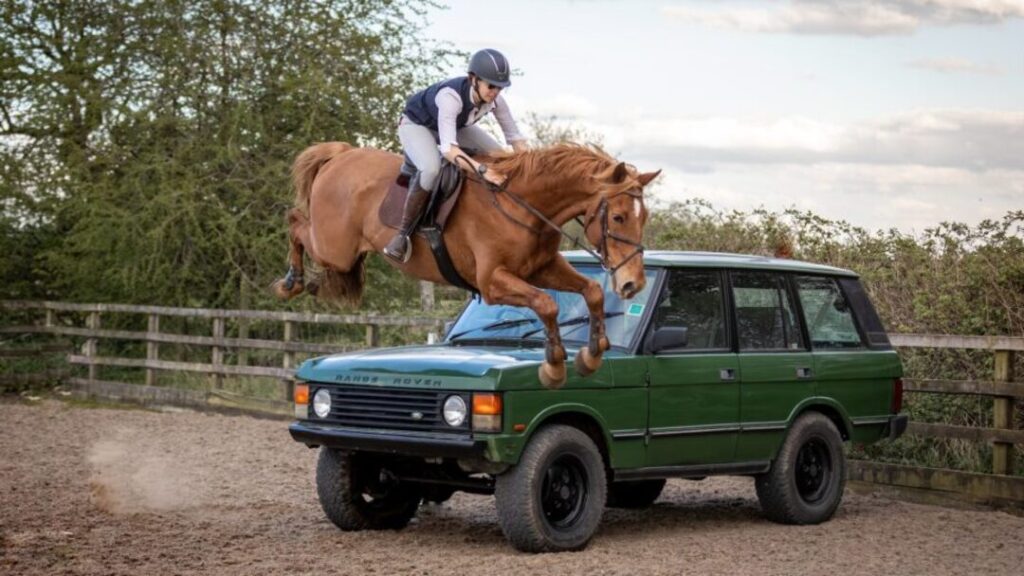
He’s phenomenal’: Watch as horse and rider jump a classic Range Rover with ease. In a sport defined by precision and trust, it is rare for a single moment to transcend its niche and capture global attention. Yet that is exactly what unfolded when British rider Letty Fenlon and her horse Grimm cleared a classic Range Rover with remarkable ease an image that quickly circulated across equestrian media and beyond.
What initially appears to be a daring stunt is, on closer inspection, a highly controlled demonstration of elite horsemanship. The jump, executed cleanly and without hesitation, reflects not just athletic ability but a deeply developed partnership between horse and rider. According to Fenlon, the idea originated from a visual concept she had seen previously, which she adapted into a structured and carefully planned exercise.
The Horse Behind The Performance
At the center of this performance is Grimm, a 14-year-old Dutch-bred horse described as Fenlon’s most reliable and technically capable jumper. His background includes competing at heights of around 1.40 meters and participating in demanding hunt rides, reinforcing his credentials as a proven performer over significant obstacles.
What distinguishes Grimm is not just physical capability but cognitive awareness. Fenlon noted that he is a horse that will refuse to jump if conditions feel unsafe—an indicator of advanced judgment and responsiveness, qualities rarely seen at such a consistent level.
This combination of athleticism and intelligence is central to understanding why the jump succeeded. Without both elements, the margin for error in such an unconventional obstacle would be significantly higher.
Key Details Of The Jump
| Element | Details |
|---|---|
| Rider | Letty Fenlon |
| Horse | Grimm (Dutch-bred, 14 years old) |
| Obstacle | Classic Range Rover |
| Jump Height | ~1.20 meters |
| Training Method | Gradual progression with placing poles |
| Discipline | Showjumping / Eventing |
| Outcome | Clean jump |
The table illustrates how the jump aligns with established equestrian parameters. While visually unconventional, the technical components—height, preparation, and execution—remain grounded in professional training standards.
How The Range Rover Jump Was Executed
The jump itself was not attempted spontaneously. Instead, it followed a methodical progression designed to build confidence and eliminate uncertainty.
Fenlon began with a smaller cross-pole positioned near the vehicle, gradually increasing the height and adjusting the approach. The final obstacle—the bonnet of the Range Rover—measured approximately 1.20 meters, a height well within Grimm’s capability but challenging due to the unfamiliar shape and visual presence of the car.
Using placing poles to control stride and take-off distance, Fenlon ensured that each attempt was predictable and repeatable. This approach reflects standard best practices in equestrian training, where incremental exposure to new stimuli reduces the likelihood of refusal or misjudgment.
The result was a clean, balanced jump that appeared effortless—though it was the product of careful preparation rather than spontaneity.
Why This Jump Matters Beyond The Visual
The significance of this moment extends beyond its visual appeal. At its core, the jump represents three foundational elements of equestrian sport.
First is technical precision. Clearing a fixed object of this size requires exact timing, balance, and stride control. Any deviation could result in contact or refusal.
Second is mutual trust. Horses rely on riders to guide them toward unfamiliar obstacles. Grimm’s willingness to approach and jump the vehicle reflects a high level of confidence in Fenlon’s judgment.
Third is adaptive training methodology. The ability to prepare a horse for such a unique challenge demonstrates how modern equestrian training has evolved to incorporate creativity while maintaining safety.
These principles are consistent across disciplines, particularly in eventing, where horses must navigate complex and varied obstacles under competition conditions.
Safety Considerations In Unconventional Obstacles
While the jump was executed successfully, it also highlights the importance of safety in equestrian sport. Solid obstacles inherently carry greater risk than traditional show jumps, particularly if approached without preparation.
In this case, several mitigating factors ensured a controlled outcome:
- A horse with proven experience over large fences
- A structured training progression
- A controlled environment with repeatable approaches
Fenlon also emphasized Grimm’s ability to assess situations independently, noting that he has previously refused to jump when conditions were unsafe.
This level of awareness significantly reduces risk, reinforcing the importance of selecting the right horse for the right challenge.
The Creative And Cultural Impact
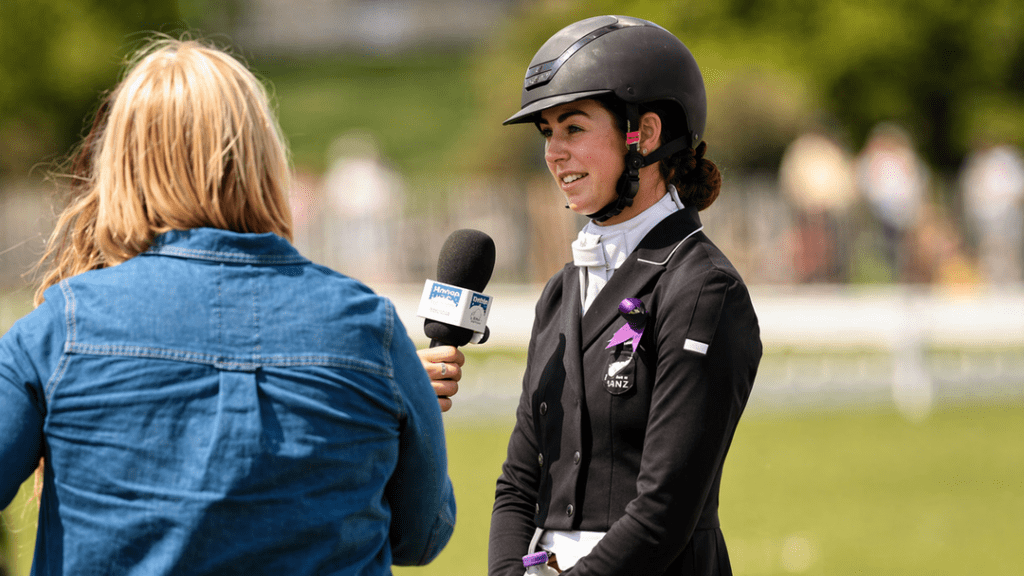
Beyond the technical achievement, the jump represents a broader shift in how equestrian sport engages with audiences. By combining traditional horsemanship with a visually striking concept, Fenlon created a moment that resonated far beyond the sport’s core following.
The collaboration with the vehicle’s owner and media team further underscores the role of storytelling in modern equestrianism. Such moments help bridge the gap between niche sporting audiences and the wider public, showcasing the athleticism and versatility of horses in new and engaging ways.
For readers interested in how performance principles translate across equestrian disciplines, this horse racing strategy analysis explores how conditioning, timing, and precision shape outcomes in competitive racing.
While racing and jumping differ structurally, both rely on the same foundational elements: training consistency, physical conditioning, and trust between horse and rider.
Final Analysis
The image of a horse clearing a classic Range Rover may appear extraordinary, but its true significance lies in the fundamentals it represents. Behind the spectacle is a carefully structured process built on discipline, preparation, and partnership.
Grimm’s performance—described as “phenomenal”—is not an isolated moment of brilliance. It is the culmination of years of training, experience, and mutual understanding between horse and rider.
In an era where equestrian sport continues to evolve, moments like this demonstrate that innovation does not replace tradition—it enhances it. And in doing so, it reaffirms the enduring appeal of a sport defined by precision, trust, and exceptional athleticism.