
Preakness 2026 SHOCKER: The Derby Winner Faces a Stunning Upset Threat
The Preakness 2026 Upset Threat is not a cheap headline built around Derby drama. It is a serious racing question because Golden Tempo’s path from Churchill Downs to Laurel Park asks whether a deep-closing Derby winner can recover, adapt, and survive a field packed with fresh challengers. The champion has earned the spotlight, but the middle jewel has a way of turning celebration into pressure and urgency very quickly.
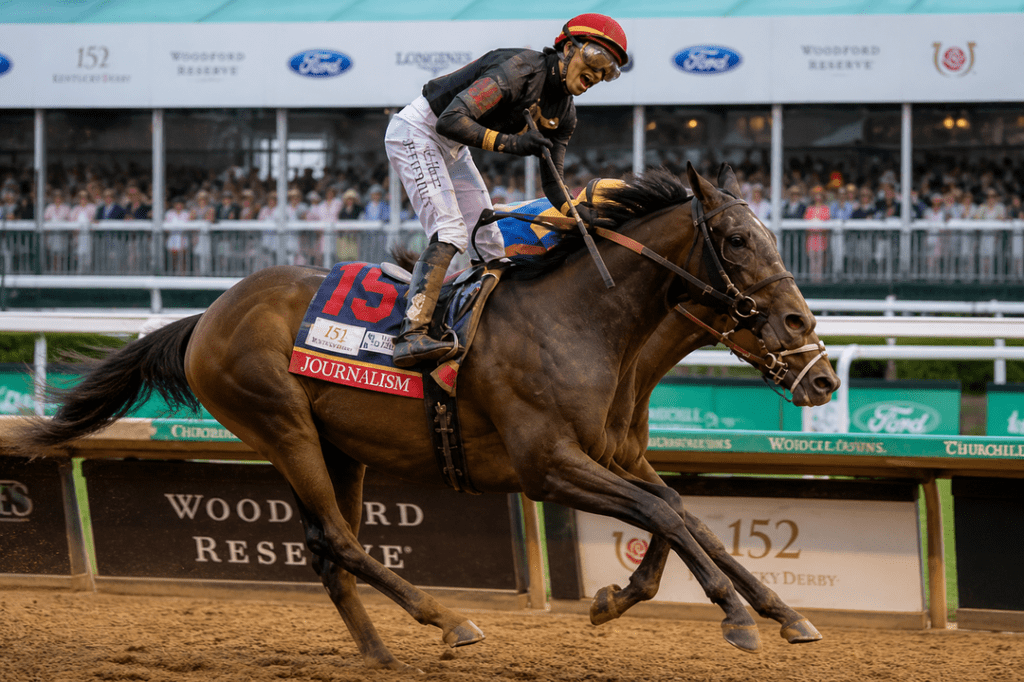
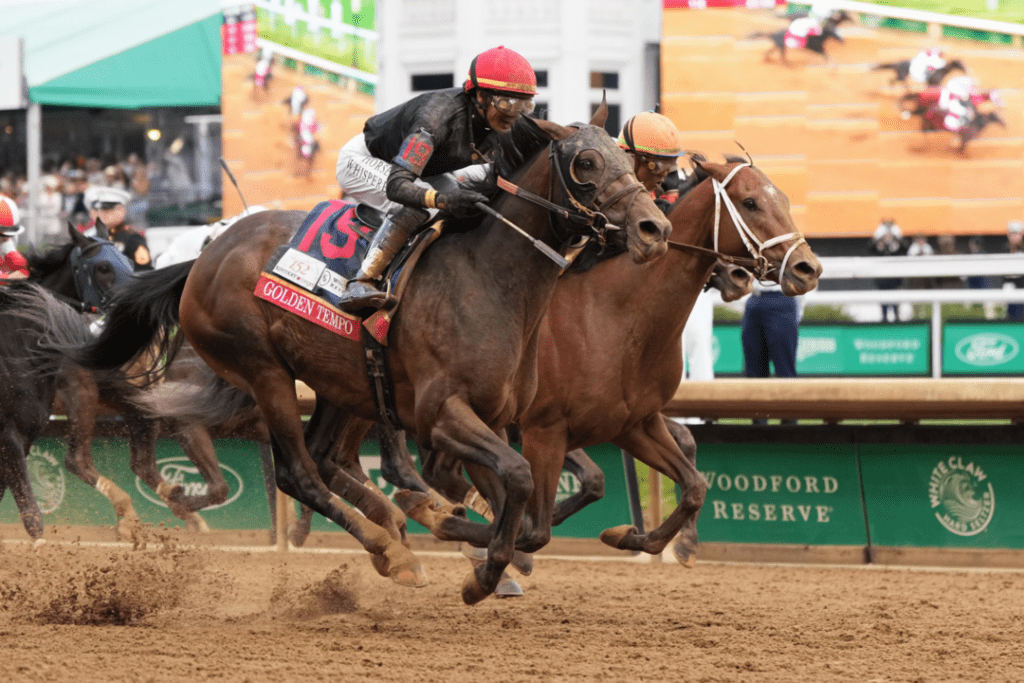
Golden Tempo’s Kentucky Derby victory gave racing a rare storyline: a late-running colt, a patient ride from Jose Ortiz, and a barrier-breaking moment for trainer Cherie DeVaux. That combination created instant momentum, but it also created expectation that can distort how the next race is judged.
The Derby winner is always the emotional center of the Preakness conversation. Fans want continuity. Broadcasters want a Triple Crown storyline. Bettors want to decide whether the Derby result was a true signal or a race-shape gift. The problem is that the Preakness does not care about the romance of the previous Saturday in Kentucky.
Golden Tempo’s Derby win mattered because he closed with power after falling well off the early pace. That style is thrilling when the trip opens correctly, yet it carries vulnerability when the field becomes smaller, sharper, and more tactically aware. A closer can look like a machine at the finish and still need help from the pace in front of him.
That is why the first major read on the Preakness 2026 Upset Threat starts with the likely presence of new shooters. Many possible Preakness horses did not run in the Derby. They may arrive with more freshness, less wear, and a strategic incentive to challenge the champion before he settles into a Tr
Golden Tempo Is The Right Favorite, But Not A Safe One
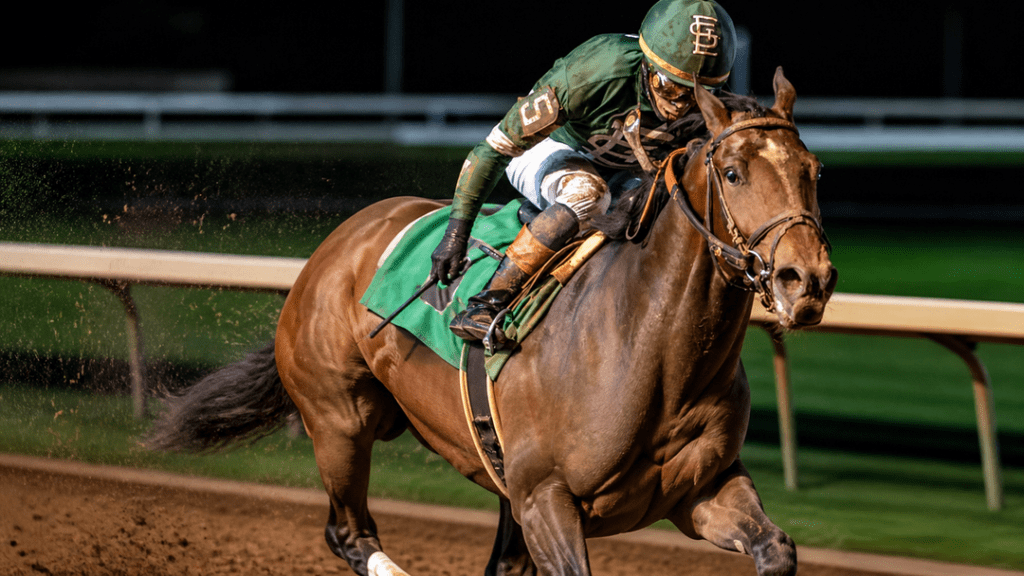
There is a difference between a worthy favorite and a safe favorite. Golden Tempo belongs at the center of the race if his connections send him to Laurel Park. He won the Derby, handled the biggest stage in American racing, and gave DeVaux a historic breakthrough. That deserves respect and attention.
Still, the Preakness is a sharper assignment than many casual fans assume. It arrives only two weeks after the Derby. It is run at 1 3/16 miles rather than 1 1/4 miles. It often rewards horses that can secure tactical position before the stretch becomes desperate. A deep closer cannot simply rely on time.
Golden Tempo’s profile creates a tactical puzzle. If Ortiz keeps him too far back, he risks giving speed horses too much separation. If he asks earlier, he risks changing the very rhythm that made the colt so effective. That is the tradeoff every closing horse brings into the middle jewel.
The horse may be brilliant enough to overcome it. That is not the issue. The issue is whether the price, the public narrative, and the Triple Crown hype will fully account for the risk. Racing history is filled with Derby winners who looked inevitable only until the next race exposed a new weakness under fresh scrutiny.
Laurel Park Makes This Preakness Different
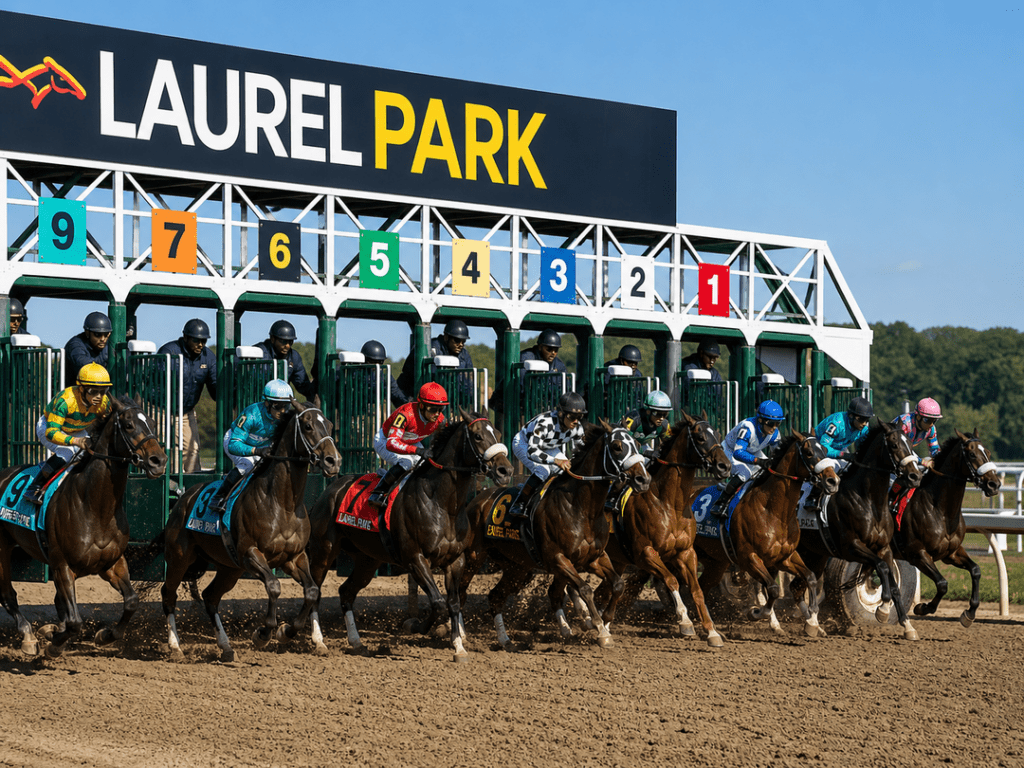
The 2026 Preakness carries another important twist: Laurel Park. With Pimlico under redevelopment, the race moves into a setting that changes the usual assumptions around the middle jewel. The official Preakness Stakes at Laurel Park frame gives the event continuity, but the practical racing questions are not identical to a standard Pimlico year.
A venue shift affects more than scenery. Horses respond to surfaces, turns, paddock flow, shipping logistics, crowd energy, and local familiarity. Trainers respond to the same factors. Bettors should, too. The favorite usually benefits from predictability, while challengers benefit from added uncertainty and variables.
This matters because Laurel Park gives certain rivals a more persuasive case than they might have had at Pimlico. Taj Mahal, for example, already owns meaningful local form through the Federico Tesio Stakes. That does not make him the winner, but it gives him a foundation of confidence in a race where every edge counts.
Golden Tempo’s team must evaluate the setting as much as the field. DeVaux cannot simply ask whether the horse won the Derby. She has to ask whether he is moving well, eating well, training with energy, and showing the same quality he carried into Churchill Downs. The public sees history. The barn sees the horse.
Contenders For Preakness 2026 At Laurel Park
The early Preakness list is still developing, and the final field will not be official until entries are set. That clarity matters. These are possible or probable contenders, not a guaranteed starting gate. Still, the names around Golden Tempo explain why the upset conversation has real substance.
Golden Tempo — Kentucky Derby winner; his Preakness status remains possible but not fully confirmed.
Cherokee Nation — This $1.15 million yearling finished sixth on April 4 in the Santa Anita Derby (G1). Bob Baffert, who has won the Preakness eight times, trains.
Chip Honcho — This son of Connect would make his first start since finishing fifth in the Louisiana Derby (G2) on March 21. Steve Asmussen trains.
Crude Velocity — This son of Beau Liam won the Pat Day Mile (G2) at Churchill Downs and is unbeaten in three starts. Bob Baffert trains.
Crupper — This homebred son of Candy Ride earned a Preakness berth by winning the Bathhouse Row Stakes at Oaklawn Park on April 18. Donnie Von Hemel trains.
Express Kid — This son of Bodexpress was second in the Sunland Derby on February 15 after racing at tracks including Canterbury, Prairie Meadows, Remington, and Sunland. Justin Evans trains.
Great White — He was scratched at the Kentucky Derby starting gate after throwing his rider and previously finished fifth in the Blue Grass Stakes (G1) on April 4. John Ennis trains.
Iron Honor — This $475,000 son of Nyquist won the Gotham Stakes (G3) in February and finished seventh in the Wood Memorial (G2). Chad Brown trains.
Napoleon Solo — He won the Champagne Stakes (G1) as a 2-year-old and has finished fifth this year in both the Fountain of Youth (G2) and Wood Memorial (G2). Chad Summers trains.
Ottinho — This son of Quality Road finished second in the Blue Grass Stakes (G1) and was third in the Withers earlier this year. Chad Brown trains.
Pretty Boy Miah — This 3-year-old gelding has won two of four starts and entered the Preakness discussion after winning a starter optional claimer at Aqueduct on April 25. Jeremiah Englehart trains.
Silent Tactic — This son of Tacitus won the Southwest Stakes (G3), finished second in the Rebel (G2) and Arkansas Derby (G1), and was scratched from the Kentucky Derby because of a foot issue. Mark Casse trains.
Taj Mahal — This $525,000 son of Nyquist is undefeated in three races, including the Federico Tesio Stakes at Laurel Park, a “Win and In” race for the Preakness. Brittany Russell trains.
Talkin — This son of Good Magic finished fifth in the Blue Grass Stakes (G1) on April 4 and also finished fifth in the Tampa Bay Derby (G3). Danny Gargan trains.
Talk to Me Jimmy — This New York-bred son of Modernist won the Withers before finishing eighth in the Wood Memorial. Rudy Rodriguez trains.
The Hell We Did — This homebred has two wins and two seconds from four starts and finished second in the Lexington Stakes (G3) at Keeneland on April 11. Todd Fincher trains.
The list shows why Golden Tempo’s path is complicated. He may be the Derby winner, but he is not walking into a race with one obvious danger. He could face speed, local familiarity, graded-stakes form, and trainers who understand how to create disruption.
The Upset Threats That Matter Most
Crude Velocity is the obvious starting point if the field develops around pace. An unbeaten horse with a Pat Day Mile victory brings speed, sharp current form, and the kind of pace influence that can make life difficult for a deep closer. If he controls the early rhythm without overextending, Golden Tempo may have to launch before Ortiz would prefer.
Bob Baffert’s presence deepens the intrigue because his Preakness record gives any possible starter from his barn instant relevance. Cherokee Nation is also on the early list, and even if he does not carry the same surface momentum as Crude Velocity, the Baffert factor changes how rivals think about strategy.
Taj Mahal may not generate the same national buzz as Golden Tempo, but his Laurel Park connection gives him real relevance. A horse undefeated in three races, including the Federico Tesio, brings a clean local argument into a Preakness year defined by venue change. That kind of context matters.
Local form can be overplayed, especially when the class test rises. Still, it should not be dismissed. A horse that has already handled the track has answered a question that Golden Tempo may still need to answer. In a Grade 1 race, no single factor decides everything, but familiar footing can strengthen execution and foundation.
Silent Tactic is another name that makes the Preakness field feel dangerous. His Arkansas route form gives him enough graded-stakes substance to be taken seriously, and his Derby scratch because of a foot issue creates a different kind of question. Is he a compromised horse, or a horse who avoided the Derby grind and now gets a cleaner opening?
That is exactly the kind of ambiguity that makes the Preakness difficult. A horse missing the Derby can look like a negative on paper, but it can also become an advantage if the issue has resolved and the horse arrives with more energy. The two-week gap between the Derby and Preakness magnifies that contrast.
The Trainer’s Decision Is Bigger Than The Public Pressure
Cherie DeVaux has to make the most important decision in the entire Preakness conversation: whether Golden Tempo should run at all. That choice defines the week. That decision should not be judged only through the public appetite for a Triple Crown attempt. The horse’s condition has to come first.
The best trainers know when a horse is thriving and when a horse is merely surviving. Those are not the same. Golden Tempo can exit the Derby as a hero and still need time. He can look outwardly fine and still be a half-step short of his best. At this level, that small margin is dangerous.
DeVaux’s historic Derby win gives her more attention, but it should also give her more room to show professional authority. The right call is not automatically the boldest call. It is the call that protects the horse while respecting the opportunity. That balance is what separates horsemanship from public relations.
The Triple Crown dream is seductive because it is rare. Yet rarity is not a reason to force a horse into a spot he has not earned physically. If Golden Tempo trains forward, the Preakness becomes irresistible. If he does not, restraint would be a sign of leadership, not fear.
What The Derby History Means For This Race
Golden Tempo’s Derby victory will remain the emotional foundation of the Preakness discussion. DeVaux became the first woman to train a Kentucky Derby winner, and Ortiz delivered a ride that will follow him for the rest of his career. The history has legitimate impact beyond racing’s usual audience.
That is exactly why the Preakness can be tricky. Big stories attract public money. Public money can flatten nuance. A horse with a great narrative can become shorter in the market than his tactical profile deserves. Bettors who want a serious opinion must separate admiration from evaluation.
The deeper meaning of Golden Tempo’s Derby history is not that he cannot lose. It is that he already changed the sport once. The Preakness asks whether he can change the season as well.
There is no disrespect in saying he is vulnerable. In fact, the vulnerability is what makes the race worth watching. A Derby winner who must answer fresh questions is far more interesting than a Derby winner treated as a ceremonial favorite. Golden Tempo now has to defend his credibility against a field designed to test it.
What Bettors Should Watch Before The Draw
The first signal is Golden Tempo’s training. Look for how DeVaux describes his energy, soundness, appetite, and attitude. A trainer’s language can be careful, but it often reveals whether a horse is moving forward or merely holding position. That small difference can shape confidence.
The second signal is the confirmed field. If Crude Velocity, Napoleon Solo, and other pace-influencing runners all enter, the shape changes. If the field loses speed, Golden Tempo’s closing kick becomes more dangerous. Race shape is not background noise. It is structure.
The third signal is the post-position draw. A closer can overcome a wide draw if the field shape allows it, but inside traffic can also become a problem if the horse needs to wait. Early placement matters. A tactical horse can benefit from clean early placement. A speed horse can become more dangerous if allowed to clear. The draw gives the handicap its map.
The fourth signal is price. Golden Tempo may deserve favoritism, but not at any number. If the public treats him as invincible, the value may shift to rivals with more practical race-shape appeal. If skepticism grows too strong, the Derby winner could become playable again. That is where discipline and value matter.
Why The Shocker Narrative Has Substance
A genuine upset threat is not built on hoping the favorite fails. It is built on identifying the specific conditions that make failure plausible. Golden Tempo faces those conditions: a quick turnaround, a shorter race, a changed venue, fresh rivals, and potential pace pressure. That is not noise. It is evidence.
The Preakness is valuable because it challenges the Derby rather than simply honoring it. It asks whether the best horse on Derby day can remain the best horse under a new set of demands. It asks whether the story has durability. It asks whether a closer can find another winning trip when everyone knows what is coming.
Golden Tempo may answer yes. If he does, the season becomes electric and DeVaux’s Derby breakthrough becomes the beginning of a larger campaign. If he does not, the upset will not be random. It will be the result of visible pressure points that were already present before the gate opened.
That is why the Preakness 2026 Upset Threat matters now. Golden Tempo has already given racing history, but Laurel Park may give racing a verdict. The opportunity is enormous, the risk is real, and the next race will show whether the Derby winner is simply the hero of one unforgettable Saturday or the horse capable of carrying that legacy forward.